Africa-Press. The British newspaper The Guardian published a report on a dispute between the government of Guinea-Bissau and the U.S. Department of Health over a medical study on hepatitis B vaccines, a conflict that has expanded to include ethical concerns related to the country’s sovereignty and the safety of its children.
Independent journalist Melody Schreiber, who wrote the report, said the government of Guinea-Bissau confirmed the suspension of the U.S.-funded study. The move places the West African country—one of the poorest in the world—into a direct confrontation with pressure from U.S. health officials, who initially insisted the trial should continue despite local objections.
Roots of the crisis
The crisis stems from a study led by Danish researchers aimed at monitoring the health effects of vaccines when administered at different times.
Schreiber quoted Guinea-Bissau’s health minister, Kenen Nantouti, as saying the trial had been stopped or canceled because its scientific aspects had not been adequately reviewed, noting that the decision was taken following changes in the country’s political leadership.
The minister said they would bring in experts from the Africa Centres for Disease Control and Prevention to conduct a detailed review of the study.
Researchers said:
The study’s methodology blatantly violates ethical standards because it deprives some children of essential preventive care.
Widespread outrage
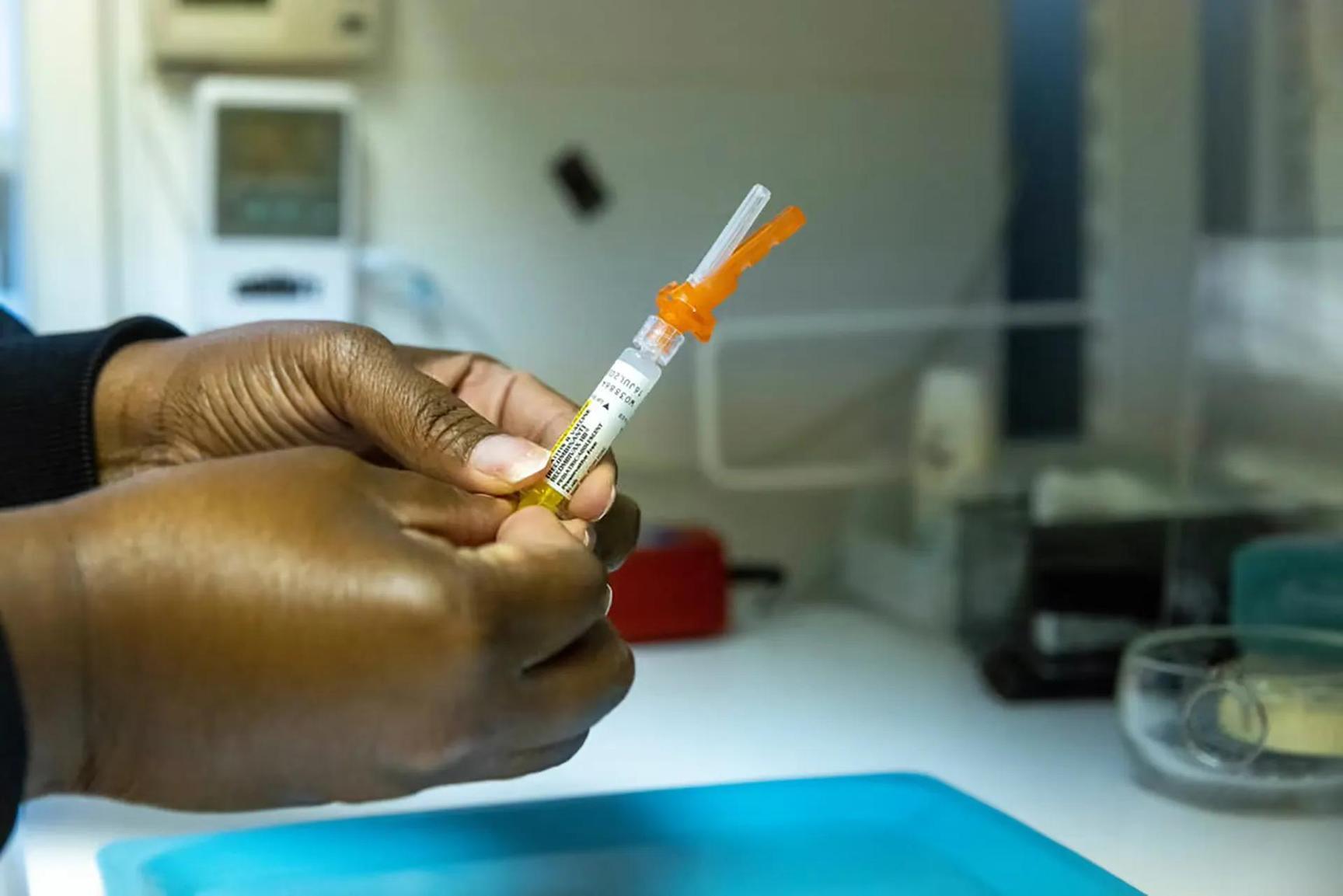
Schreiber said the study design sparked widespread anger in African medical circles. Under the proposed design, 14,000 infants would be split into two groups: the first would receive the vaccine at birth, as is standard worldwide, while vaccination for the second group would be delayed until they reached six weeks of age.
Researchers, according to the report, argued that this approach constitutes a clear breach of ethical standards because it withholds necessary preventive care from children in a country where 11% of young children are infected with hepatitis B, exposing them to the risk of death.
The report’s author said the director general of the Africa Centres for Disease Control and Prevention, Jean Kaseya, stressed that the decision to proceed with or halt the study is a sovereign one that belongs solely to the government of Guinea-Bissau, affirming the continental body’s support for whatever decision the local health ministry makes.
A testing ground
African experts criticized the tendency to use children on the continent as testing grounds instead of providing funding to strengthen vaccination campaigns that have been struggling due to a lack of financial resources—especially since the World Health Organization recommends immunization within the first 24 hours of a child’s life.
On the U.S. side, the report said the crisis saw a rhetorical escalation, with officials at the U.S. Department of Health questioning the credibility of African health organizations and describing the Africa CDC as a “fake organization.”
However, Schreiber noted that the tone later softened when the U.S. Department of Health subsequently confirmed that the trial had in fact been temporarily halted, without addressing the core questions about ethical standards or why ethics committees in the sponsor countries had not granted approval.
Balance of power
The author commented that the case exposes an imbalance of power between international funders and the countries hosting research. Guinea-Bissau faces enormous health and development challenges, including high maternal mortality, a lack of sanitation services, and chronic poverty.
She concluded that the current position of Guinea-Bissau’s Ministry of Health remains the key reference point for determining the future of the study, amid calls for African solidarity to protect children from any research that might sacrifice their safety under the cover of science.