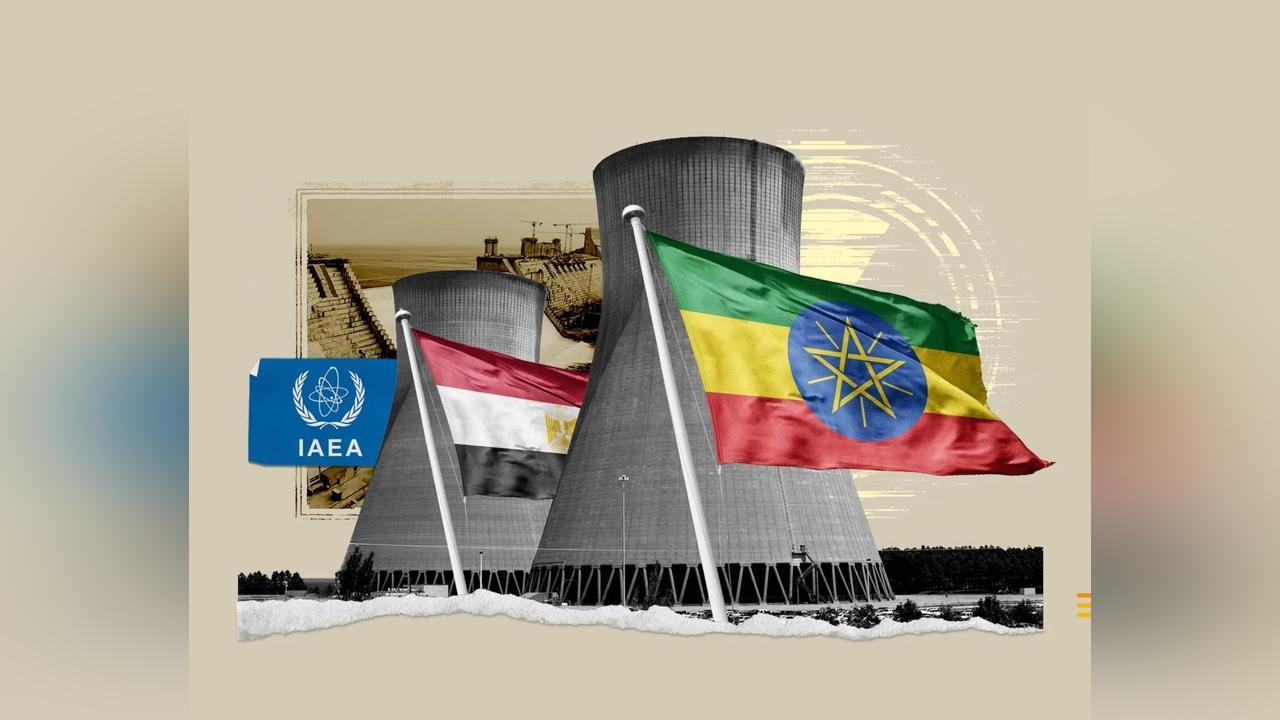
Africa-Press. Ethiopia is placing its nuclear ambitions on the table of strategic calculations, a move that raises fundamental questions about the trajectory of the nuclear path and its timing. While Addis Ababa adopts a policy of maximizing energy gains, it is escalating its ambitions toward nuclear power and reaping its multiple benefits. Observers believe this option reflects a strategic orientation with multiple objectives and aims.
In this context, Ethiopia’s nuclear energy commissioner, Sandokan Dibebi, stated that Ethiopia’s decision to pursue nuclear technology stems from its awareness of the importance of national energy security, economic transformation, and long-term national resilience.
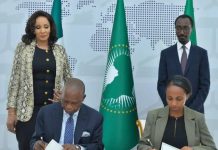
He made these remarks during a high-level meeting to officially launch Ethiopia’s nuclear energy program and activate the Ethiopian Nuclear Energy Commission. The event, held in Addis Ababa on December 8, according to the Ethiopian News Agency (ENA), brought together senior officials, including Foreign Minister Gideon Timotheos, Nuclear Energy Commissioner Sandokan Dibebi, and the IAEA Deputy Director General and Head of the Department of Nuclear Energy, Mikhail Chudakov, alongside senior government officials and relevant stakeholders.
According to the Ethiopian agency, attention was directed to a project to build a massive nuclear power plant, described as part of the major development initiatives recently announced by Ethiopian Prime Minister Abiy Ahmed.
The strategic alternative
Ethiopia’s path to securing its energy has not been smooth; the “Grand Ethiopian Renaissance Dam” project, which took more than a decade, has remained entangled in political and legal disputes with Cairo and Khartoum. Despite Ethiopia’s success in imposing a new water reality, Ethiopian ambition has leapt toward the “nuclear option” as an alternative that transcends natural constraints and neighbors’ disputes. Prime Minister Abiy Ahmed affirmed his country’s “commitment to developing a safe, transparent, and exemplary nuclear program for peaceful purposes in cooperation with the International Atomic Energy Agency.” He also pledged a massive budget of $30 billion, recently announced as part of goals to strengthen energy security in Ethiopia and support industrial transformation.
Experts’ views suggest that this step is not merely a technical energy project, but a repositioning in the regional balance of power and a guarantee of an ambitious roadmap across multi-purpose energy domains. Addis Ababa has earmarked investments to build the major nuclear plant, considered the cornerstone of a package of projects launched earlier by Prime Minister Abiy Ahmed to decouple economic growth from geographic volatility.
Last year saw intentions turn into procedural steps, as a strategic agreement was signed with the Russian energy giant “Rosatom” in September 2025 to build the first nuclear plants. To give the effort an official framework, the “Ethiopian Nuclear Power Commission” (ENPC) was formed as the sovereign engine of this program, which extends to a revolution in the industrial sector, strengthening food security, and developing scientific and technical research through the use of radioisotopes in agriculture and medicine.
Disputes remain
Alongside technological ambition, diplomacy has not calmed: regarding the Renaissance Dam, disagreements remain intense between Ethiopia and the two downstream countries demanding a legal agreement that secures their water rights. Last December witnessed a sharp exchange, as Ethiopia’s Foreign Ministry described Egypt’s recent positions—through which Cairo threatened Ethiopia—as a “tilt toward escalation.” Addis Ababa argues that Cairo’s insistence on what it calls “exclusive claims” over Nile waters has become the biggest obstacle to regional prosperity, while reiterating its entrenched right to use the “Abay” River (the Blue Nile).
Tensions peaked after the official inauguration of the Renaissance Dam in September 2025, when Ethiopia accused its northern neighbor of seeking to isolate it internationally and attempting to destabilize the Horn of Africa to create “weak and compliant” entities that serve the Egyptian agenda—reflecting the depth of the rift and the lack of trust.
A contested wager
African affairs researcher Abdel Samad Hassan argues that “the path through which Addis Ababa diversifies its energy sources—whether through electricity, gas, geothermal energy extracted from the ground, wind, solar energy, or the turn to nuclear power—represents a response to an integrated energy development project.” He notes that “nuclear technology also has a very large number of uses, including in medicine where it is highly efficient, and it is used in agriculture and for peaceful, educational purposes. Therefore, the nuclear field encapsulates this diversity of benefits that Ethiopia needs.” Hassan stresses a strategic point: Ethiopia is said to possess uranium ore reserves, qualifying it to achieve self-sufficiency in operating its reactors away from import pressures or international financing, which could be used as a tool of obstruction.
Ethiopian economic researcher Abdelrahman Ahmed emphasizes the need to strip these projects of “conspiracy theory,” explaining that Ethiopia aspires to reach a generation capacity exceeding 42,000 gigawatts of electricity. The goal is to present an inspiring “Ethiopian model” for African countries, proving the continent’s ability to master complex technology despite geopolitical obstacles.
For his part, international relations specialist Mohammed Ibrahim Hasbo says: “Regionally, the nuclear program grants Ethiopia the symbolism of a ‘rising power,’ but it adds a sensitive element to East Africa’s fragile environment. Acquiring a nuclear reactor requires political stability, strong institutional capacities, and massive financing—support Ethiopia would need from Russia or China—which deepens major powers’ presence in the region.”
Hasbo adds: “The still-active disputes over the Renaissance Dam affect acceptance of this project; the two downstream countries do not view the nuclear program as merely a development initiative, but as an extension of the fait accompli approach Ethiopia adopted in the water file. Because of this legacy, the project remains surrounded by doubts about Ethiopia’s intentions, especially amid the rising competitive dimension between it and Cairo and the emergence of energy as one arena of strategic competition between the two countries.”
International backing
At the international level, Ethiopia’s nuclear energy program received endorsement from the IAEA Director General, Rafael Mariano Grossi. In remarks delivered during an online seminar, according to the Ethiopian News Agency, Grossi stressed “the importance of establishing Ethiopia’s nuclear energy authority to develop and regulate nuclear energy in line with international safety and security standards.”
He also pointed out that “nuclear power has strong potential as a reliable, fast, low-carbon source of electricity, which helps significantly accelerate social and economic transformation in Ethiopia.” He added that “this initiative can also stimulate industrial growth and secure highly skilled job opportunities.”
Grossi further affirmed “the Agency’s full commitment to support Ethiopia through advisory services and capacity-building at every stage of its program to develop nuclear capabilities,” noting that “the Agency is currently working with Ethiopia within its technical cooperation program to strengthen human resources, institutional capacities, and readiness for future phases of infrastructure development.”