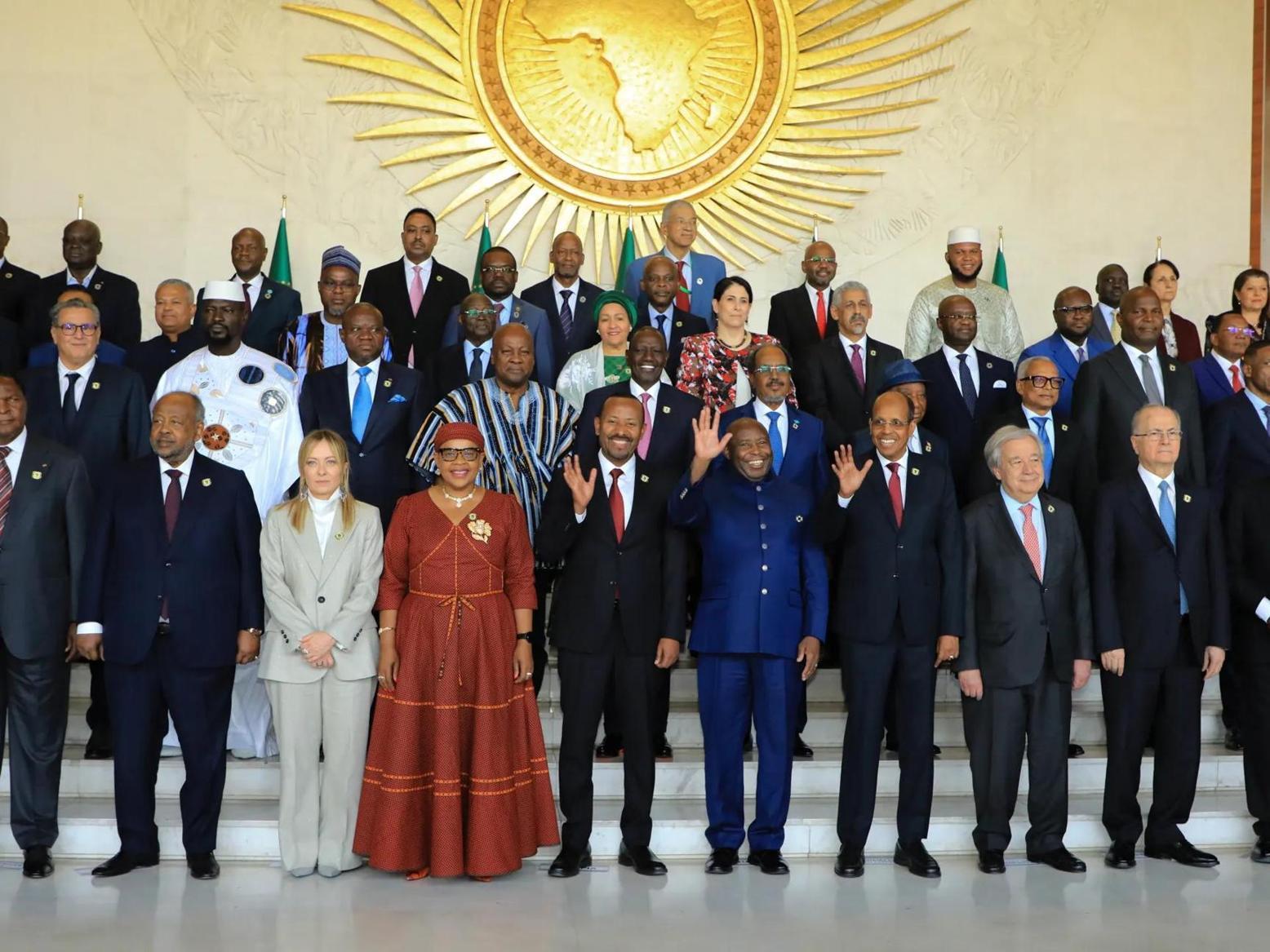
Africa-Press. The 39th African summit in Ethiopia’s capital, Addis Ababa, wrapped up its first day with broad participation from heads of state and government.
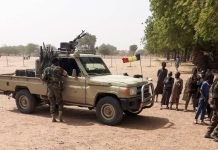
Opening sessions on Saturday were dominated by warnings about expanding conflict hotspots and growing fragility in continental institutions, alongside key files led by the situation in Sudan, unrest across the Sahel, and issues of debt, water sovereignty, and the African free trade area.
Warning over conflicts
In his opening remarks, African Union Commission Chair Mahmoud Ali Youssouf addressed ongoing conflicts across the continent, saying: “From Sudan to the Sahel, from eastern DR Congo to Somalia and elsewhere, our peoples continue to pay a heavy price for instability.”
He added: “We struggle to silence the guns. Political and institutional fragility in several of our countries is worrying. And conflicts—whether open or latent—are becoming chronic.”
UN priorities
UN Secretary-General António Guterres said Africa would remain the organization’s “top priority,” stressing the need for permanent representation for the continent on the UN Security Council.
Speaking about conflicts on the ground, Guterres reaffirmed the UN’s full commitment to pressing for an “immediate ceasefire” in Sudan.
He stressed the need to confront external actors supplying arms to both sides, noting the UN’s engagement with the African Union, the Arab League, and a quadripartite mechanism to help build pressure for ending the war that has been ongoing since April 2023.
The UN chief also touched on tensions in the Horn of Africa, voicing hope for reconciliation between Ethiopia and Eritrea to bolster stability—especially after tensions that followed the Tigray conflict—adding that the two neighboring countries share “a long history of common struggle.”
A comprehensive security approach
Egypt’s foreign minister, Badr Abdelatty, called for a “comprehensive approach” to strengthening security in Africa, addressing terrorism and foreign interference that undermines state sovereignty.
Abdelatty reiterated Egypt’s commitment—while serving as chair of the AU Peace and Security Council for this month—to support efforts to “silence the guns” by 2030 and to reach an inclusive political settlement that preserves Sudan’s unity and territorial integrity.
On the Palestinian issue, Palestinian Prime Minister Mohammad Mustafa urged a decisive international response to Israeli settlement expansion to protect the two-state solution.
Mustafa, who was invited to the summit, said Israel continues to violate the ceasefire agreement and threatens its second phase, stressing to African leaders that “the Gaza Strip is an inseparable part of the State of Palestine.”
For his part, the African Union Commission chair called for an end to the “genocide” of Palestinians, saying their suffering requires a firm international stance.
Earlier on Saturday, the AU’s 39th summit opened in Addis Ababa in the presence of the UN secretary-general to discuss the continent’s future and seek ways to halt internal conflicts.
The summit agenda includes water security, sanitation, the free trade area, and debts weighing on the continent, as well as security turmoil in the Sahel and the Horn of Africa.
Among the top priorities is the war in Sudan, as leaders seek to map out a path toward resolving the crisis.