What You Need to Know
Klafer Gatiti, Executive Secretary of the Economic Commission for Africa, highlighted that Africa possesses over $1.1 trillion in local institutional capital. He emphasized that strategic deployment of this capital is crucial for the continent’s economic transformation, despite existing challenges such as infrastructure funding gaps and illicit financial flows.
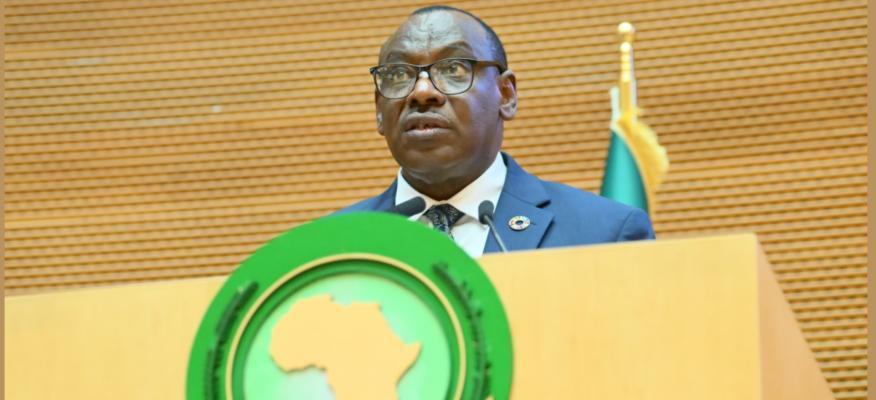
Africa-Press. Klafer Gatiti, the Executive Secretary of the Economic Commission for Africa, stated that the continent possesses over $1.1 trillion in local institutional capital, affirming that this substantial financial stock can fund the economic transformation Africa needs if strategically employed.
During an online speech at the Ninth African Business Forum held in Addis Ababa, Ethiopia, Gatiti explained that Africa, despite existing challenges such as infrastructure funding gaps and annual losses from illicit financial flows, does not suffer from a lack of capital but rather from the absence of mechanisms that connect available funds to viable projects.
He noted that local institutional capital is distributed across pension funds, insurance pools, and sovereign assets, emphasizing that the real issue lies in the lack of effective channels to convert this capital into direct investments in developmental projects.
Gatiti remarked, “The paradox is not in the lack of capital, but in the absence of mechanisms to link it to economically viable projects,” adding that global capital has become more selective, gravitating towards markets that offer size, security, and future growth prospects.
The Executive Secretary of the Economic Commission for Africa asserted that the continent, with its youngest workforce globally, rapid urban expansion, digital technology proliferation, and emerging consumer markets, is poised to be a major driver of global economic growth in the coming decades. He stated, “Africa is no longer a continent waiting for transformation… transformation is already underway.”
He highlighted the African Continental Free Trade Area (AfCFTA) as one of the most significant economic achievements, creating a unified market of over 1.5 billion people. He also pointed to the increasing expansion of digital platforms and startup ecosystems across various countries in the continent.
However, Gatiti stressed that the pace of transformation remains slower than required due to weak infrastructure and the absence of effective frameworks for preparing investment projects.
In discussing the theme of the event: “Financing Africa’s Future: Jobs and Innovation for Sustainable Transformation,” he confirmed that millions of young Africans are entering the labor market annually, making the provision of productive job opportunities a pressing necessity for Africa’s growth and global economic stability.
He added, “If young people find productive job opportunities, Africa will become the leader in growth this century; if they do not, instability will extend across the globe.”
Gatiti proposed four strategic measures to accelerate transformation on the continent, including: increasing local capital and developing innovative financing tools; enhancing credit ratings and expanding capital markets; fully implementing the AfCFTA to enable regional value chains and boost production; and investing in innovation, skills, and data systems as the foundation for sustainable transformation.
He also emphasized the importance of improving tax systems, adopting blended financing models, and activating the role of pension funds and sovereign assets in expanding the financial space and supporting infrastructure and industrial development projects.
In conclusion, Gatiti called for enhanced financial transparency, the development of credit ratings, and deepening capital markets to help reduce borrowing costs and direct investments toward productive sectors. He urged the full implementation of the African Continental Free Trade Agreement to enable widespread production and create new job opportunities across Africa.
The Economic Commission for Africa (ECA) has been pivotal in addressing economic challenges on the continent. Established in 1958, the ECA aims to promote economic and social development in African countries. Over the years, it has focused on enhancing regional integration, addressing poverty, and fostering sustainable development. The recent emphasis on local capital reflects a growing recognition of Africa’s potential to leverage its resources for self-sustained growth.