What You Need to Know
The Democratic Republic of Congo has included the Rubaya coltan mine, controlled by rebels, in a shortlist of strategic assets offered to the United States. This move aims to enhance US investment in the mineral-rich eastern Congo, despite ongoing conflicts and the mine’s current control by the March 23 Movement rebels.
Africa-Press. The Democratic Republic of Congo has added the Rubaya coltan mine, controlled by rebels, to a shortlist of strategic assets it is offering to the United States as part of a mineral cooperation initiative, according to a government document reviewed by a local source.
A senior Congolese official and an American diplomat confirmed the inclusion of Rubaya in the shortlist presented during a meeting between the Democratic Republic of Congo and the United States in Washington on February 5, aimed at strengthening their strategic partnership in minerals agreed upon in December. They spoke on condition of anonymity due to the sensitivity of the matter.
This move places the Rubaya mine—despite being controlled by the March 23 Movement rebels, who are backed by Rwanda—within Kinshasa’s efforts to attract American investments to the mineral-rich eastern Congo, which is suffering from ongoing conflicts.
This could provide Washington access to tantalum, a heat-resistant metal extracted from coltan ore, used in the manufacturing of semiconductors, aviation components, computers, mobile phones, and gas turbines.
The document indicates that Congo estimates the Rubaya mine requires between $50 million and $150 million to restart and increase its commercial production, with a quick cost recovery expected due to the rising global demand for tantalum.
The United States is seeking access to a variety of natural resources in its efforts to counter China’s dominance in Africa and build a strategic stockpile of critical minerals.
The document from the Congolese government confirms that Rubaya could provide tantalum supplies that are “fully traceable and conflict-free,” compliant with American purchasing regulations.
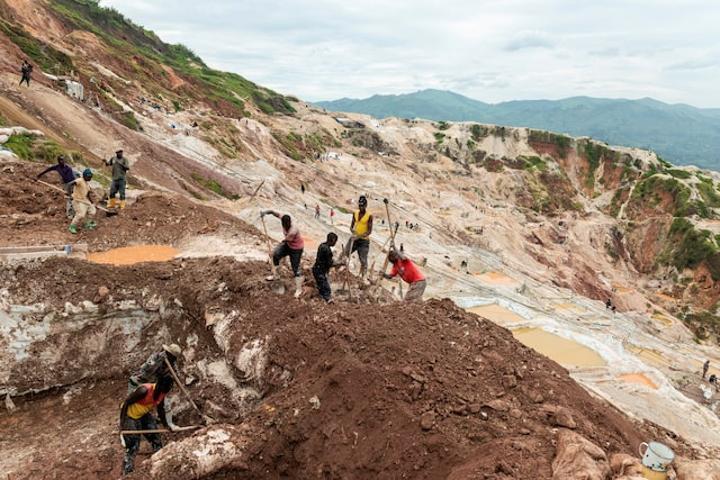
The Rubaya mine produces 15% of the world’s coltan. Located in North Kivu, it contains several thousand metric tons of coltan with tantalum concentrations ranging from 20% to 40%. This mine accounts for about 15% of global coltan production and is entirely extracted manually by impoverished local residents earning a few dollars a day.
The United Nations reported last year that the mine and the surrounding hills remain under the control of the March 23 Movement/Allied Democratic Forces, whose occupation has contributed to the flourishing of organized smuggling networks to Rwanda.
The UN estimates that the rebels, whom Rwanda denies supporting, collect at least $800,000 monthly from taxes imposed on Rubaya’s coltan production and trade.
The March 23 Movement and its political ally, the Congo River Alliance, are under American sanctions and are not parties to the stalled peace agreement between Congo and Rwanda brokered by former President Donald Trump in December. Clashes continue despite the agreement.
Both sides have criticized the mineral framework, describing it as “severely flawed,” emphasizing the need for Kinshasa to refrain from negotiating new mineral partnerships while fighting persists.
A senior official from the group told a local source that the March 23 Movement’s goal is “not the mines, but the liberation of our people.” He added that Kinshasa, by offering the Rubaya mine to Washington despite not controlling it, aims to draw the United States into a military restoration of the region for the benefit of the Congolese government.
The official, who requested anonymity due to the sensitivity of the discussions, stated that a private entity—not the Congolese state—owns the mining rights, and any future dispute will show that President Félix Tshisekedi “does not control all mining sites.” He refrained from elaborating on the mine’s ownership details.
The US State Department informed a local source that Congo officially presented the preliminary list of strategic asset reserves at the meeting on February 5, but the department did not disclose these assets.
Under the framework agreement, American companies will have priority access to the assets, which Washington claims aims to promote transparent investment, create jobs, and contribute to long-term stability in the Democratic Republic of Congo.
The US State Department added that qualified private sector companies are now invited to request the priority asset list and express interest in eligible projects.
Other projects listed on Congo’s priority list for American investors include the giant Manono lithium mine in Tanganyika and the Shimap copper-cobalt complex.
Proposed projects include the Hot Katanga and Lualaba projects, the expansion of the STIL germanium and gallium project in Lubumbashi, and three cobalt refineries.
The list also includes hydropower projects associated with the state mining company Gécamines, Congo’s share of the Lobito railway corridor—a project aimed at transporting critical minerals from Central Africa to the west—and key gold exploration sites such as South Kibali and Moku Biverandi, according to the document.
Congo and several American or allied companies have signed preliminary supply agreements under the Mineral Security Agreement, as part of Washington’s broader efforts to reduce China’s entrenched dominance over Congolese critical minerals. The government document does not specify the names of the American companies that have been contacted, nor does it confirm the start of formal negotiations.
The Democratic Republic of Congo is rich in natural resources, particularly minerals like coltan, which is essential for modern electronics. However, the region has been plagued by conflict, with various armed groups vying for control over these lucrative resources. The March 23 Movement, backed by Rwanda, has been a significant player in the ongoing struggles, complicating international investments and efforts for stability in the region.
In recent years, the US has sought to diversify its access to critical minerals to counter China’s dominance in Africa. The Rubaya mine, which produces a significant portion of the world’s coltan, has become a focal point in these efforts.