What You Need to Know
The National Democratic Institute (NDI) has completed its pre-election assessment in Bénin, issuing a report highlighting political and institutional constraints ahead of the presidential elections scheduled for April 12. The report emphasizes the lack of political representation and calls for reforms to enhance political plurality and ensure fair electoral processes.
Africa-Press. The National Democratic Institute (NDI) has completed its pre-election assessment in the Republic of Bénin, just under two months before the presidential elections scheduled for April 12.
After a week of meetings and consultations, the institute issued a report that presented a varied view of the current political situation. Over the course of a week, the NDI delegation, consisting of six members, including former presidents Catherine Samba-Panza and Jorge Carlos Fonseca, held meetings with political parties and presidential candidates, as well as representatives from civil society, media, and institutions involved in organizing the electoral process.
In its conclusions presented to the press, the NDI highlighted the existence of political and institutional constraints, as well as a clear imbalance in political representation.
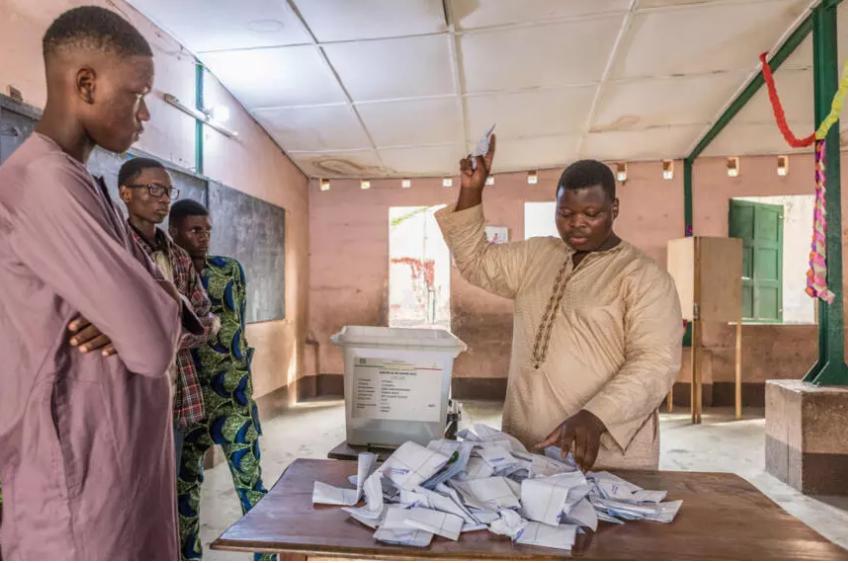
The report noted that following the recent legislative and municipal elections, in which the opposition did not win any representation, the presidential elections remain the only avenue for political participation.
Additionally, the Democratic Party, the largest opposition party, will be absent from the elections, similar to what occurred in the municipal elections, which the party claims it was excluded from. However, the National Independent Electoral Commission (CENA) stated that the exclusion was due to non-compliance with requirements.
During the press conference, Catherine Samba-Panza painted a concerning picture of the political landscape, stating: “We felt fear, as civil society no longer dares to take any civic actions, and political parties are largely silenced. We have observed several violations, and we cannot remain silent about them. But merely observing them is not enough; what can be done?”
The delegation presented a series of short, medium, and long-term recommendations in preparation for the presidential elections scheduled for April 12, in which majority candidate Romuald Wadani and moderate opposition candidate Paul Hounkpè will compete.
Jorge Carlos Fonseca explained that the final recommendations reflect demands previously raised by the opposition and civil society. He emphasized that priorities include enhancing conditions for political plurality, reconsidering the 20% threshold required in each constituency to win parliamentary seats, reviewing electoral sponsorship rules, and opening a clear and ongoing political dialogue.
Fonseca stated: “Honest and open dialogue is essential, as political life continues after April, and it cannot stop on election day.” For her part, Catherine Samba-Panza revealed that she had a lengthy conversation with Boni Yayi, the head of the Democrats’ Party, before concluding with the message: “When you are a democrat, do not give up; rather, fight until the end to ensure democracy prevails.”
At the end of the mission, Christopher Fomunyo, a representative of the National Democratic Institute, confirmed that the delegation was welcomed by various parties and that the mission was completed smoothly and effectively.
Bénin has faced significant political challenges in recent years, particularly regarding the representation of opposition parties. The last legislative and municipal elections saw the opposition fail to secure any representation, raising concerns about the democratic process in the country. The upcoming presidential elections are viewed as a critical opportunity for political participation amid these constraints.