What You Need to Know
Following a US Supreme Court ruling on tariffs, South Africa faces economic uncertainty, particularly in the automotive and agricultural sectors. The country is now looking to diversify its export markets, especially towards China, to mitigate the impact of fluctuating US trade policies and tariffs.
Africa-Press. Uncertainty has prevailed in South Africa following the ruling issued on Friday, February 20, by the US Supreme Court, which determined that some tariffs imposed by the administration of former President Donald Trump were illegal.
This decision has opened the door for the possibility of lifting those tariffs, which was expected to alleviate the burdens on many affected countries, particularly South Africa.
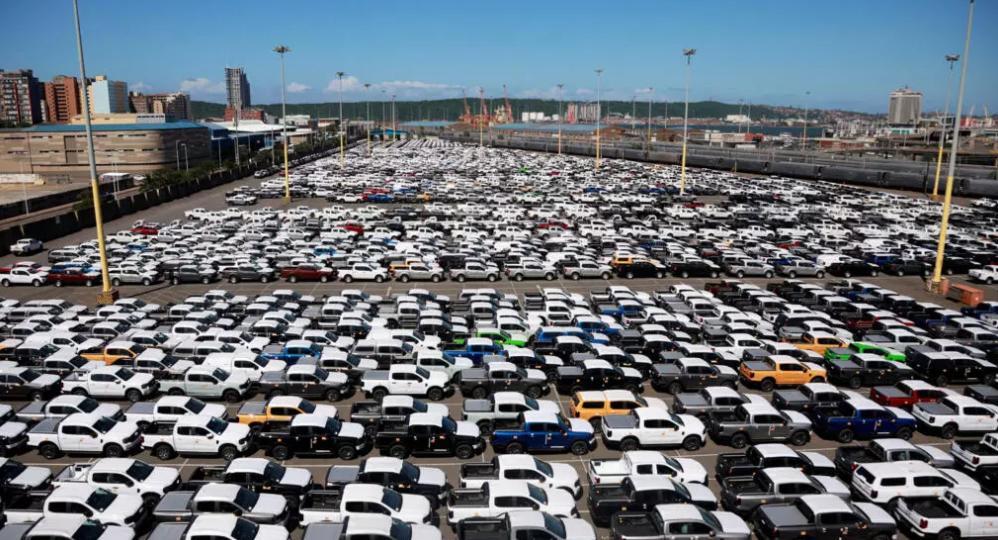
South Africa is among the countries most impacted by US tariffs, especially in the automotive sector. In 2025, South African automotive exports to the United States fell by about 30%, making it the most affected sector by the tariffs imposed by the Trump administration, which reached 30% on most exports, despite the fact that the United States is South Africa’s second-largest trading partner.
The impact of the tariffs has also extended to the agricultural sector, further intensifying the pressures on the South African economy, which heavily relies on these two vital sectors.
Although the court’s decision was supposed to provide relief to wide-ranging sectors, optimism did not last long after Trump announced on Saturday new tariffs of 15% globally, which caused further confusion.
Sharon Modiba, chief economist at the South African International Trade Administration Commission, stated that the 25% tariff on the automotive sector has severely harmed the industry, adding, “We are closely examining the court’s decision, but we know that the US government will not abandon these tariffs; it is a strategy they have focused on heavily.”
In this context, economist Dawie Roodt, chief economist at Efficient Group, noted that the current atmosphere is characterized by a high degree of uncertainty, making it difficult to assess the impact of these decisions in the short term.
He said, “All we can do now is wait to see what happens, especially with Trump. Once the picture becomes clearer, it will be possible to speculate on the consequences.”
Roodt pointed to the prevailing discontent among economic circles, stating, “There is a lot of confusion. We still do not know the consequences, and this uncertainty is causing frustration for everyone.”
Amid ongoing ambiguity regarding the future of trade relations with the United States, South Africa is seeking to redirect its exports towards alternative markets, primarily China, the country’s largest trading partner, in hopes of reducing its reliance on the US market and mitigating the effects of fluctuating decisions.
In recent years, South Africa’s economy has been significantly affected by international trade policies, particularly those imposed by the United States. The tariffs introduced during the Trump administration, especially on automotive exports, have strained South Africa’s trade relations and economic stability. As a result, the country has been compelled to seek alternative markets to sustain its economic growth and reduce dependency on the US market.