What You Need to Know
Mozambique has signed an agreement with the UN Human Rights Commission to establish a permanent office in the country. This move aims to enhance institutional cooperation in protecting fundamental rights, but raises questions about its practical impact in a politically and socially tense environment, especially following the violent 2024 elections.
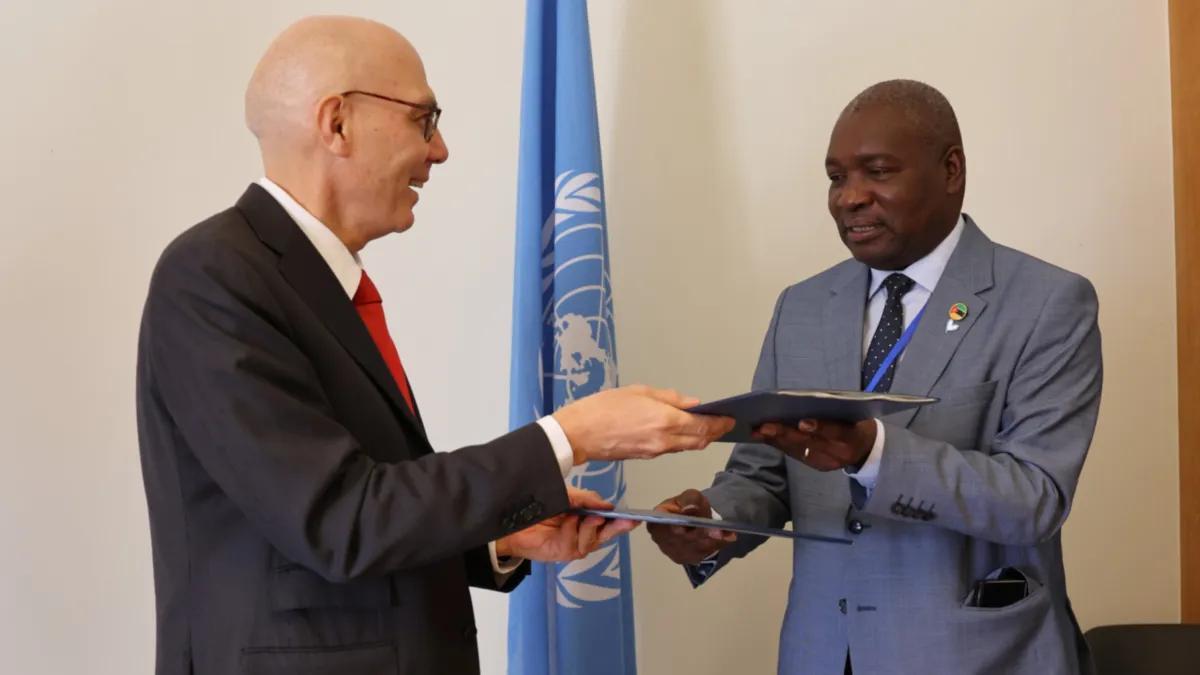
Africa-Press. The government of Mozambique signed an agreement in Geneva with the United Nations High Commissioner for Human Rights to establish a permanent office of the agency in the country.
The agreement, signed by Minister Mateus Saíze and High Commissioner Volker Turk, aims to enhance technical and institutional cooperation in the field of protecting fundamental rights. However, the move raises questions about its practical impact in a politically and socially tense context.
The announcement comes in the wake of the 2024 general elections, which witnessed violence that reignited discussions about the performance of security forces, the right to protest, and the integrity of the democratic process. In this climate, the president launched the “Comprehensive National Dialogue” initiative as a mechanism to ease tensions, but analysts are skeptical about its ability to engage all political forces and civil society.
The agreement stipulates that the office will advise the government on drafting and implementing human rights policies and seeks to align national legislation and practices with the UN Charter, in addition to providing technical support for the application of regional and international standards.
These tasks include monitoring legal reforms, building institutional capacities, and overseeing Mozambique’s international commitments. However, the question remains: “Will the office have enough independence when facing violations attributed to the state apparatus itself?” according to observers.
Periodic Review and Deferred Commitments
Minister Saíze announced that the country will present its fourth report under the Universal Periodic Review mechanism next May. Mozambique received recommendations in the previous session regarding the use of excessive force, prison conditions, press freedom, and the protection of human rights activists. Although the upcoming report is expected to reflect some progress, it will still face ongoing challenges such as the conflict in Cabo Delgado, political tensions, and a weak judicial system.
The government has also confirmed that it is working on ratifying the Convention for the Protection of All Persons from Enforced Disappearance and joining the International Covenant on Economic, Social and Cultural Rights. Experts believe that signing these treaties is insufficient unless they are effectively integrated into national legislation and their content is applied in practice.
The establishment of a UN Human Rights Office in Mozambique comes at a critical time, following the 2024 general elections marked by violence and political unrest. This agreement aims to align national legislation with international human rights standards and provide technical support for legal reforms. However, skepticism remains regarding the office’s independence in addressing state-related violations.
Mozambique’s government has committed to presenting its fourth report under the Universal Periodic Review in May, addressing issues such as excessive force, prison conditions, and press freedom. While the government is working on ratifying key human rights treaties, experts emphasize that,