
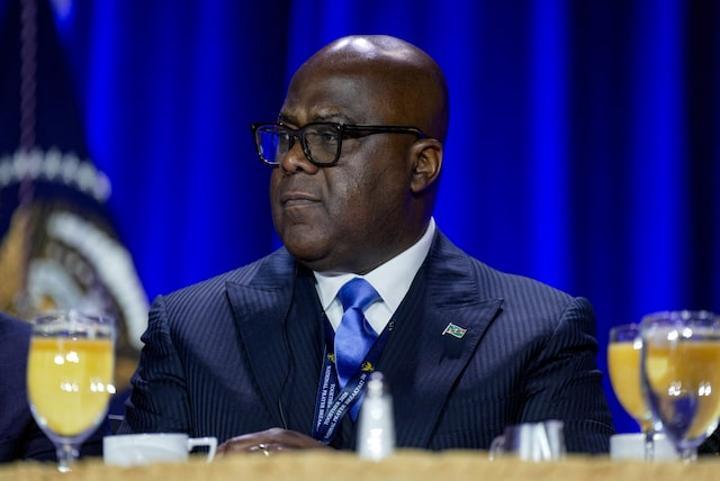
Africa-Press. The President of the Democratic Republic of the Congo, Felix Tshisekedi, has ordered a comprehensive audit of mining export revenues and state assets, warning that weak controls prevent the country from fully benefiting from its record copper and cobalt exports.
Congo is a major supplier of cobalt and copper, possessing vast reserves of lithium, gold, and coltan, making it a competitive arena in the global struggle to secure vital mineral supply chains.
The Congolese government has signed separate agreements regarding minerals with the United States and China, as both superpowers seek to build vital mineral stockpiles to support the transition to clean energy and battery-powered electric vehicles.
The Central African nation exported approximately 3.4 million metric tons of copper in 2025, up from 3.1 million tons in 2024, while cobalt exports reached around 220,000 tons, according to figures presented at a cabinet meeting chaired by Tshisekedi.
Reuters reported this month that Congo exported about 955,000 metric tons of copper between January and March 2026, down from approximately 1.09 million tons the previous year.
Despite increased production, Tshisekedi stated that the country is losing revenue due to weak oversight, opaque joint ventures involving state mining assets, profit transfers abroad, and capital flight through fraudulent imports.
The president has ordered a comprehensive audit within 30 days to identify unpaid revenues and shortcomings in the management of mining partnerships, according to the meeting minutes. The report did not specify the mechanisms and scope of the audits.
He also instructed authorities to fully connect customs, port authorities, the central bank, and commercial banks, emphasizing the need to track all mineral exports and imports through a single traceable supply chain. The meeting minutes indicated that preliminary results will be announced by June 15.
Congo, one of the poorest countries in the world, has recently launched reforms in the mining sector to enhance state control over this sector with the aim of increasing revenues.
A government audit revealed that major mining companies undervalued nearly $16.8 billion between 2018 and 2023, which could reduce resources allocated to the government and local communities.