Africa-Press. The National Independent Electoral Commission in Burundi announced on Friday, May 8, 2026, that the presidential elections are scheduled for May 3, 2027, amid rising objections from opposition parties, which have threatened to suspend their participation unless a comprehensive national dialogue is initiated before the electoral process.
In a joint statement, the opposition parties, including the National Council for Freedom, the Union for Democracy in Burundi, the KODIBO Party, the Democratic Party for Democracy in Burundi, and the Front for Democracy in Burundi, called for the preparation of a new political climate ahead of the elections, arguing that holding them under current conditions would be “premature and inappropriate.”
The opposition parties expressed concerns stemming from what they described as a repeat of the 2025 legislative election scenario, which they claimed was marred by numerous violations. They emphasized that no substantial reforms have been implemented since then, despite repeated calls to reconsider the electoral process and ensure the independence of the overseeing institutions.
Olivier Nkurunziza, the Secretary-General of the Union for Democracy in Burundi, stated that participating in elections conducted in the same manner as the 2025 elections would be a “lie,” adding that the continuation of the current situation could exacerbate social cohesion crises in the country.
Nkurunziza criticized what he perceived as a lack of independence of the National Independent Electoral Commission, reaffirming that the opposition continues to demand a broad political discussion to ensure elections that are “truly free and transparent,” as he put it.
In contrast, the ruling party, the National Council for the Defense of Democracy – Forces for the Defense of Democracy, rejected these conditions, arguing that the opposition has consistently linked its participation in every electoral cycle to prior political conditions.
Dorian Munyizero, the National Secretary of the ruling party and communications officer, stated that democracy in Burundi “cannot continue under the threat of ongoing boycotts,” adding that political pluralism exists, but the opposition “is always looking for justifications to question the electoral process.”
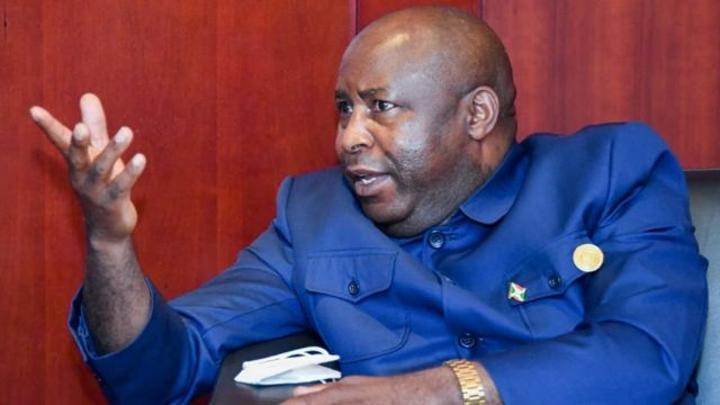
Despite the opposition’s demands, the Burundian government has not yet issued any official position regarding the call for national dialogue, while the ruling party announced the nomination of the current president, Évariste Ndayishimiye, to run in the upcoming presidential elections, as of April 2026.