
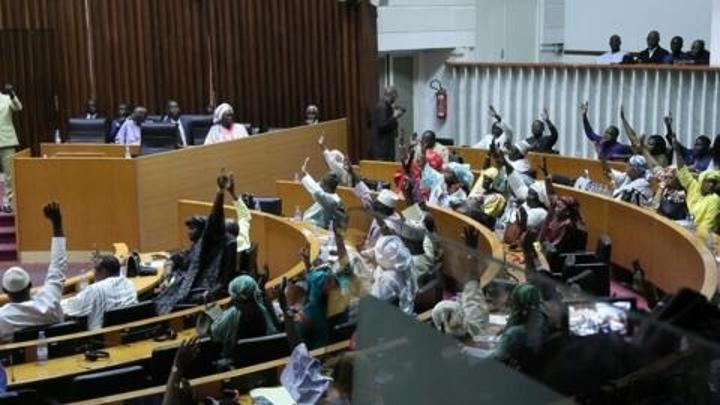
Africa-Press. The National Assembly in Senegal has approved a new bill aimed at reducing absenteeism among deputies during parliamentary sessions. This decision was made during a session held on Friday, May 8, 2026, where 127 deputies voted in favor of the law, while 3 opposed it, and 2 abstained from voting.
This move is supported by the ruling party, which dominates the parliament, as part of tightening disciplinary measures against deputies who are absent without justification.
The new law stipulates gradual penalties for absent deputies, starting with a formal warning after four unjustified absences from public sessions. The deputy is required to provide justifications for their absence before any financial or administrative actions are taken against them. If absenteeism occurs ten times without justification, the deputy automatically loses their parliamentary seat.
Article 118 of the internal regulations of the National Assembly already included measures allowing for the suspension of parliamentary allowances and even the possibility of automatic dismissal in cases of repeated absenteeism. However, the head of the parliamentary group of the ruling party clarified that this article was rarely applied and needed further clarification and organization.
He emphasized that the new law aims to establish a clear mechanism for penalties while ensuring the rights of deputies and enabling them to fully perform their duties.
Conversely, the law faced criticism from some opposition deputies. Sheikh Ahmad Tidiane, a deputy from the United Republic party, argued that addressing repeated absenteeism should remain a political responsibility within parliamentary groups, rather than a matter requiring new legislation. He stated that, in his view, the National Assembly does not have the authority to withdraw the mandate of an elected deputy.
Opposition deputy Thierno Hassan Sal criticized the law, describing it as “populist,” asserting that the country faces more pressing priorities, such as public debt and economic policies, noting that the parliament has not suffered from a quorum crisis during the current session.
In response to the criticisms, the head of the parliamentary group reiterated that the parliamentary majority is working to address its priorities sequentially, considering that regulating the attendance of deputies is part of reforming parliamentary work and enhancing discipline within the legislative institution. The National Assembly has not yet announced the number of deputies who regularly miss parliamentary sessions out of a total of 165 members.