Africa-Press. It appears that the Ethiopian government has found itself compelled to ease tensions with Sudan, following what analysts describe as stern American threats stemming from deep concerns about the future of the Bab el-Mandeb Strait.
The Sudanese army accused Ethiopia of launching drone attacks on Khartoum Airport last Monday, which Addis Ababa denied, accusing Khartoum of supporting fighters from the Tigray Liberation Front and violating Ethiopian territorial integrity.
These accusations are the latest in a long series of mutual allegations, with the Sudanese army consistently accusing Abiy Ahmed’s government of supporting the Rapid Support Forces that have been fighting against it for over three years, while Ethiopians have accused the ruling Sovereignty Council in Sudan of supporting hostile entities against their country.
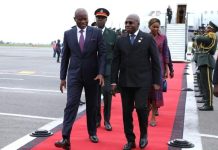
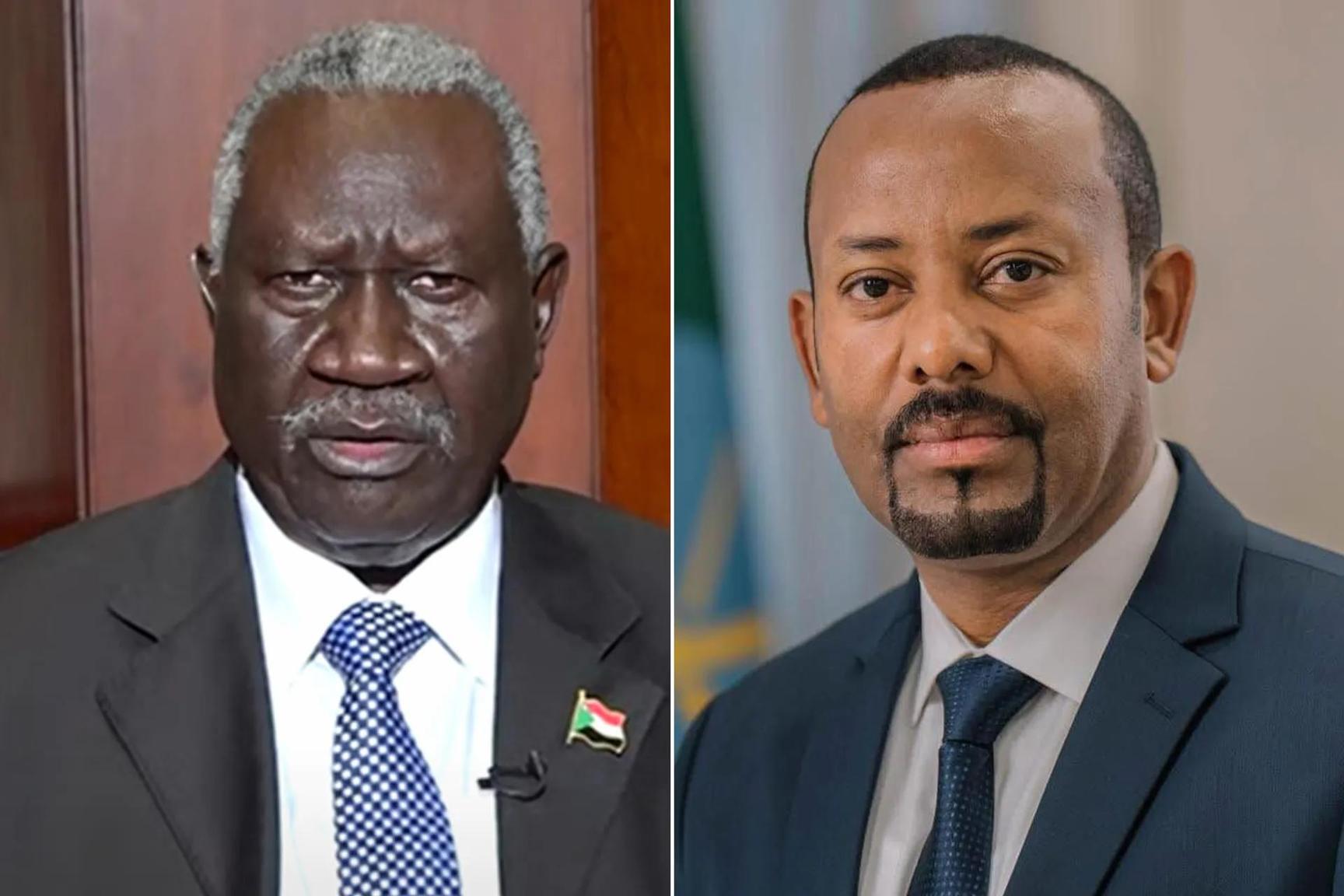
However, Djiboutian President Ismail Omar held a closed session yesterday that brought together Ethiopian Prime Minister Abiy Ahmed and Deputy Chairman of the Sudanese Sovereignty Council Malik Agar. A local source reported that the two sides agreed during the meeting to work on containing their disputes.
Ethiopian Retreat
This meeting could be a precursor to resolving the disputes between the two countries if Abiy Ahmed stops exporting his internal problems to Sudan, according to political analyst Ammar Awad in an interview.
However, the head of the Ethiopian Institute for Popular Diplomacy, Yasin Ahmed, responded by saying that other parties, including Egypt and Eritrea, are trying to exploit Sudan to undermine Ethiopian interests, believing that the Djibouti meeting might signal a move towards resolving the conflict.
He stated that the world now knows that the solution to the Sudanese crisis has become fundamentally internal, as both parties to the conflict possess weapons and are stubbornly continuing the war.
American Warning
International and African affairs researcher Ibrahim Idris attributes Abiy Ahmed’s meeting with Malik Agar in Djibouti to Ethiopia’s desire to resolve the dispute with Sudan through dialogue after the United States sent a direct and clear message to Addis Ababa not to overstep its boundaries with neighboring countries.
The United States and the European Union have deep concerns that the crisis in the Hormuz Strait could extend to the Bab el-Mandeb Strait, potentially drawing all countries into the Horn of Africa, according to Idris.
Due to these fears, Idris states that the United States has asked Addis Ababa to cease threatening Eritrea and Somalia in its pursuit of a maritime outlet, whether peacefully or through conflict, as indicated by senior Ethiopian officials earlier.
Moreover, Washington, according to Idris, has decided to correct its relations with the Eritrean government and ease the sanctions imposed on it, as it has begun to play an important role at present, prompting Addis Ababa to request the Djiboutian president to attempt to resolve the dispute with Sudan through dialogue.
While Ethiopians are disturbed by the American message, which Idris claims no one knows the details of, they have no choice but to seek to alleviate these tensions, as they find themselves surrounded by problems on all sides due to Abiy Ahmed’s policies.
Everything agreed upon between Abiy Ahmed and the Tigray Liberation Front has “failed miserably, which has led the Addis Ababa government to halt its actions,” according to Idris, who stated, “Abiy Ahmed must return to his original policies based on promoting peace, which are no longer present.”
As the situation in Sudan reaches a boiling point that threatens to extend the risks of conflict regionally and possibly internationally through the Bab el-Mandeb Strait, the Ethiopian-Sudanese meeting in Djibouti, in the opinion of the same spokesperson, is an Ethiopian attempt to contain the situation after Khartoum provided evidence of drones coming from Ethiopian territory.
Reuters reported last February that Ethiopia is hosting a camp to train thousands of fighters for the Rapid Support Forces and has developed the nearby Asosa Airport for use in drone operations.
Last week, Reuters reported from local residents that the recent strikes targeted military objectives and civilian areas in Khartoum, which has begun to witness the return of citizens and international ministries and agencies since the army regained control in March 2025.
The attacks targeted Khartoum International Airport, which witnessed some of the first battles between the army and the Rapid Support Forces in April 2023. The bombing came a week after the airport received its first international flight in three years.
The spokesperson for the Sudanese army, Brigadier General Asim Awad Abdel Wahab, stated that the government has evidence that the attacks targeting several states originated from the Ethiopian airport in Bahir Dar.