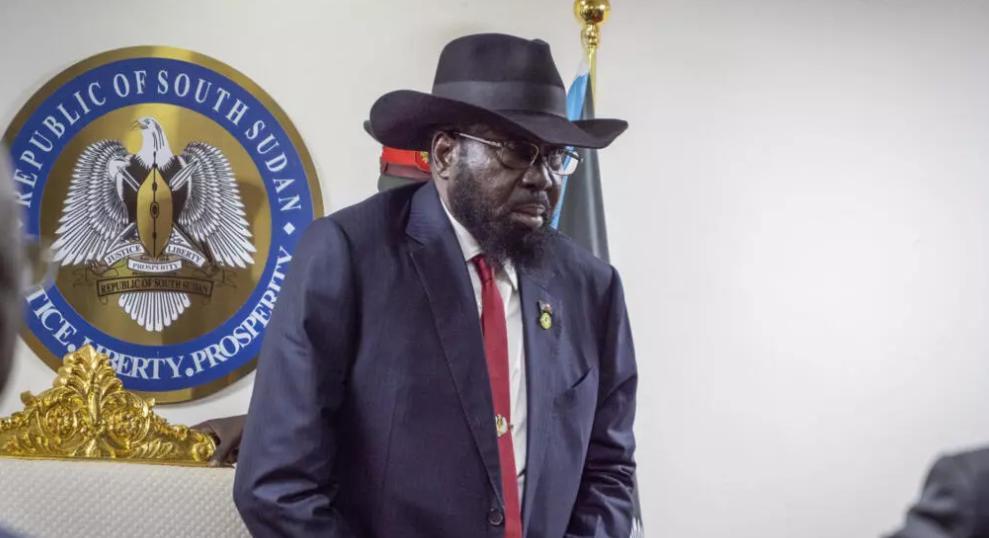
Africa-Press. The United States has accused the leadership of South Sudan of attempting to circumvent the peace agreement signed in 2018, demanding an immediate return to its implementation amid rising political tensions and renewed clashes within the country.
These American statements followed a visit by a U.S. official from the African Affairs Office to the capital, Juba, on May 7 and 8, 2026, where he sharply criticized the South Sudanese government, stating that promises related to political reform and improving basic services have not been fulfilled, alongside the continued detention of Vice President Riek Machar and his trial.
The official confirmed, after meetings with government officials in Juba, that the 2018 peace agreement has been gradually collapsing for over a year, with stalled implementation of its provisions and a return of security tensions. He emphasized that Washington sees the necessity of returning to the agreement as the only framework capable of preventing the country from sliding further into chaos.
These statements come at a time when President Salva Kiir’s camp is trying to convince the international community of progress in the political process by asserting readiness to hold elections in December 2026, alongside discussions of dialogue with opposition forces. The new chief of staff also announced on Monday the start of integrating opposition factions into the South Sudanese army.
However, the U.S. official expressed clear skepticism regarding these steps, stating that discussions of political dialogue lose credibility amid the continued detention of Riek Machar, who leads the second-largest party signatory to the peace agreement.
He accused the South Sudanese leadership of “exploiting the crises it has created itself” by making repeated promises of reform and readiness for elections in order to gain international support.
In the same context, a session of the National Assembly in South Sudan witnessed sharp political tension on Monday after lawmakers loyal to Riek Machar withdrew in protest against attempts to pass amendments to the 2018 peace agreement, which they described as “non-inclusive,” arguing that they ignore the mechanisms and procedures outlined in the original agreement.