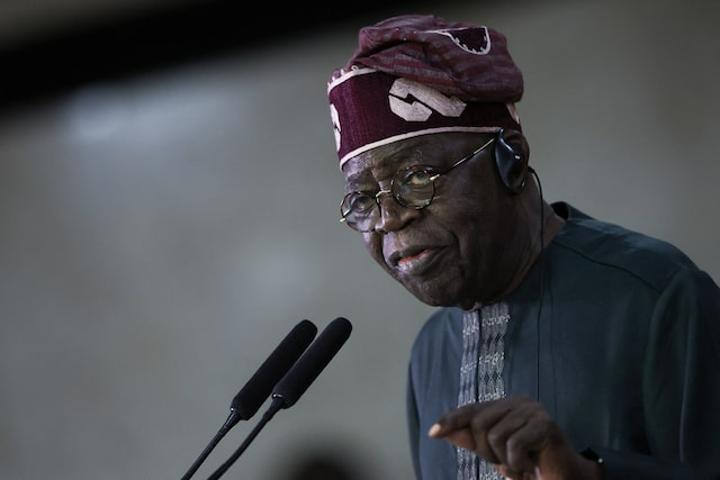
Africa-Press. President Bola Tinubu stated that Nigeria will spend approximately $11.6 billion on debt servicing in 2026, which is nearly half of its expected government revenues, calling for a comprehensive reform of the global financial system that he described as harmful to African borrowers.
He added that the burden of debt servicing weighs heavily on spending for infrastructure, healthcare, and education, despite government tax reforms aimed at increasing revenues in the most populous country in Africa. Data from the Debt Management Office indicated that Nigeria spent $5.15 billion on debt servicing in 2025.
In a speech delivered at the Africa Forward Summit in Nairobi, Tinubu noted that rising borrowing costs and limited access to long-term financing divert resources away from industry, skills, and infrastructure, which he characterized as a structural flaw in African economies. The summit, hosted by Kenya and France, attracted leaders from over 30 countries.
He stated, “Every dollar that leaves our coffers to pay exorbitant interest is a dollar not invested in the steel sector, textile factories, agricultural processing plants, or digital industries.” He pointed out that this also means a shortage of trained engineers and a decrease in the available energy costs for factories.
It is noteworthy that Tinubu, who has been in office for three years and is seeking re-election in January 2027, has initiated the largest reforms Nigeria has seen in decades, including the removal of costly fuel and energy subsidies, currency devaluation, and comprehensive tax reforms in an effort to stabilize an economy suffering from inflation, foreign currency shortages, and external shocks.
He stated that the “painful and domestic” reforms have contributed to stabilizing macroeconomic indicators and boosted investor confidence. However, he added that these gains are being eroded by a global financial system that treats sovereign African nations as high-risk borrowers, leading to increased interest costs.
Tinubu called for reforms that include cheaper financing and deeper economic integration that prioritizes Africa’s growth and prosperity. He also urged for restrictions on illicit financial flows and greater support for manufacturing, noting that Africa still accounts for less than 2% of global manufacturing.
He said, “Nigeria is not asking for charity; we demand a financial system that intentionally empowers Africa to manufacture, process its minerals, refine its crude oil, produce its medicines, and compete fairly in global markets.”