Africa-Press. Signs of calm have gradually returned to Comoros after days of strikes and tensions following the decision to raise fuel prices, following the government’s announcement to suspend the controversial increase.
In the capital, Moroni, shops, taxis, and street vendors resumed their activities on Sunday, May 17, 2026, just one day after authorities decided to freeze the increase in fuel prices.
Despite the government decision, some gas stations continued to sell gasoline at the previously raised prices, justifying this by waiting for an official decree to outline the mechanisms for implementing the price reduction. Authorities confirmed they are considering ways to support them as much as possible.
Citizen Fekra Alawi stated that the crisis directly affected the daily lives of residents, explaining: “There was no water or food, but the government ignored the matter.” She added that the protests were not just a limited union movement but a broad expression of accumulated public anger due to difficult economic and living conditions.
For his part, Youssef Ali Machangama believed that the tension had surpassed the realm of labor unions, saying: “It was like pouring oil on fire, and even gasoline too. I completely understand this anger; it was the struggle of an entire people.”
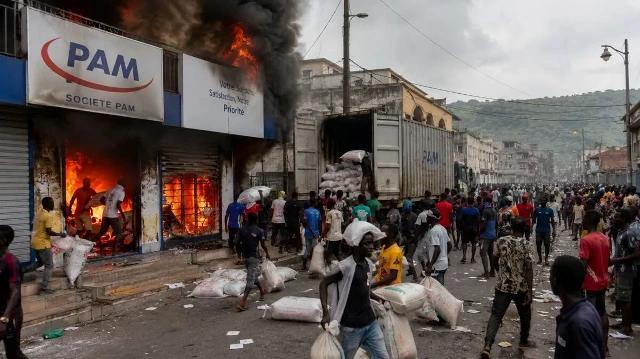
The violence and clashes that accompanied the protests left a sense of unease among residents, as Malanau Roland expressed his fears of the country slipping into chaos if tensions continued, stating: “I thank the government for making this decision; otherwise, the country would have entered a state of chaos. But if violence returns, the people will not endure it any longer, and they will take to the streets again.”
Despite the relative calm returning to Moroni, many residents believe that the underlying causes of the crisis remain, primarily unemployment, rising living costs, and deteriorating social conditions. Sharif, a resident of the capital, stated that the government needs to address “many fundamental issues, such as unemployment, improving living conditions, and the situation of citizens,” adding that “the people of Comoros do not live a dignified life; they are struggling to survive.”
In contrast, Anjouan Island has not fully resumed its activities, as movement remained noticeably limited on Sunday, with few taxis and a lack of buses during daylight hours, reflecting the ongoing repercussions of the crisis despite signs of easing in the capital.