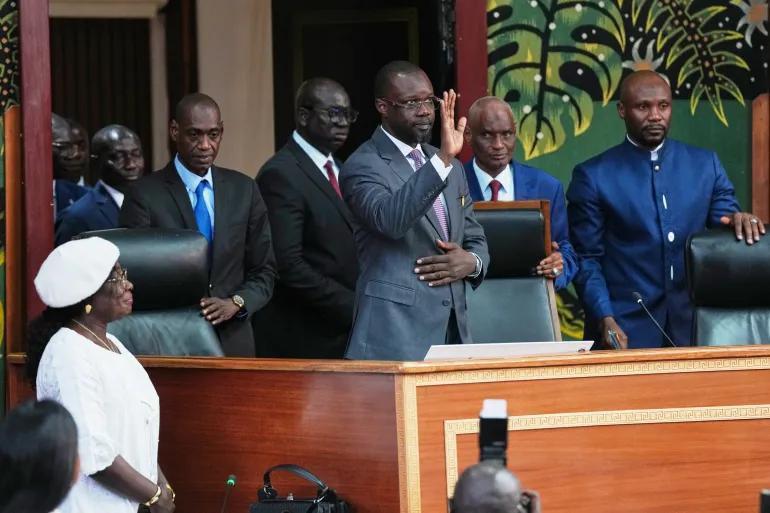
Africa-Press. The Senegalese parliament has elected ousted Prime Minister Ousmane Sonko as its president, defying President Bassey Diumai Fay, who dismissed Sonko just four days prior, signaling a potential political crisis in a country burdened by record debt.
Sonko received a warm round of applause after securing 132 votes, with no member voting against him and one abstention, according to session chair Ismail Diallo. Sonko was the sole candidate for the position.
Sonko remains the uncontested leader of the Pastef party, which holds 130 out of 165 seats in Senegal’s unicameral legislature.
As president of the parliament, Sonko now has the authority to determine which laws will be put to a vote, review government reforms, and propose legislation—powers that could put him in direct confrontation with the president he previously served.
In his first statements following his election victory, Sonko pledged not to misuse this responsibility to create institutional chaos, or to cause problems for the president.
Sonko, speaking in Wolof, stated, “No member of parliament will use this institution for personal purposes.” However, he added that the National Assembly would not be a “formal body.”
He also affirmed that the parliament is a source of checks and balances, saying, “We will vote in favor of laws that serve the public interest, and we will reject those that do not.” He promised to hold the government accountable and to utilize all constitutional powers available to him to achieve that.
From Accord to Discord
Fay and Sonko were former allies from the Pastef party, which holds a strong majority in parliament with 130 members out of 165. Sonko leads the party and may pose a challenge to Fay’s authority.
Sonko was dismissed along with all other ministers last week after months of tensions between him and the president, following the collapse of the strong partnership that brought them to power. His dismissal led to the resignation of the parliament’s president. Fay appointed a new prime minister on Monday and is expected to announce the formation of a new government in the coming days.
Fay and Sonko took their positions following the presidential elections held in March 2024, pledging to implement ambitious reforms including combating corruption, providing job opportunities for Senegal’s growing youth population, and maximizing the benefits from natural resources.
However, the two men have publicly disagreed on key policies in recent months, including negotiations regarding a loan from the International Monetary Fund.
This sharp political divide between former allies foreshadows a confrontation between Fay and Sonko’s supporters in parliament over reforms, including curbing the rising national debt in West Africa.
Senegal faces a worsening debt crisis and rising living costs. The country is among the African nations with the highest debt-to-GDP ratio, following a government audit last year that revealed debts exceeding the previously reported $13 billion, attributed to the previous administration.