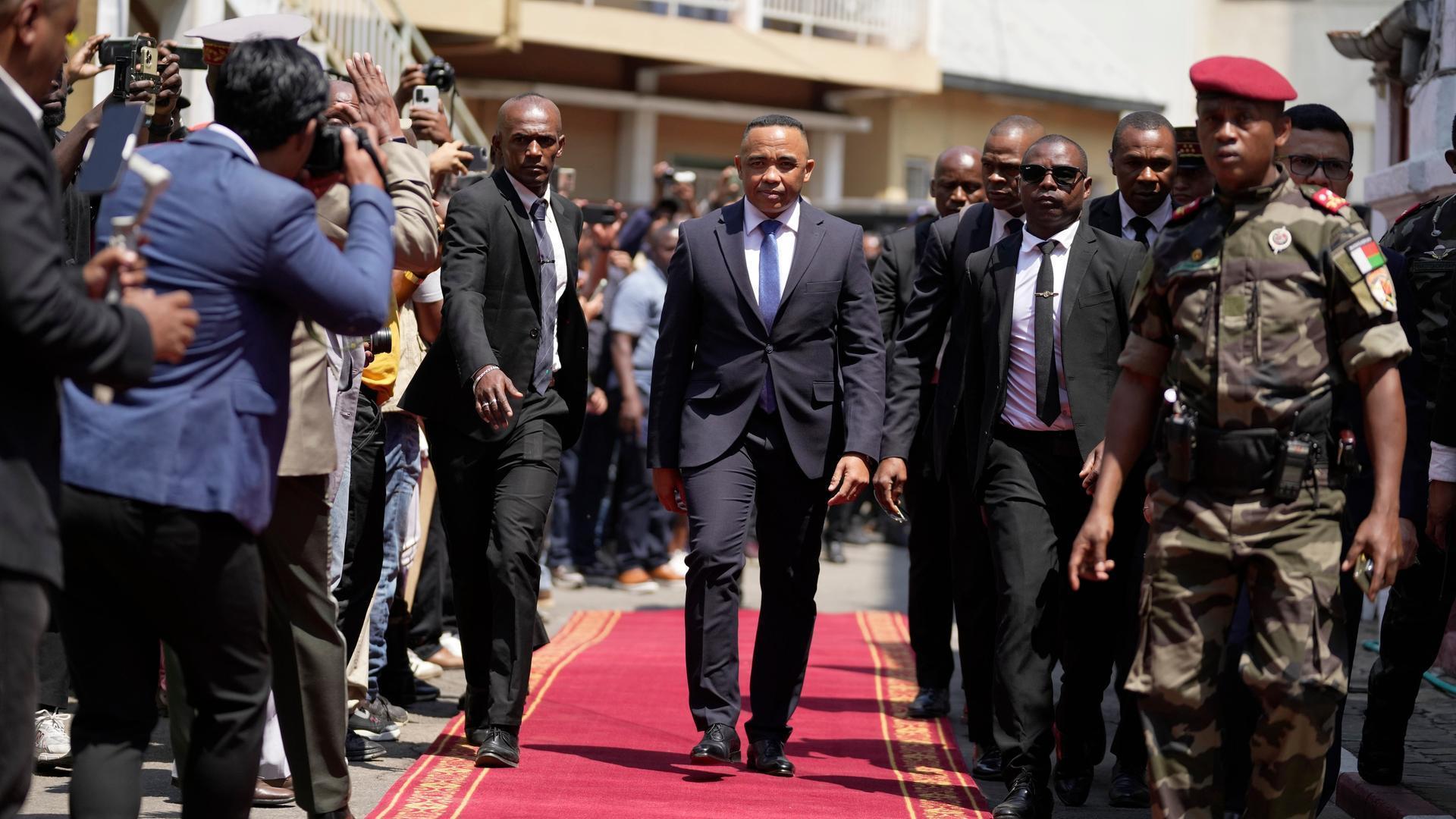
Africa-Press. The Constitutional Court of Madagascar has rejected a request from the opposition to dismiss military ruler Colonel Michael Randrianirina, amid escalating political crisis on the African island, which has been in a turbulent transitional phase since the ousting of former President Andry Rajoelina last year.
The court stated that the petition submitted by prominent opposition deputy Antoine Razafindrakoto was “unacceptable,” arguing that it did not meet the constitutional requirements necessary for the dismissal of the head of state.
Razafindrakoto had accused Randrianirina of committing “serious and repeated violations of the constitution,” reaching the level of “treason,” pointing to the management of power and government appointments made by the military ruler since he came to power in Madagascar.
Colonel Michael Randrianirina came to power last October following widespread protests known as “Generation Z” against former President Andry Rajoelina, triggered by a sharp decline in water and electricity services and worsening living conditions.
The protests, which witnessed violence and casualties, led to Rajoelina fleeing the country before the military took over the management of the transitional phase with the support of the Constitutional Court, according to current authorities.
Randrianirina has consistently rejected the characterization of the events as a military coup, asserting that the transfer of power occurred in a “legal and constitutional” manner following intervention by the Constitutional Court.
However, the opposition and human rights organizations argue that the military has consolidated its grip on power, accusing the new authorities of undermining public freedoms and cracking down on opponents and demonstrators.
When the military took power, there were hopes among many young people for the possibility of achieving rapid political and economic reforms, especially after the transitional authority’s pledges to combat corruption and improve essential services.
However, those hopes have gradually diminished in recent months, with ongoing economic and service crises and slow implementation of the promised reforms by the transitional leadership.
In recent weeks, Madagascar has witnessed sporadic protests organized by young people frustrated with the slow pace of change, demanding improvements in living conditions and acceleration of political and economic reforms.
Human rights organizations state that the authorities have responded to some of these movements with strict security measures, including the arrest of demonstrators and the use of force to disperse gatherings.
In March, Randrianirina took a controversial step by announcing the dissolution of the government and the dismissal of the Prime Minister and all cabinet members, as part of what the presidency described as a reorganization of state institutions in preparation for the next phase.
The opposition viewed the decision as a sign of increasing military dominance over the executive branch, while supporters of the transitional president considered it an attempt to recalibrate government performance and expedite the implementation of reforms.
Observers say that the current political crisis reflects deep divisions within the political landscape of Madagascar, amid a lack of clear consensus regarding the shape of the transitional phase and mechanisms for returning to full civilian rule.
In an attempt to reassure both domestic and international audiences, the transitional authorities announced a two-year political roadmap in February, which includes drafting a new constitution, organizing a public referendum, and presidential elections.
The independent electoral commission later announced that the constitutional referendum would be held in June 2027, with presidential elections scheduled for October of the same year.
A comprehensive process to update the voter registry across the country is set to begin next month, amid extensive scrutiny of the electoral commission’s work following months of controversy and accusations regarding its performance and independence.
Despite the recent replacement of several commission members, some opposition forces remain skeptical about the integrity of the transitional process, demanding additional guarantees to ensure transparency and full independence of the institutions overseeing the elections.
Opposition figures have warned that the country “stands on the brink of collapse,” accusing the current authorities of failing to achieve national reconciliation and restore trust among various political and social forces.
Human rights organizations have also expressed concern over the rise in arrests and intensified security measures against protesters, arguing that continued repression could lead to further political and social unrest.
This comes at a time when Madagascar faces severe economic and living challenges, despite possessing significant natural wealth and one of the richest environmental diversities in the world.
The country is known as the largest producer of vanilla globally and hosts rare ecosystems that make it one of the most prominent biodiversity hotspots on the planet, yet these resources have not translated into improved social conditions for the population.
Madagascar is classified among the poorest countries in the world, with millions of residents suffering from poverty, inadequate basic services, and high unemployment rates, factors that have fueled public anger in recent years.
Madagascar has a long history of political crises and coups since its independence from France, experiencing repeated phases of instability and power struggles.
With the military now in power, Madagascar has become the latest African country to experience military rule in recent years, joining Mali, Burkina Faso, and Niger, which have witnessed coups that ousted civilian governments since 2020.
Analysts believe that the success of the transitional phase in Madagascar will largely depend on the current authorities’ ability to regain public trust and achieve a balance between security demands and political reform, alongside organizing elections that enjoy broad domestic and international acceptance.