
By Hanan Zbeis, Tunisian Journalist
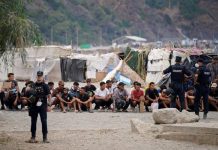
Africa-Press. Why don’t Tunisians revolt? This is a question we ask ourselves daily, as everything urges us to do so: the frequent power and water outages amid record temperatures nearing fifty degrees, the severe shortage of bottled water to the extent that it has become permissible for each citizen to buy only one bottle a day, the fuel shortage following last week’s sudden strike in the oil sector, which resulted in long lines at gas stations, and the recurring fires that have destroyed over 12,000 hectares of forests, affecting many impoverished families living on their outskirts. Adding to this tragedy, a recent disaster struck the border area of Ben Guerdane with Libya after a boat carrying 15 irregular migrants sank, most of whom were from the same family and neighborhood. The incident resulted in the deaths of 14 individuals, while social media circulated painful videos of grieving families, including one of a brother who found his sibling’s body in the sea while searching for him among the other missing persons. When the residents of Ben Guerdane, a marginalized border town for decades, protested against the suffocating economic crisis and the ongoing poverty and unemployment, they were met with police pursuits, tear gas, and arrests.
All these successive events occurred during two months of scorching summer, a summer that will remain in the minds of all Tunisians, not only because of the unusual heat but also due to the frequency of problems and tragedies without any solutions to alleviate their impact on the people.
Meanwhile, the authorities’ positions range from occasional neglect to pretending to find makeshift solutions at other times, through sudden visits by the head of state to some affected areas and making hollow promises to provide solutions without any actual change on the ground. What exacerbates the situation is that the failing authorities continue to justify their shortcomings and inability to resolve the accumulated crises with the usual populist rhetoric about conspiracy theories, “traitors,” “corrupt individuals,” and “supporters of the previous regime” from the Islamists who “want to stir up the situation” to overthrow the current system.
However, even this discourse, which previously resonated strongly with wide segments of the Tunisian population, is no longer convincing, as they have understood that after most opposition figures and leaders of the Ennahda Movement were imprisoned, the problem lies not in the previous administration’s mismanagement of the country but in the current administration’s failure to outline a clear vision to overcome the ongoing economic, social, and political crises.
Despite the political opposition’s attempts to capitalize on the system’s failures and reunite after being weakened to the utmost through arrests, unfair trials, police harassment, and ongoing smear campaigns on social media and in the official media, it has not been able to shake the authority’s throne or ensure popular engagement in demanding its change.
In vain, it tried to rally popular support for its demands for respect for freedoms, achieving social justice, and fulfilling promises of economic prosperity by organizing periodic marches to denounce the authorities’ ineptitude and demand their departure through powerful slogans like “Leave” and “Your turn, Kais, dictator,” but it has not managed to expand its reach beyond its traditional members and followers.
Its ongoing divisions and lack of a clear vision to present alternatives to the current authority, in addition to the presence of its key figures in prisons or in exile, have all prevented it from improving its image among the Tunisian public, who consider it the “root of the disease” and the reason for the corruption of the previous system that led the country to its current state. Additionally, the counter-propaganda fueled by the regime and its supporters against all intermediary bodies, including parties, unions, and civil society organizations, does not help in overcoming this situation.
Nevertheless, we cannot deny the existence of some attempts today to bridge viewpoints and unify the political arenas, such as what the “Nafas” movement is doing, which consists of a group of parties and associations, by organizing marches that simultaneously gather “Islamists” and “Destourians” (supporters of the Free Destour Party led by Abir Moussi, who has been imprisoned for three years) and leftist parties and “nationalists.” However, these marches do not enjoy popular support, as there is a deep-rooted fear among a wide segment of the public that these attempts may serve as a pretext to whitewash the old system composed of both Islamists and supporters of Ben Ali.
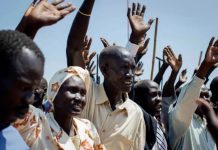
On the other hand, popular protests continue and intensify, demanding the basic rights of the Tunisian people, such as the right to water, electricity, a clean environment, health, and employment. They reached a record number in July, with an average of 1,101 protest movements according to the Tunisian Forum for Economic and Social Rights, the highest rate in 10 years. Most of these movements are spontaneous, expressing public anger and restlessness due to the absence of solutions and the deadlock in prospects. Although the organizers are keen not to carry any political slogans to avoid being associated with any party, which could undermine the credibility of their social demands, the authorities often respond with force and violence.
A notable example of this occurred recently in the “Bordj Ras” area of Mahdia, where dozens of young minors were arrested for protesting due to a month-long water outage in their area amid temperatures exceeding 45 degrees.
With all these complexities, and in light of the availability of all the elements for igniting the crisis and the compelling reasons to instigate a change in the authority, the question remains: why doesn’t this change happen? Why don’t Tunisians revolt? Why don’t the repeated popular protests take on a national political character that establishes Tunisia after the current regime?
This can be explained by several reasons:
First: The current rift between political elites and the people, which the regime has fueled, remains strong, as the latter’s failure to manage the democratic transition phase and its involvement in exacerbating corruption through power-sharing and its spoils at the expense of responding to the demands of Tunisians for work, freedom, and dignity is still present in people’s minds.
Second: The weakness and deterioration of intermediary bodies such as parties, unions, and civil society, which have proven their fragility and inability to build a new societal project that unites all segments of the Tunisian people and paves the way for the new Tunisia we dreamed of after the revolution: a free, democratic Tunisia that accommodates everyone and achieves development and prosperity for all its citizens through a developmental model that creates wealth and distributes it fairly across all regions.
Third: The continued existence of a “deep state” that controls most state mechanisms and prevents it from taking a new direction that could lead it out of the accumulated crises, preferring to address escalating problems with outdated tools and solutions that have proven ineffective in tackling current challenges, whether economic, environmental, or social. As the famous French saying goes, “Nothing new can come from the old.”
The rigidity of the administration and its refusal to keep pace with global developments and to use new methods to address crises, along with its insistence on relying on approaches that were effective in the 1980s and 1990s, prevents any new breath or different vision from entering. Consequently, to cover up its failures and shortcomings, it suppresses any dissenting voice and prefers security solutions and violence over openness and dialogue with other components of society to find new approaches.
Fourth: The fear of democracy as an experience, after the repercussions of the failure of all successive governments post-revolution to meet the demands of the Tunisian people for freedom and dignity, have led many segments to prefer a return to a single rule and dictatorship rather than endure the burden of building and failing and rebuilding anew, allowing populist rhetoric to dominate minds and demonize the “democratic transition” experience without proposing convincing alternatives.
Fifth: In the absence of a strong and united opposition and the presence of effective intermediary bodies capable of mobilizing popular support, similar to the role that the Tunisian General Labour Union used to play, it is difficult to unify the demands raised by popular protests across the country to transform them into political pressure forces that compel the state to find real solutions to the crises or to initiate a change at the head of the authority.
The fear of those leading the popular protests in the regions of politicizing their demands, along with the inability of the political opposition, with what remains of its figures, to absorb the popular demands for basic rights, makes it challenging for these two bodies to converge to form a nucleus for a popular momentum that can extend from the interior regions to the major cities and impose a radical political change.
The current regime benefits from all these factors to remain in power without feeling compelled to provide radical solutions to the crises or to revise its policies. However, the worsening conditions on all fronts and the intensification of protests cannot allow the situation to continue as it is, and may herald a popular explosion that could have dire consequences.