Africa-Press. Egypt condemned, “in the strongest terms,” the step it described as “illegal and unacceptable”; represented by what it termed the “Somaliland region” opening a “so-called embassy” in the occupied city of Jerusalem.
The Egyptian foreign ministry stated in a statement that this step constitutes “a blatant violation of international law and relevant international legitimacy resolutions, representing a direct assault on the legal and historical status of the occupied city of Jerusalem.”
It also affirmed its complete rejection of any unilateral actions aimed at entrenching an illegal reality in occupied Jerusalem or granting legitimacy to any entities or arrangements that violate the rules of international law and relevant United Nations resolutions.
The Egyptian foreign ministry’s statement reiterated that East Jerusalem is Palestinian land occupied since 1967, and that any steps aimed at changing its legal and historical status are considered null and void and have no legal effect.
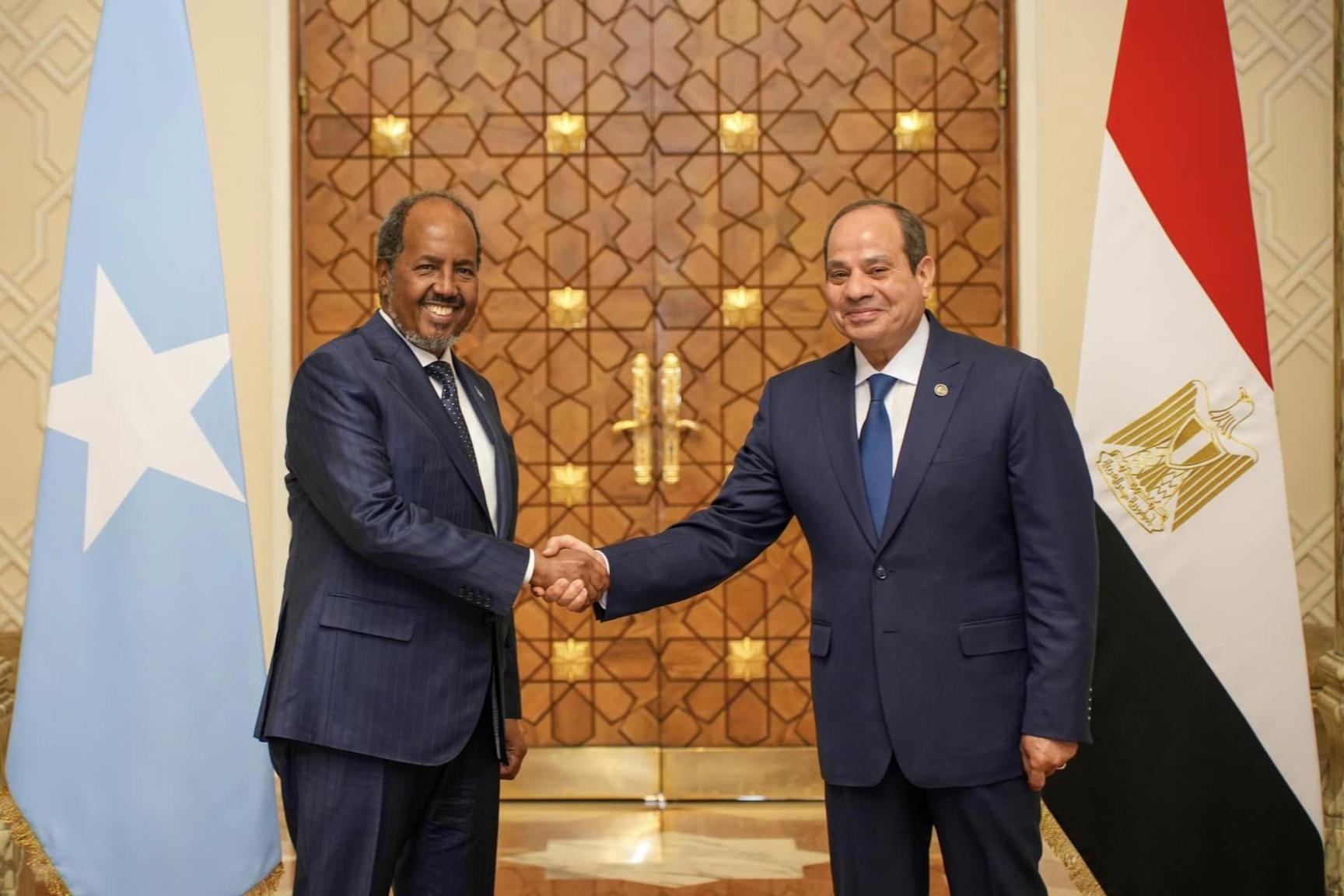
Egypt emphasized its full support for the unity and sovereignty of the Federal Republic of Somalia and the integrity of its territory, and its complete rejection of any unilateral actions that affect the unity of Somali territory or undermine its sovereignty.
The Arab League warned against Israeli infiltration in the Horn of Africa and its serious implications for the region, as well as the repercussions of Israeli recognition of the separatist Somaliland region.
In a statement by the Secretary-General of the Arab League, Ahmed Aboul Gheit, he condemned in the strongest terms the Somaliland region’s opening of an embassy in occupied Jerusalem with the occupying Israeli state.
He considered this step unacceptable and legally void from all aspects, and it represents an unacceptable provocation to both the Arab and Islamic worlds.
Jamal Rushdi, the official spokesperson for the Secretary-General of the Arab League, stated that this rapprochement reflects the extent of isolation suffered by the Israeli occupying authority and its desperate attempts to elicit invalid recognitions from entities or regions that have no legal existence.
Rushdi attributed the Israeli stance to efforts aimed at entrenching an illegal occupation of East Jerusalem, the West Bank, and Gaza Strip, and covering up the crimes committed daily against the Palestinian people.
The Somaliland ambassador announced that it will soon open an embassy in Jerusalem, following Israel becoming the first entity to officially recognize the unilaterally declared republic.
In return, Israel is expected to open an embassy in Hargeisa, the capital of Somaliland, as mentioned by Ambassador Mohamed Haji in a post on X.
Israel recognized the region as an independent sovereign state in December 2025, a step rejected by Somalia, which described it as a “deliberate attack” on its sovereignty.
Somaliland has enjoyed effective self-governance and relative peace and stability since 1991, when Somalia plunged into civil war, but the separatist region has not received recognition from any other country until December.
Over the years, Mogadishu has mobilized international efforts against any country that recognizes Somaliland. The former British protectorate hopes that Israel’s recognition will encourage other countries to follow suit, enhancing its diplomatic influence and expanding its access to international markets.
Israeli Foreign Minister Gideon Sa’ar stated that the opening of the embassy in Jerusalem will be another important step towards strengthening relations with Somaliland. He added that the Somaliland embassy, once opened, will be the eighth embassy in Jerusalem.
Most countries maintain their embassies in Israel, specifically in Tel Aviv, although the United States moved its embassy to Jerusalem during President Donald Trump’s first term. Fiji, Papua New Guinea, and a few other countries have also established embassies there.
The roots of the “Somaliland” issue date back to 1960 when the region, which was under British colonial rule, gained independence for a few days before the independence of Somalia, which was under Italian administration, leading both parties to later enter into a political union.
However, tensions escalated between the north and south of the country, with accusations from northern politicians of political and economic marginalization, leading to armed conflict in the late 1980s. This was when the army, led by former President Mohamed Siad Barre, launched a large-scale military campaign against northern cities, most notably Hargeisa.
Following the collapse of the central government in Mogadishu in 1991, the Somali National Movement unilaterally declared the region’s independence under the name “Republic of Somaliland.” Since then, the region’s authorities have managed their affairs separately from the federal government.
Despite lacking international recognition, the region has managed to build its own political and administrative institutions, including a presidency, an elected parliament, security forces, a local currency, and an independent constitution.
The significant rapprochement between Israel and Somaliland is seen as a diplomatic development that may encourage other parties to engage with “Somaliland,” potentially bolstered by developments in the Iranian war, especially from Washington’s side.
Meanwhile, Mogadishu views Israeli recognition of Somaliland as a direct challenge to the unity of the country, making the issue likely to lead to further tensions in the upcoming phase.