Africa-Press – Liberia. A wave of dissatisfaction and quiet outrage swept through the Liberian Senate on Tuesday as lawmakers reacted to a briefing by the Chairman of the Senate Committee on Ways, Means, Finance and Budget, Senator Prince Moye, on a long-pending bill seeking to reduce lawmakers’ salaries to US$5,000.
The bill, titled “An Act Fixing the Monthly Remuneration of the Legislature,” was first introduced by Senator Abraham Darius Dillon during the 54th Legislature in August 2020. It resurfaced in the 55th Legislature, proposing a 37.5% cut from the current US$8,000 monthly salary of each senator.
For years, the bill has stalled due to the Legislature’s reluctance to deliberate on measures that would slash members’ take-home pay.
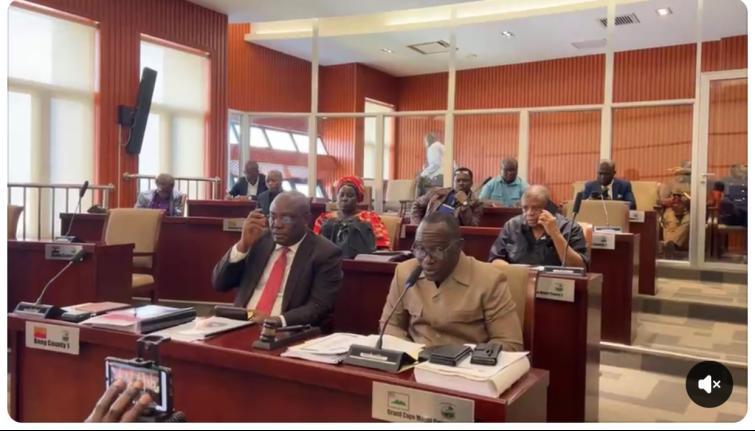
On Tuesday, December 2, the Senate Chambers were filled with murmurs and side discussions as Senator Moye delivered his briefing—an atmosphere observers described as the lawmakers’ familiar political maneuvering to dodge an unpopular decision.
Draft Budget to Capture Deduction
In his presentation, Senator Moye revealed that the draft national budget for Fiscal Year 2026 currently projects senators’ salaries at US$8,000. However, he noted that the US$5,000 figure would be integrated into the draft budget.
“The report on this bill will come along with the current draft budget proposing the US$5,000 benchmark,” he said. “We will be ready to make this report either before the passage of the budget so that the necessary adjustments can be made in the projections.”
Moye promised to submit his committee’s report to the Plenary next week and emphasized the need for committee members to affix their signatures before submission.
But several senators—including Joseph Jallah, Simeon Taylor, and Crayton Duncan—raised concerns and murmured throughout the briefing, signaling strong opposition.
The mood in the chamber made it clear that many lawmakers did not support the bill.
“Who will sign it? You and who will sign? Your one will sign it. Where is the bill?” Senator Joseph Jallah of Lofa County quipped, even questioning whether the bill existed.
Senator Emmanuel Nuquay of Margibi County urged Moye to upload the bill to the Senate chatroom so that every senator could access a copy.
Senator Dillon later called on Presiding Officer, Senator James Biney, to mandate the submission of the bill to the committee and ensure all 30 senators receive copies—warning against political tactics that could delay its passage.
Senator Biney instructed the Secretary of the Senate to distribute both hard and soft copies of the bill to all senators to eliminate excuses ahead of debate.
Dillon Makes the Case for Reduction
Speaking to journalists afterward, Senator Dillon argued that a legal framework is necessary to standardize lawmakers’ salaries, curb exaggerations, and generate much-needed revenue for government.
He estimated that reducing the salaries of lawmakers in both houses could save the government at least US$4 million annually.
He added that if lawmakers take the lead in cutting their own salaries, they would be better positioned to reduce those of the President, Vice President, and other high-ranking officials.
Public pressure for lawmakers to slash their compensation has intensified as the government struggles with budgetary constraints and citizens demand improved services. Critics insist the Legislature should lead by example, given that lawmakers’ earnings remain among the highest in the region relative to national income.
Tuesday’s session, marked by murmurs and resistance, again highlighted Senate reluctance to embrace fiscal reforms that affect members’ personal benefits.
Dillon acknowledged the emotional and political sensitivity surrounding pay cuts but urged his colleagues to muster the courage to act in the national interest.
“We understand the emotions and sentiments, but a referee can’t give himself a red card,” he said. “It takes courage to say, ‘In the interest of the country, I will reduce my salary.’ Any of my colleagues who say we should make less than US$5,000—I’m ready. But let’s make the law.”
He stressed that although some public officials earn more than lawmakers, his push for the bill is not an attempt to target anyone.
He cautioned senators not to use constituents’ pleas for financial assistance as justification for retaining their high salaries.
Dillon further called on Liberians to put sustained pressure on their lawmakers to support the proposed salary cut.
Senators are expected to commence full debate on the bill next week.
For More News And Analysis About Liberia Follow Africa-Press