
Africa-Press – Tanzania. THE government has unveiled a Five-Year Strategic Plan for Space Programmes (2025–2030), marking a major step in strengthening Tanzania’s role in advanced satellite technology and global space initiatives.
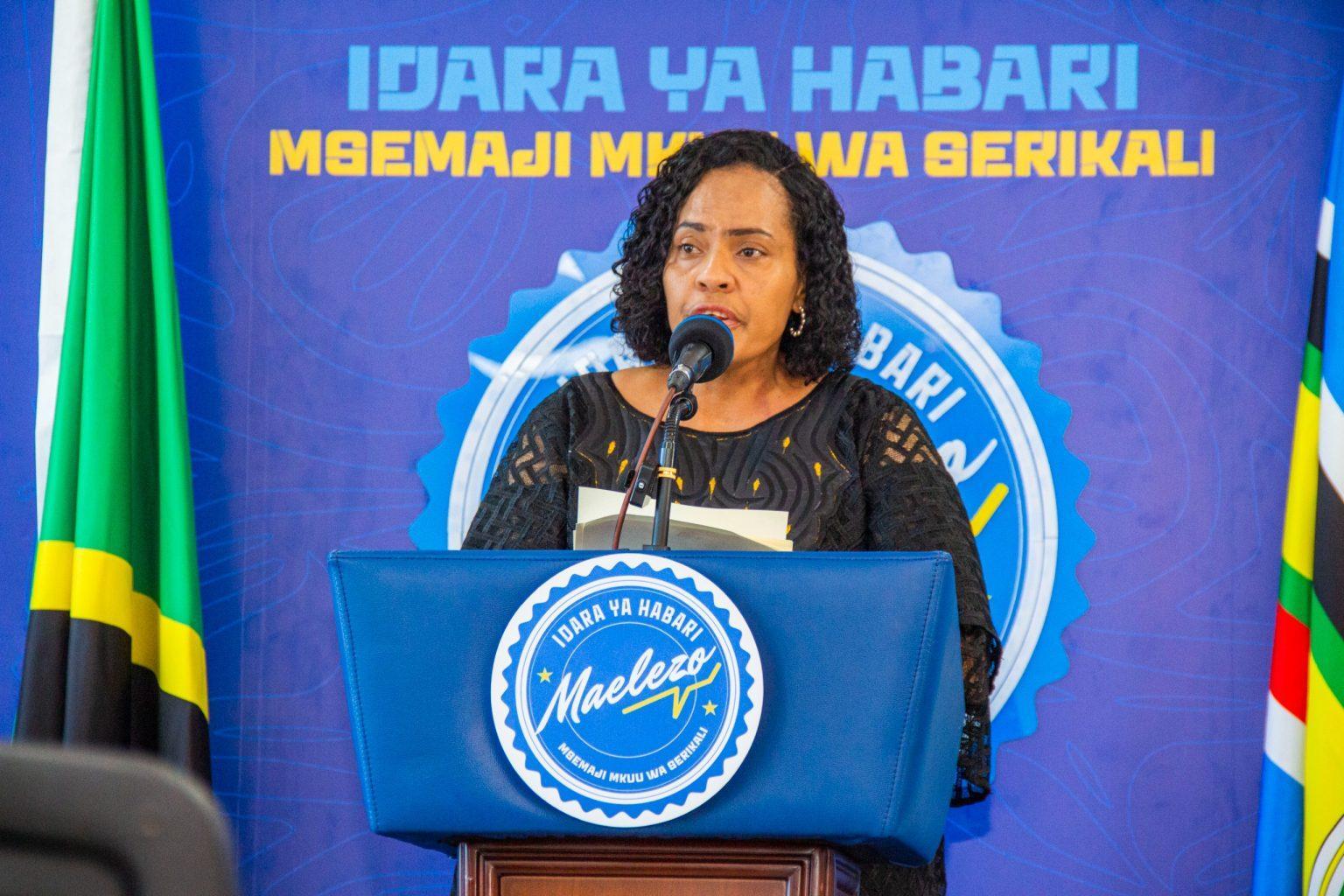
Presenting the ministry’s 100-day performance report in Dodoma, Minister for Communication and Information Technology, Angellah Kairuki, said the strategy, titled “From Mount Kilimanjaro, the Peak of Africa, to Space”, outlines five strategic pillars to guide governance, coordination and implementation of space programmes.
The pillars focus on: Establishing governance frameworks, policies, laws and institutional arrangements; enhancing Tanzania’s presence in international space efforts, developing human capital, research and innovation, building public awareness, strengthening space infrastructure and promoting the use of space technologies across all economic and social sectors.
Ms Kairuki revealed that the ministry has already begun formulating the 2026 National Space Policy and the 2026 Space Act, aimed at creating an enabling environment for space exploration, satellite development and the application of space technologies.
“These initiatives will ensure coordinated research and practical use of satellite solutions in key sectors such as agriculture, environment, mining, maritime operations and other socio-economic activities,” the minister said.
She further disclosed that St Joseph University in Tanzania (SJUIT) and Tumaini University (TURDACO) in Dar es Salaam are collaborating with the ministry in developing training and research satellites.
On infrastructure development, Ms Kairuki noted that the government has completed the design, procurement and contractual process with a satellite equipment manufacturer, paving the way for the commencement of satellite production.
In efforts to accelerate the delivery of President Samia Suluhu Hassan’s commitments, the ministry has also forged partnerships with several higher learning institutions, including the University of Dar es Salaam (UDSM), the University of Dodoma (UDOM), the State University of Zanzibar (SUZA) and Mbeya University of Science and Technology (MUST).
The collaboration, valued at 2.94bn/- , will support preliminary programmes under the National Digital Technology Institute (NDTI), as the ministry moves forward with construction plans.
“The ministry is continuing with procurement of ICT equipment to upgrade laboratories in these institutions in preparation for the rollout of specialised digital technology training,” she said.
The minister further noted that within the 100-day period, the ministry launched cooperation with Hanyang University of South Korea to offer training for NDTI instructors and exchange expertise in institutional management.
The government has also launched a joint programme involving employers, Technical and Vocational Education Training (TVET) colleges and universities to align training with the needs of priority sectors including energy, ICT and value-addition industries enabling VETA students to secure industrial attachments for hands-on experience.
As part of the same pledge, Ms Kairuki said the ministry has commenced preparations for the construction of the National Digital Technology Institute (NDTI) at Nala in Dodoma at a cost of 167.37 million US dollars.
The institute will produce highly skilled professionals in emerging technologies, including Artificial Intelligence (AI), the Internet of Things (IoT), Robotics, Data Analytics and Cybersecurity, supported by robust practical training infrastructure.