What You Need to Know
The United States has accused Rwanda of exacerbating instability in the region due to its involvement in the conflict in Eastern Democratic Republic of Congo. This statement follows a recent agreement between the two nations and highlights concerns over Rwanda’s military support for the M23 rebel group, which has taken control of key areas in Congo, raising fears of a broader regional conflict.
Africa. The United States has criticized Rwanda, accusing it of dragging the region into further instability due to its involvement in the conflict in Eastern Democratic Republic of Congo, just days after an agreement was signed in Washington between the two countries.
U.S. Ambassador to the United Nations Mike Walters stated during a Security Council meeting that “instead of making progress toward peace—as we saw under President Donald Trump’s sponsorship in recent weeks—Rwanda is dragging the region into further instability and war.”
Walters explained that “in recent months, Rwanda has deployed a significant number of surface-to-air missiles and other advanced heavy weapons in North and South Kivu to assist the M23 movement.”
He noted, “We have credible information about an increase in the use of suicide drones and artillery by M23 and Rwanda, including strikes in Burundi.”
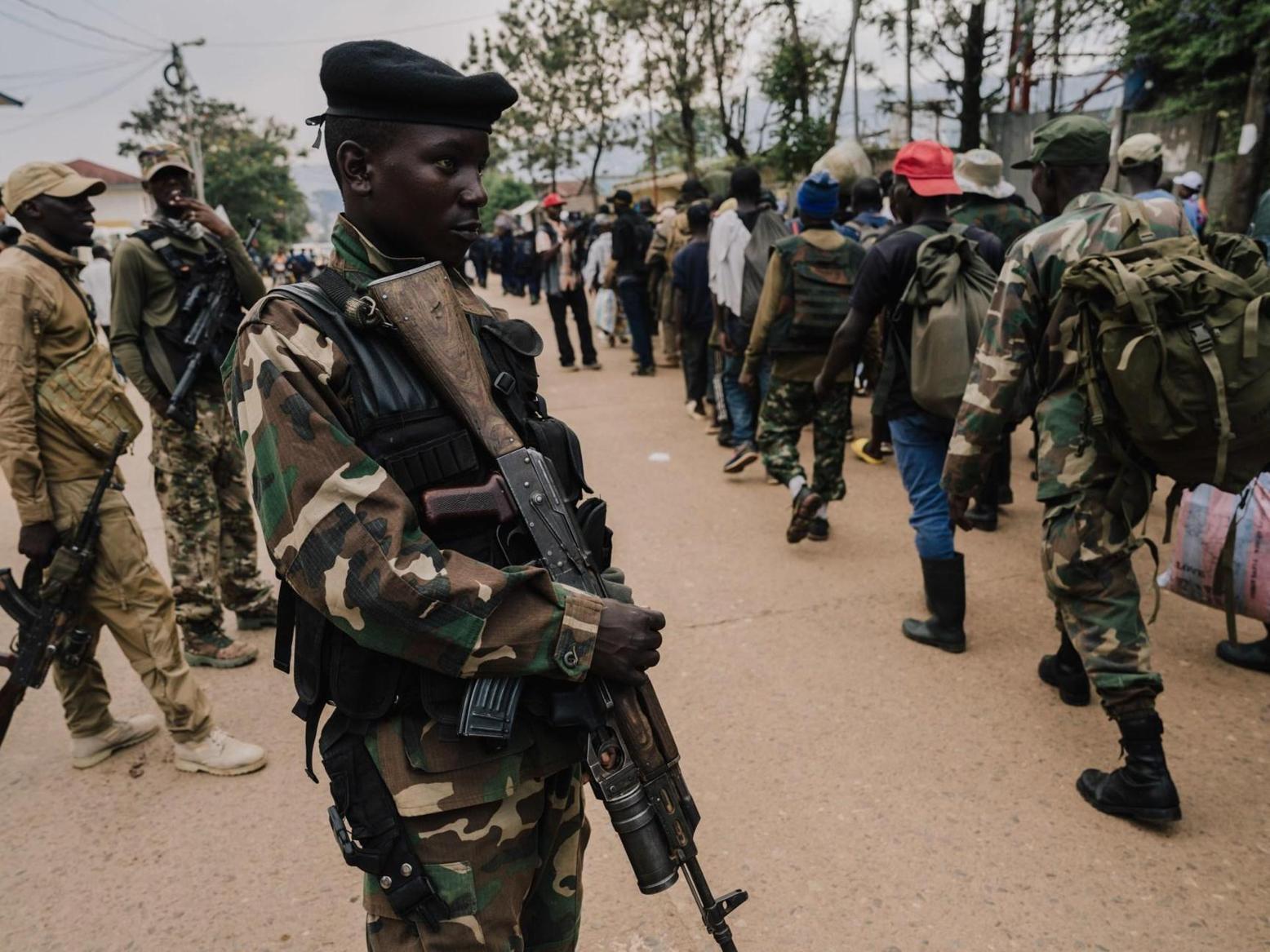
This U.S. accusation against Rwanda follows the takeover of the city of Uvira in South Kivu province by M23 militants, who are loyal to Rwanda and have spread throughout the city, which has a population of approximately 700,000.
Uvira holds strategic importance due to its location on the shores of Lake Tanganyika and its position along the border with Burundi.
Concerns Over Escalating Conflict
UN peacekeeping operations chief Jean-Pierre Lacroix warned that this new attack “has awakened the specter of a regional explosion whose consequences cannot be estimated,” expressing concern over a broader expansion of the conflict.
Lacroix stated that “the direct or indirect involvement of armed forces and groups from neighboring countries, along with the movement of displaced persons and fighters across borders, significantly increases the risk of a regional explosion,” voicing fears of a “gradual disintegration” of the Democratic Republic of Congo due to M23’s control over more territory and the establishment of parallel administrations.
French Ambassador to the UN Jérôme Bonaventure, responsible for the conflict between the two countries, explained that he presented a draft resolution to Security Council member states that would allow the UN peacekeeping force in the Democratic Republic of Congo to play a role that aligns with peace efforts, particularly monitoring the ceasefire between the conflicting parties.
Right to Respond
While several Security Council member states expressed concern over regional escalation, Burundi’s Ambassador to the UN, Zéphirin Maniratanga, asserted that his country “reserves the right to resort to legitimate self-defense,” accusing Rwanda of shelling its territory.
The Burundian ambassador stated, “If these irresponsible attacks continue, it will become increasingly difficult to avoid direct escalation between our two countries.”
In contrast, his Rwandan counterpart, Martin Ngoga, denied any intention for his country to engage in war in Burundi, instead accusing both Bujumbura and Kinshasa of violating the ceasefire.
Meanwhile, Congolese Foreign Minister Thérèse Wagner criticized the Security Council for not taking concrete measures against Rwanda. She stated that despite a resolution from the council in February demanding the withdrawal of Rwandan forces and a ceasefire, “a new city has fallen, a parallel administration has been strengthened, thousands of additional families have been displaced, while others have faced killings, rapes, and intimidation.”
The Democratic Republic of Congo has faced ongoing conflict for decades, with various armed groups vying for control over its rich resources. Rwanda’s involvement in Congolese affairs has been a contentious issue, particularly since the 1994 Rwandan genocide, which led to a massive influx of refugees and armed groups into Congo. The M23 rebel group, which has received support from Rwanda, has been a significant player in the ongoing violence, leading to international concerns about regional stability and humanitarian crises.