
What You Need to Know
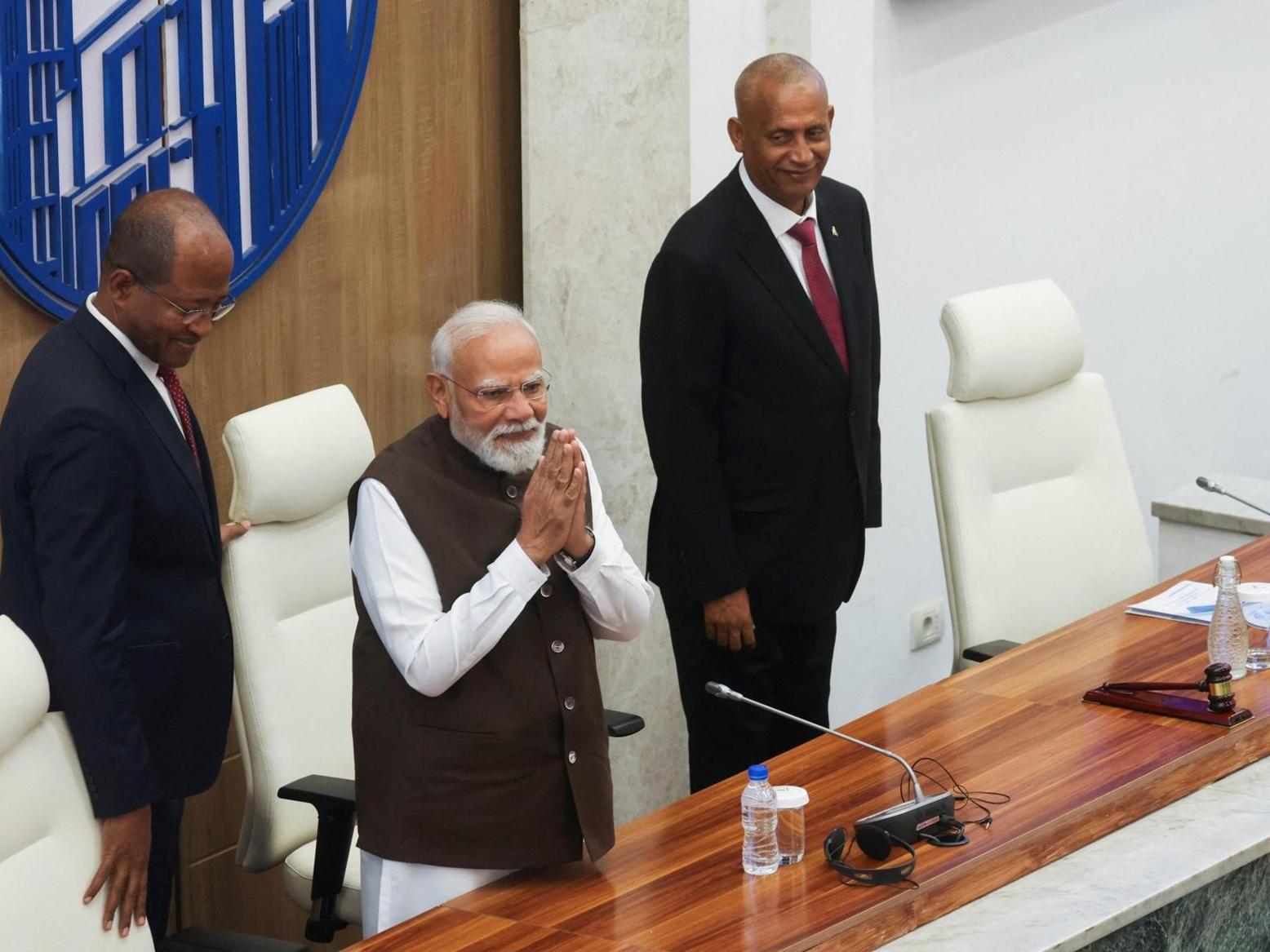
Indian Prime Minister Narendra Modi concluded a two-day visit to Ethiopia, marking the first of its kind. During his visit, he called on Global South nations to unite for mutual defense and cooperation. Modi held talks with Ethiopian Prime Minister Abiy Ahmed and signed several agreements, emphasizing the deepening strategic partnership between the two countries.
Africa. Indian Prime Minister Narendra Modi concluded a two-day visit to Ethiopia, marking the first of its kind for this country. During his visit, he rallied Global South nations, urging them to defend themselves and stand united.
Modi held discussions with Ethiopian Prime Minister Abiy Ahmed and African Union Commission Chairperson Moussa Faki Mahamat, signing several agreements between the two nations.
In a speech before the Ethiopian Parliament, Modi highlighted the depth of relations between the two countries, announcing the start of a new phase in their strategic partnership.
Through the Ethiopian Parliament, Modi conveyed greetings from over a billion Indian citizens to the Ethiopian people, expressing his great honor to be in Ethiopia, the land of the black.
He expressed appreciation for the developments taking place in Ethiopia across various sectors, noting that the legislative authority he addressed embodies democratic values that reflect the citizen’s voice, forming the foundation for advancing national policies and programs.
Modi pointed out that the two countries are natural partners, with Ethiopia located at the crossroads of Africa and India at the heart of the Indian Ocean, making cooperation between them essential for regional development and peace.
The Indian Prime Minister affirmed that India and Ethiopia share a common vision for a world characterized by equitable development, easy access to technology, respect for sovereignty, shared prosperity, and the defense of peace.
He stated, “Solidarity is strength, and cooperation is a source of influence. Today, as countries of the Global South, as ancient civilizations, and as friends, India and Ethiopia stand together.”
Modi noted that Ethiopia’s hosting of the African Union headquarters has enhanced its status as a center for African diplomacy, citing India’s support for the African Union’s inclusion in the G20 in 2023, based on a shared vision for a more inclusive world.
Strategic Partnership
The Indian Prime Minister revealed a clear roadmap for activating the partnership, covering areas such as economy, innovation, technology, defense, capacity building, and multilateral cooperation. In this context, he announced India’s decision to double the number of scholarships offered to Ethiopia in support of human development and to strengthen future cooperation.
He also expressed gratitude for being awarded the highest national honor in Ethiopia, stating that he accepted the award humbly on behalf of the Indian people, who share special ties with Ethiopia. He recalled the role of thousands of Indian teachers in supporting Ethiopia’s development journey, noting that they have entered the hearts of Ethiopians through their educational contributions.
For his part, Ethiopian Prime Minister Abiy Ahmed announced that the talks resulted in a development of relations to a level of strategic partnership across all fields, emphasizing the historical depth of relations between India and Ethiopia.
He explained that the discussions focused on crafting a modern partnership based on respect for state sovereignty and grounded in equality and solidarity. He noted that India is a key partner for foreign investments in Ethiopia, with 650 Indian companies active in the country.
India and Ethiopia maintain strong bilateral relations encompassing trade and defense, and Ethiopia’s growing economic stability and strategic location may provide New Delhi with an important platform to expand its economic presence in Africa.
India and Ethiopia share a long-standing relationship that dates back centuries, characterized by cultural and economic exchanges. In recent years, this partnership has strengthened, particularly in areas such as trade, investment, and technology, reflecting both nations’ commitment to mutual growth and development in the context of a rapidly changing global landscape.
The establishment of a strategic partnership aims to enhance cooperation across various sectors, including defense and innovation, further solidifying their ties in the African region.