Africa-Press. Niger voted alongside Russia and China against a U.S.-backed resolution within the Board of Governors of the International Atomic Energy Agency (IAEA) that calls on Iran to disclose the status of its remaining enriched uranium stockpile and allow international inspectors access to relevant sites to verify the status of these nuclear materials.
The Board of Governors, composed of 35 member states, adopted the resolution by a majority of 21 votes, with three countries—Niger, Russia, and China—opposing it, while 10 countries abstained from voting. This move places Niamey at odds with the United States and several Western nations regarding the Iranian nuclear issue.
The resolution comes amid escalating tensions related to Iran’s nuclear program, as the IAEA seeks accurate information regarding the quantities of enriched uranium believed to still exist following military strikes that targeted several Iranian nuclear facilities over the past year.
The resolution stipulates that Iran must provide complete information regarding its nuclear material stockpiles and grant the IAEA the necessary access to verify this information “without delay,” amid Western assurances that transparency is a fundamental requirement to ensure these materials are not diverted for military purposes.
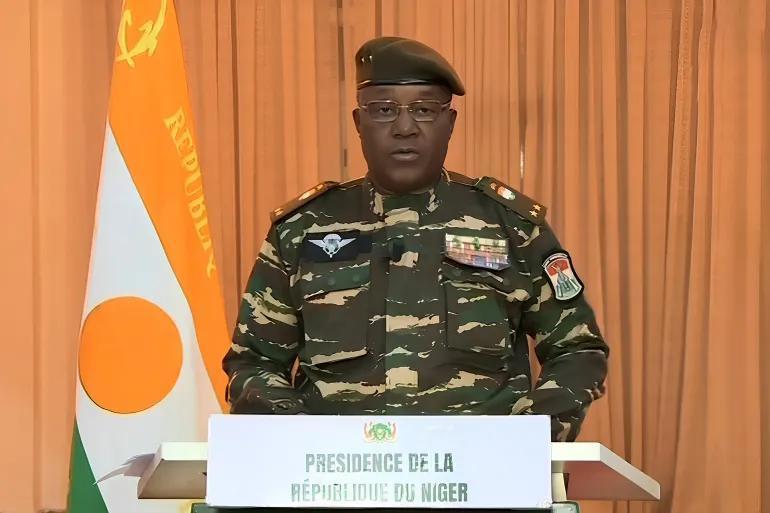
Niger’s stance reflects notable shifts in its foreign policy since the military council came to power in 2023, as the new authorities have sought to reduce ties with traditional Western partners while enhancing cooperation with non-Western powers, primarily Russia.
The vote is also seen as an indicator of broader changes in the African diplomatic landscape, with some African countries adopting more independent positions on major international issues, moving away from the traditional alignment with Western stances.
Iran claims that the IAEA has overstepped its legal and technical role to operate within the political and security agendas of the United States, and to date, the agency or its director has not condemned the American-Israeli attacks on Iran’s peaceful nuclear facilities.
Tehran rejected the agency’s resolution and criticized the U.S. initiative, describing it as an attempt to “whitewash military aggression,” asserting that it had previously granted IAEA inspectors access to its nuclear facilities before they were subjected to attacks.
Iran’s Deputy Foreign Minister, Kazem Gharib Abadi, stated that the attacks targeting Iranian nuclear facilities by the United States and Israel led to the suspension of the agency’s verification activities and forced its inspectors to leave Iran for security reasons.