What You Need to Know
Since April 2023, over eight million children in Sudan have lost nearly 500 days of schooling due to a protracted conflict between the army and the Rapid Support Forces. This crisis has led to extensive school closures, displacement of families, and a significant risk of educational disruption for an entire generation.
Africa-Press. More than eight million children in Sudan have lost nearly 500 days of schooling since a protracted war erupted in April 2023 between the army and the paramilitary Rapid Support Forces (RSF), marking one of the longest school closures in the world and surpassing disruptions seen during the COVID-19 pandemic, according to a local source.
The organization stated that the affected children, nearly half of Sudan’s school-aged population, have spent about 484 days out of the classroom as war has damaged schools, displaced families, and left teachers unpaid for months.
It described the situation as “one of the worst education crises in the world,” warning that millions of children are now “increasingly unlikely to ever complete their studies.”
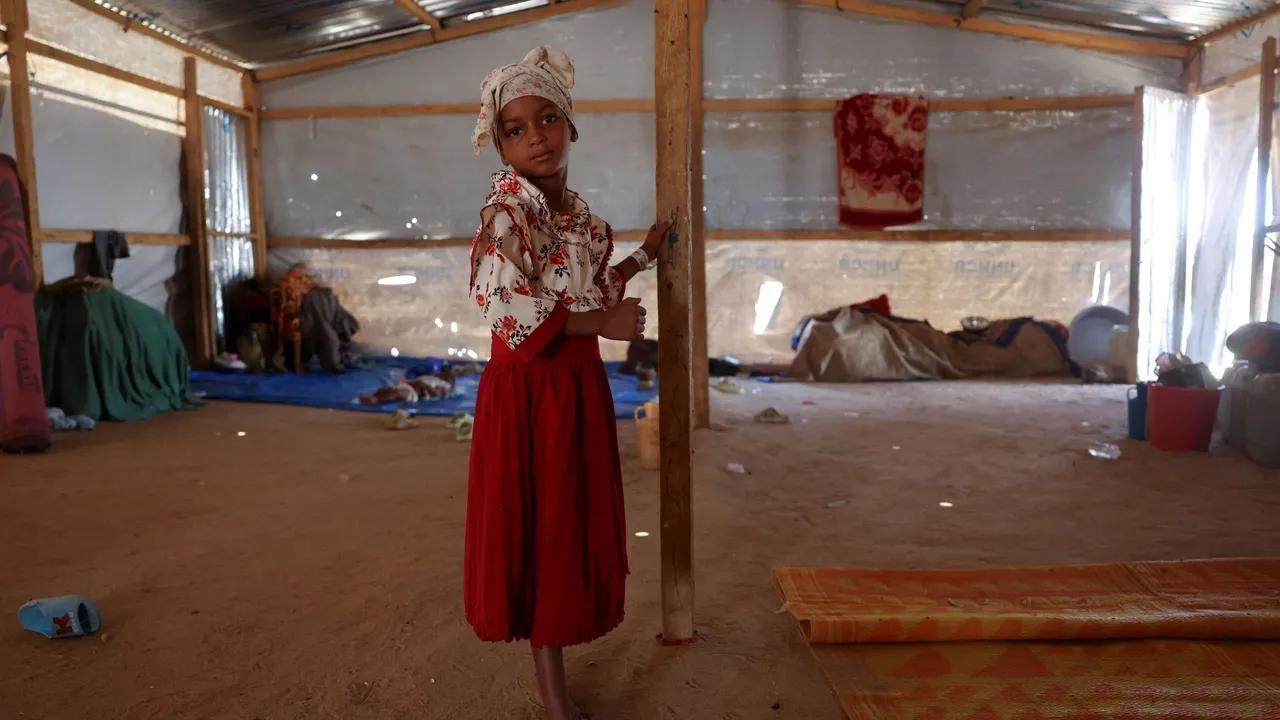
“Unlike during the pandemic, remote learning is not an option for most children in Sudan,” the aid group said, noting that schools have been closed, destroyed, or repurposed as shelters for displaced families.
In North Darfur, where fighting continues, only 3% of more than 1,100 schools are open, according to education cluster data cited by the organization.
“Education is not a luxury for children; it is a lifeline that protects children from exploitation, early marriage, and recruitment into armed groups,” Inger Ashing, the chief executive of the organization, said.
She noted that children repeatedly expressed their desire to return to school during a recent visit.
“Everywhere I went during my visit, I heard the same message from children: they want to be in school safe, supported, and learning,” she added.
Ashing mentioned that she met children who walk long distances alone to attend classes despite fear and insecurity.
“They deserve more than just safety; they deserve the chance to learn, to hope, and to rebuild their lives,” she said.
The aid organization warned that without urgent funding to pay teachers, restore classrooms, and provide basic learning supplies, the education system risks a “total breakdown.”
“If we fail to invest in education today, we risk condemning an entire generation to a future defined by conflict rather than by opportunity,” Ashing said.
Of Sudan’s 18 states, the RSF now holds all five in the Darfur region, except for a few northern areas of North Darfur still under army control. The Sudanese army continues to dominate most of the remaining 13 states across the south, north, east, and central regions, including the capital, Khartoum.
The conflict between the army and the RSF has killed thousands of people and displaced millions of others.
The conflict in Sudan has roots in long-standing political and social tensions, exacerbated by economic instability and power struggles. The recent escalation of violence between the Sudanese army and the Rapid Support Forces has resulted in widespread humanitarian crises, including severe disruptions to education, which is crucial for the country’s future stability and development.