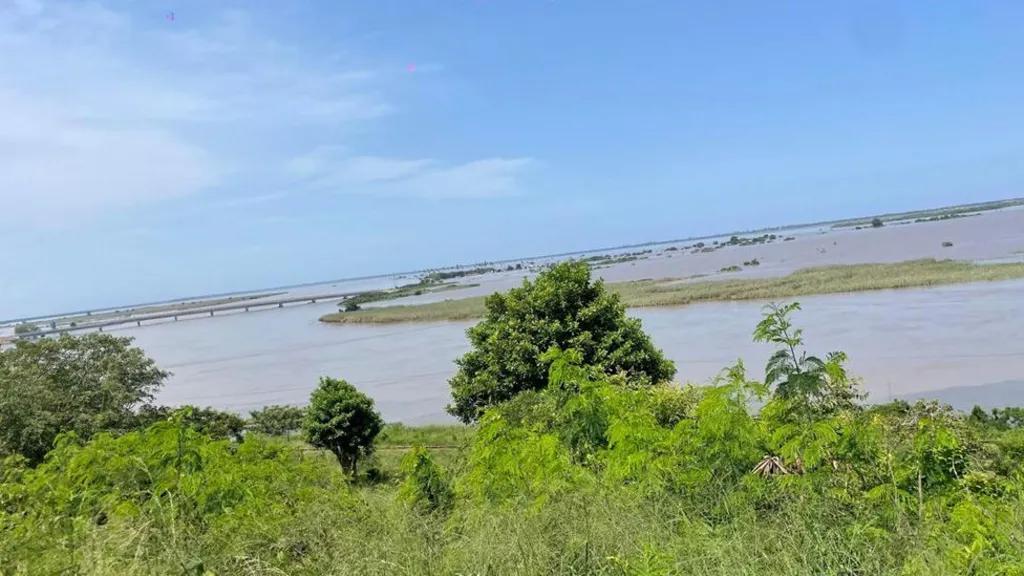
Africa-Press. Mozambique is experiencing one of the deadliest waves of flooding in its recent history, as rising water levels continue to devastate vast areas of the country in what authorities have described as the “worst disaster in a generation.”
Hundreds of thousands of residents have been forced to cling to trees or seek refuge on higher ground to escape the rushing waters, in scenes that reflect the scale of the mounting humanitarian crisis.
Large-scale rescue operations are underway to assist tens of thousands of affected people, with rescue teams from Brazil, South Africa, and the United Kingdom deployed to save lives and deliver urgent aid under extremely harsh field conditions.
Tomas António Malau, a 24-year-old mechanic, says he has never seen a disaster of this magnitude: “This is the first time I have seen anything like this, while the elders say a similar disaster happened in the 1990s.” For nearly two weeks, vast areas of southern and central Mozambique have been flooded following relentless heavy rainfall.
According to preliminary figures from the National Institute for Disaster Risk Management and Reduction, at least 642,122 people have been affected since January 7, mostly in the southern and central provinces, with 12 confirmed deaths so far from the recent floods. This brings the total death toll since the start of the rainy season in October to 125.
In this context, the mayor of Sídad expressed concern that conditions could worsen in the coming days due to continued heavy rainfall in neighboring South Africa, where the Incomati River originates. “We are deeply worried about water being released from a dam in South Africa into the Incomati, as our city is the last one downstream,” he said. “Before the water reaches the Indian Ocean, it floods farmland, homes, and grazing areas in low-lying regions, multiplying the damage.”
Transport Minister João Matlombe explained that the floods have submerged major roadways, particularly the N1 highway, which runs the length of the country and forms the only land link to northern Mozambique. The disruption of this vital route has already led to shortages of goods and noticeable price hikes — affecting basic food items, coconuts, and fuel — even in the northwestern city of Tete, more than 1,500 km from the capital Maputo.
Amid worsening conditions, Education Minister Samaria Tovela announced that the Cabinet is considering rescheduling the start of the 2026 academic year, originally set for next week, noting that the objective is to “allow flood victims to continue using schools as shelters,” particularly in the provinces of Maputo and Gaza, currently among the hardest hit.