Africa-Press. A senior official in the U.S. Africa Command (AFRICOM) has stated that the U.S. military is stepping up equipment deliveries and intelligence sharing with Nigeria as part of a strategy to pursue Islamic State fighters in cooperation with Nigerian forces.
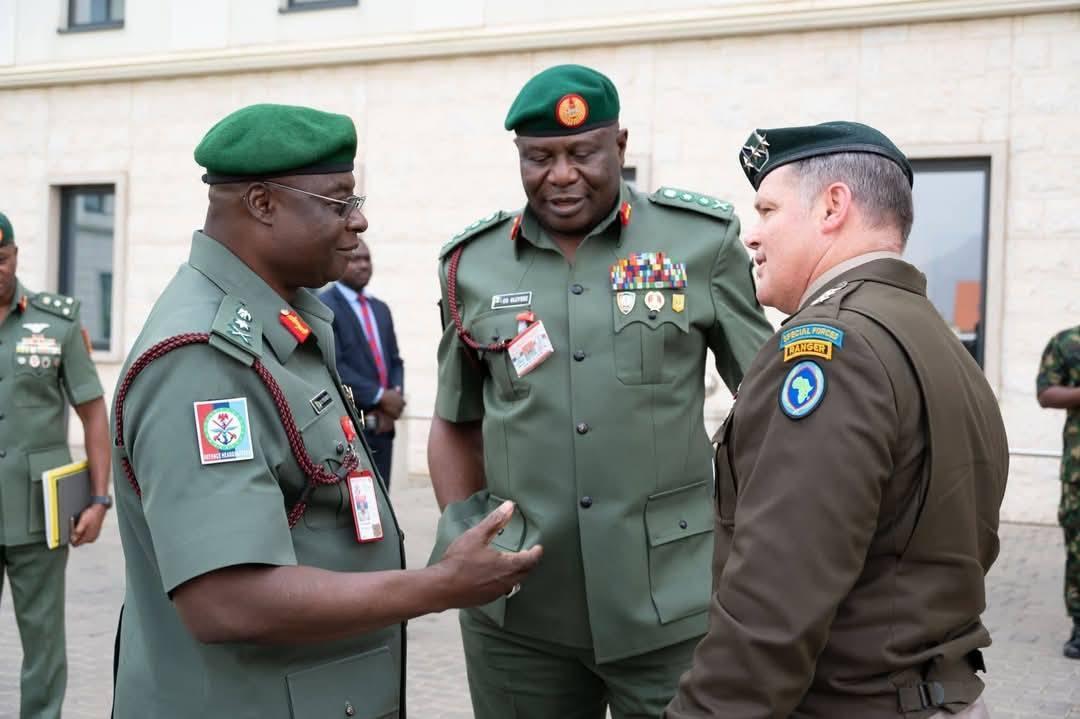
The Pentagon is also maintaining security cooperation with Burkina Faso, Mali and Niger — all governed by military juntas — according to General John Brennan, who spoke in an interview on the sidelines of U.S.–Nigeria security talks in Abuja.
This enhanced cooperation comes after diplomatic pressure from Washington on Abuja over violence carried out by armed groups, and amid a surge in U.S. military operations targeting Islamic State in Africa, Brennan explained.
“Under President Donald Trump’s administration, we became more assertive, working with our partners to target threats operationally — foremost among them ISIS,” he said.
“From Somalia to Nigeria, the issues are interconnected. So we aim to break them apart and provide our partners with the intelligence they need,” he added. “It’s mainly about building partner capacity and then providing equipment and resources while reducing restrictions so they can be more effective.”
The Abuja meeting occurred roughly a month after joint U.S.–Nigerian airstrikes on Islamic State–linked targets in northwestern Nigeria on Christmas Day.
This military cooperation comes amid diplomatic pressure from Washington, with the U.S. president condemning what he called “genocide” and “persecution” of Christians.
The Nigerian government and most experts reject these accusations, arguing that attacks target Muslim and Christian civilians alike without distinction.
During the discussions in Abuja, Alison Hooker, U.S. Deputy Assistant Secretary of State for Political Affairs, urged the Nigerian government to “protect Christians,” in remarks that did not mention Muslim victims of armed groups.
Nigeria, Africa’s most populous country with about 230 million people, is almost evenly split between a Muslim-majority north and a Christian-majority south. Although millions live peacefully side by side, religious and ethnic identity remains highly sensitive in a country plagued by sectarian violence.
General Brennan stressed that U.S. intelligence support will not be limited to protecting Christians. He explained that after U.S. airstrikes in Sokoto State at Christmas, American support will focus on sharing intelligence to assist Nigerian airstrikes in that region, as well as in the northeast, where an insurgency led by Boko Haram and its splinter faction, Islamic State West Africa Province, has raged since 2009.
Brennan described ISWAP as “the group of greatest concern to us.” Analysts have monitored U.S. reconnaissance flights over the country for months, though some question the effectiveness of relying heavily on air power against armed groups based in fragile rural areas.
The general noted that U.S.–Nigeria cooperation will center on “intelligence sharing, exchange of tactics, techniques and procedures, and assistance in acquiring new equipment.”
He added that joint strikes conducted in December targeted militants linked to Islamic State in the Sahel region, though the impact remains hard to verify as journalists have been unable to confirm casualties. Nigerian Information Minister Mohammed Idris said last week that the results were “still being assessed.”
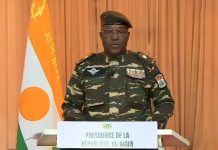
Regarding the Sahel, Brennan said the U.S. “continues cooperation” with governments formed by military juntas in Burkina Faso, Mali and Niger, despite partial suspension of security cooperation following coups between 2020 and 2023.
“We have shared intelligence with some of them to strike high-value terrorist targets. And we remain in contact with our military partners in the Sahel, even if not formally,” he said.
An AFRICOM official further stated that the United States is not seeking to replace its bases in Niger after U.S. forces were expelled by the junta. Referring to halted U.S. operations in Agadez, he added: “We are not looking to establish a drone base anywhere.”
General Brennan concluded: “We are not looking to set up long-term bases in West African countries.”