Africa-Press. Rapid intervention police forces in Guinea-Bissau expelled the European Union’s ambassador from the headquarters of the Human Rights League during an official visit to the building.
The incident occurred on February 7, 2026, during the first visit by Ambassador Federico Bianchi to the premises since he assumed his duties in the country in September 2025.
According to the Human Rights League, around ten masked and armed officers stormed the building unexpectedly, ordering about ten people inside to leave immediately, before shutting down the headquarters without providing any explanation. The EU ambassador was accompanying the League’s president, Bubacar Touré, at the time of the raid.
In a statement, the League condemned what it described as “another act of intimidation” targeting the organization, saying it could not understand the motives behind this “arbitrary and unacceptable action.”
It noted that this was not the first time it had faced harassment by the authorities: last December, two of its members were severely beaten and its offices were looted. However, it stressed that Friday’s incident was the first to occur in the presence of a high-level political representative, particularly one representing the European Union.
The EU delegation in Bissau has so far issued no official comment, despite posting several messages on its social media accounts since the incident without mentioning it. A source within the delegation said they were “shocked” by what happened, adding that an internal meeting would be held later to discuss the developments.
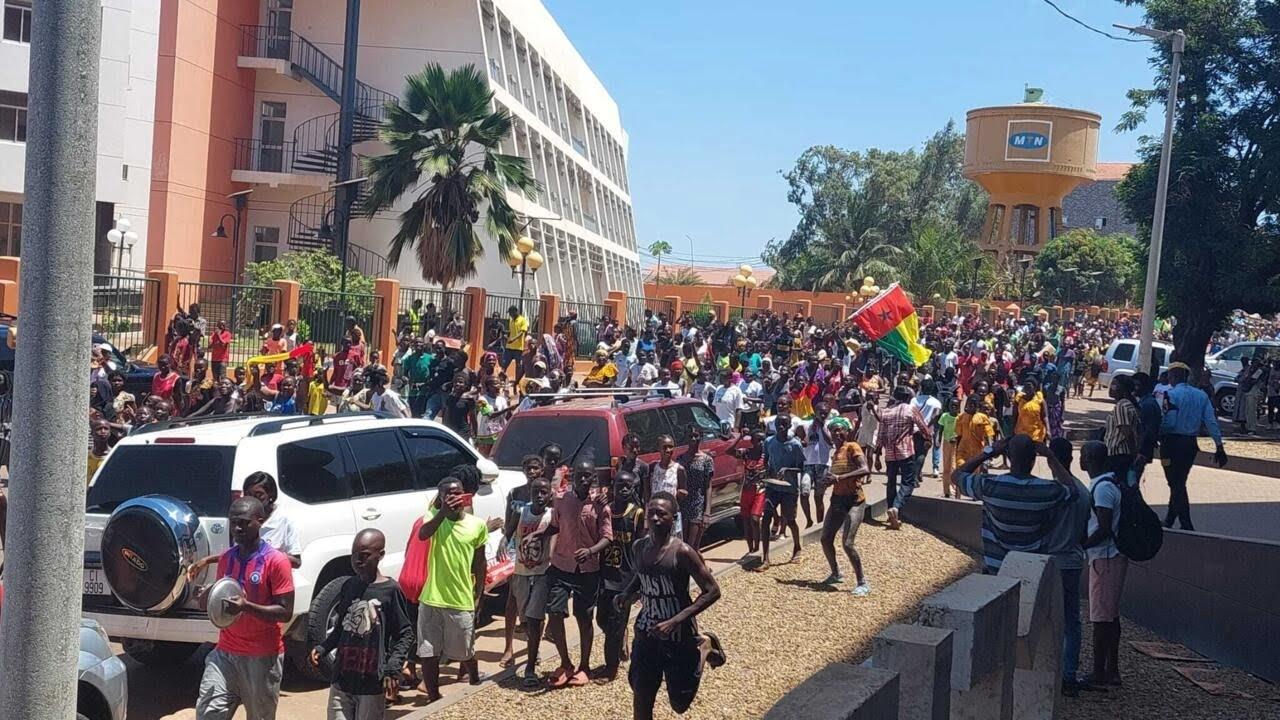
The League says this intrusion is the fourth targeting its headquarters in less than two months, amid a tense political climate in Guinea-Bissau since the army seized power on November 26, one day before the expected announcement of preliminary results of the presidential and legislative elections. The army overthrew outgoing president Umaro Sissoco Embaló and suspended the entire electoral process.
Since the coup, the military council has appointed General Horta N’Tam as head of a one-year transitional government and, in early December, published a “transitional charter” providing the legal framework for the next phase. These events come in a country that has experienced four military coups and several attempted uprisings since gaining independence from Portugal in 1974.