
Africa-Press. Recently released files on the website of the U.S. Department of Justice reveal that American financier Jeffrey Epstein explored investing in Zimbabwe’s economy during its recent recovery phase, expressing an interest in establishing a new financial system within one of Africa’s most fragile economies.
The documents show that Epstein was interested in addressing the complex economic challenges Zimbabwe faced at the time, particularly the currency crisis that severely affected its national currency. Emails published by the organization “Good” also revealed financial links between Epstein and senior Zimbabwean officials, as well as his interest in the local currency, which was among the weakest on the continent.
In a message sent to American intellectual Noam Chomsky on June 23, 2015, Epstein commented on Zimbabwe’s economic situation, writing:
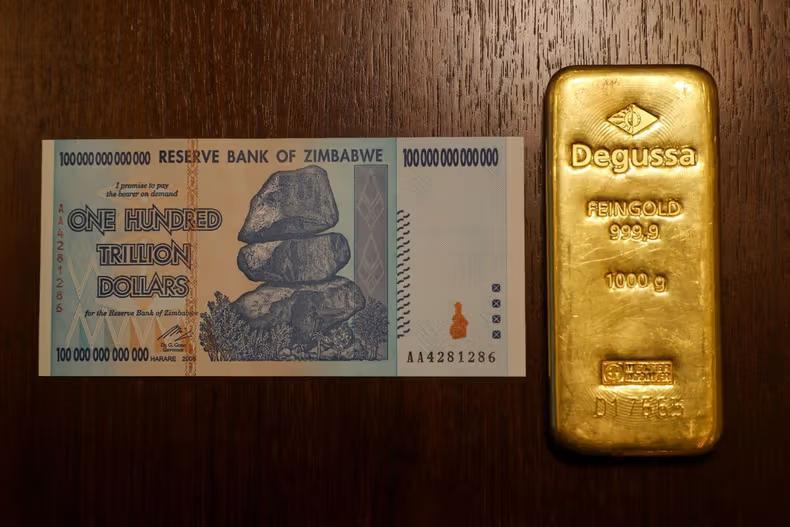
“If you were to design a tax system, what objectives would you propose? Zimbabwe has now become a clean slate for experimentation, with the exchange rate reaching one trillion dollars to a single dollar.”
According to available information, Western officials — including British politician Peter Mandelson — sought to persuade Epstein to establish a private bank to manage oil revenues in the Democratic Republic of the Congo, though his response to these efforts remains unknown.
These disclosures come at a time when Zimbabwe’s economy is showing notable improvement. Since the introduction of the “ZiG” currency in April 2024, it has demonstrated exceptional stability compared to previous currencies, declining by only 0.7% in 2025. Inflation measured in ZiG fell to 4.1% in January 2026, down from 15% in December and 19% in November of the previous year.
Although the U.S. dollar still dominates most daily transactions in the country, recent economic measures — including the scarcity of the ZiG currency and rising gold prices — have driven the Victoria Falls Stock Exchange up by around 45%, according to recent reports.