
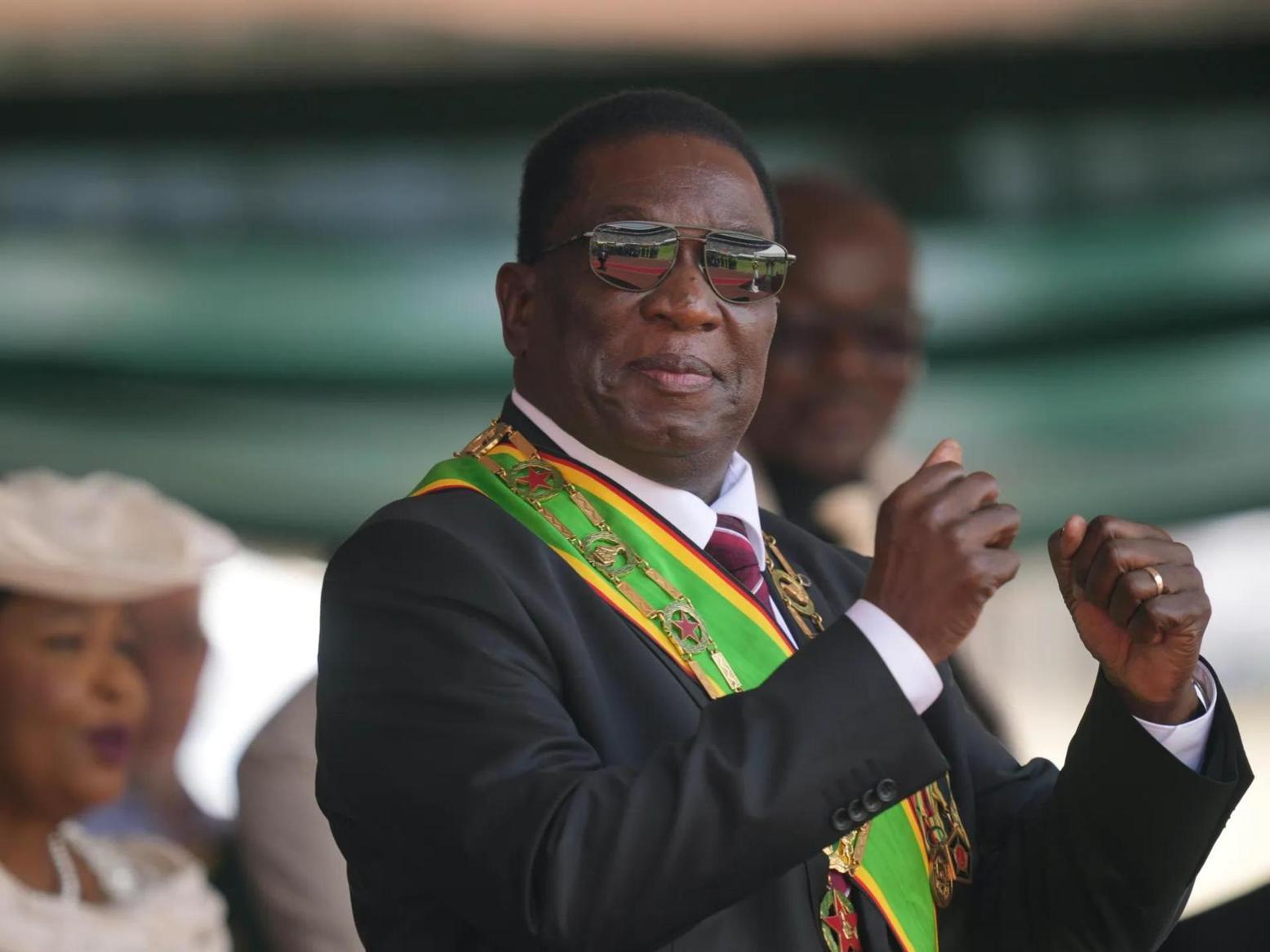
Africa-Press. Zimbabwe’s opposition forces accused President Emmerson Mnangagwa’s government of carrying out what they described as a “constitutional coup,” after the cabinet approved controversial amendments that would extend the presidential term and change how the head of state is chosen.
The amendments approved by the cabinet would extend the presidential term to seven years and abolish direct nationwide presidential elections, making parliament the body empowered to select the president. They would also grant Mnangagwa the authority to appoint ten additional members to the Senate.
This move follows an earlier decision by the ruling Zimbabwe African National Union–Patriotic Front (ZANU-PF) to keep Mnangagwa in power for two additional years after his term ends in 2028, under what is known as the “Agenda 2030.”
The opposition said these amendments amount to an attempt to circumvent the constitution. Prominent opposition politician Job Sikhala said what is happening is “a coup by the president to remain in power against the will of the people,” adding that Mnangagwa is seeking, “in a dictatorial manner,” to extend his rule until 2030.
Meanwhile, Jameson Timba, a leader in the Citizens’ Coalition for Change, accused the president of using “official procedures” to entrench his power without direct approval from the people. Writing on X, he said what is happening “is not constitutional reform, but a constitutional coup.”
For its part, the National Democratic Group led by Sikhala called on the African Union to intervene, arguing that “silence in the face of an ongoing coup in a member state is unacceptable.” It said activists opposing the amendments are facing crackdowns and mass arrests. Reports indicate that attempts to protest the “Agenda 2030” plan were met with a strict security campaign that resulted in dozens being jailed.
Political background
Mnangagwa came to power in 2017 following a military coup that ousted late president Robert Mugabe after 37 years in office. He was subsequently elected in 2018 and again in 2023, but he faces allegations of corruption and curbs on democratic freedoms, while ZANU-PF has remained dominant since the country’s independence in 1980.
Opponents argue that the latest amendments are intended to guarantee the ruling party’s continuity and its control over state institutions, under the banner of “political stability and policy continuity,” as stated in a government communiqué.