
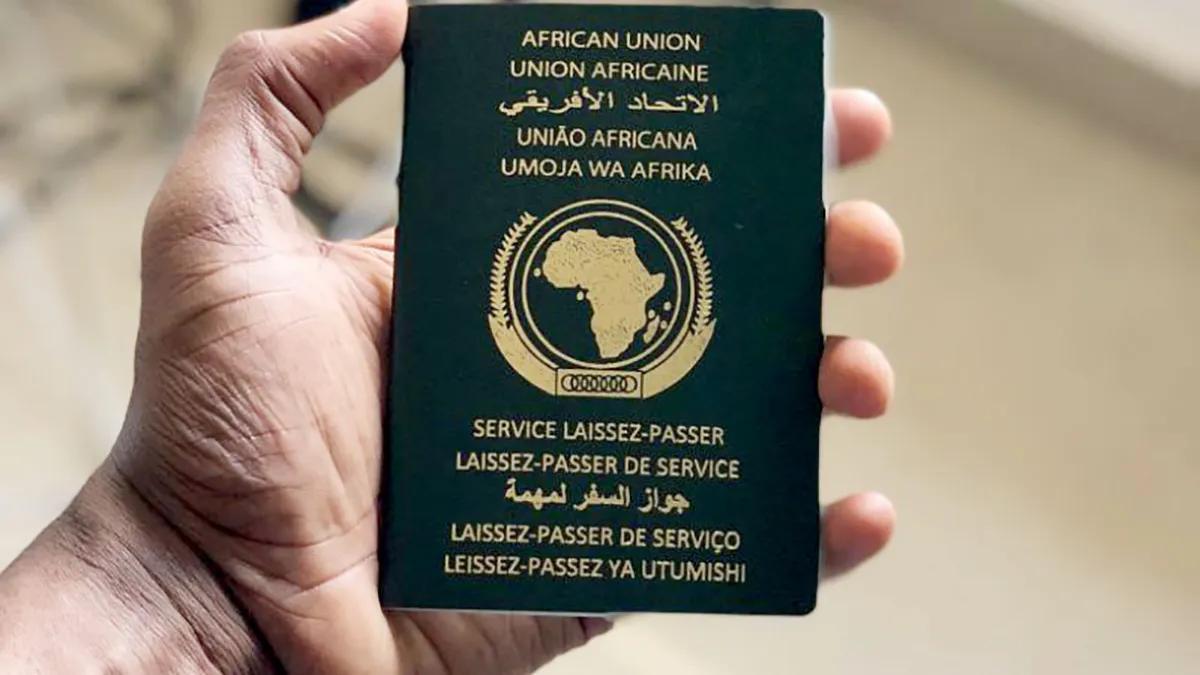
Africa-Press. Togo has announced the exemption of citizens from all African countries from visa requirements for stays of up to 30 days, provided they apply electronically through a government platform at least 24 hours before arrival. With this, Togo joins a small group of only six African countries that have fully opened their borders to citizens of the continent, which includes Rwanda, Seychelles, Gambia, Benin, and Ghana, while Kenya is close to joining the list, exempting only two countries (Somalia and Libya) from the visa waiver.
However, this openness remains an exception in a continent of 54 countries, as about 48 of them still adhere to traditional visa systems that restrict the movement of people and capital. These restrictions are reflected in the low level of intra-African trade, which does not exceed 16%, compared to over 60% within the European Union, according to a report from the African Export-Import Bank published last March.
Worse still, the African Union’s Protocol on Free Movement of Persons, adopted in 2018, has only been ratified by four countries so far, while 15 ratifications are required for it to come into effect. The African passport, which was symbolically launched in 2016, remains limited to diplomats and senior officials, making current initiatives unilateral sovereign decisions that can be reversed at any moment, rather than binding legal commitments.
The African Visa Openess Index for 2024 shows modest cumulative progress, as Africans can travel visa-free in 28% of continental mobility scenarios, compared to 27% in 2022 and only 20% in 2016. Additionally, 33 out of 54 countries grant visa exemptions to ten or more countries, while about a quarter of travelers receive a visa on arrival.
Security: A Real Barrier or a Political Pretext?
Countries opposing openness cite genuine security concerns, particularly in the Sahel region, which is experiencing one of the most intense waves of armed conflict in the world, alongside arms and human trafficking and cross-border crime. However, reducing the situation to security issues overlooks deeper layers of economic and political calculations, including some countries’ reliance on visa revenues as a stable sovereign resource, fears of labor migration to more attractive economies, and disparities in administrative and regulatory capacities at borders.
A Symbolic Advance and Delayed Institutions
Observers believe that Togo’s step represents a positive development that adds symbolic momentum to the continental openness process, but it does not reflect a profound institutional transformation. Achieving the dream of a “Borderless Africa” requires practical measures, such as ratifying protocols, unifying customs and digital infrastructure, and enhancing security trust among countries. Until that is achieved, the African common market remains closer to political rhetoric than to real application, where weak political will and the absence of enforcement mechanisms stand as major obstacles, alongside existing security challenges.