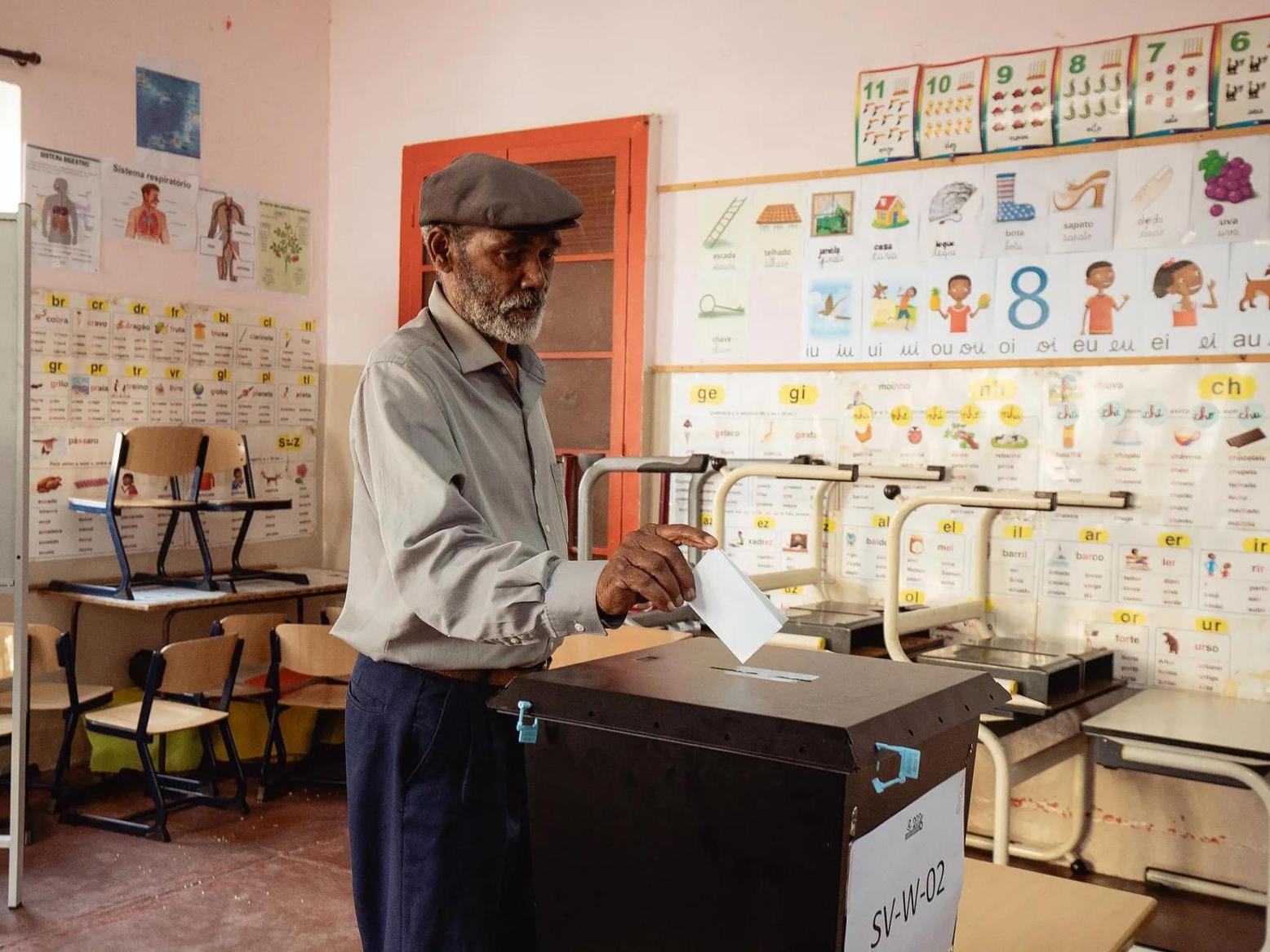
Africa-Press. The African Party for the Independence of Cape Verde, classified as center-left, won the legislative elections held last Sunday, returning to power after nearly a decade in opposition at the expense of the ruling Movement for Democracy, according to a local source.
According to preliminary results announced by the National Electoral Commission based on 98.2% of polling stations, the African Party for the Independence of Cape Verde secured 37 seats out of 72 in the National Assembly, achieving 46.7% of the votes, which is the required number to form a majority. The commission is expected to announce the final results on May 25.
The Prime Minister acknowledged the defeat before the final announcement of the results, stating: “I contacted the leader of the African Party for the Independence of Cape Verde to congratulate him on the result and wish him success in governing Cape Verde,” according to a local news outlet. He admitted that his party did not achieve its goal of remaining in power and announced his resignation from the leadership of the movement after an unsuccessful bid for a third term.
Francisco Carvalho, the leader of the African Party for the Independence of Cape Verde and mayor of the capital Praia, is expected to take over as head of government. Carvalho, who is 55 years old and specializes in sociology and economics, focused his campaign on social justice, improving healthcare, expanding higher education opportunities, and enhancing public services in the islands. After the voting, he stated that “the Cape Verde project for all was the best because it was built around the needs of Cape Verdeans.”
Carvalho will share power with President José Maria Neves, who is also a member of the African Party for the Independence of Cape Verde, within a semi-presidential system where the president and prime minister are elected separately. The president holds the responsibilities of head of state and supreme commander of the armed forces, while the prime minister exercises executive authority. Presidential elections are scheduled for November 15.
The election campaign focused on the cost of living and bureaucracy, as the African Party for the Independence of Cape Verde promised to reduce air and sea transport costs between the islands, provide exemptions from fees in the health and education sectors, and establish a government that combats what Carvalho described as “widespread corruption,” while the Movement for Democracy relied on continuity and “economic stability” and growth indicators, according to a local news source.
The African Union Commissioner for Political Affairs, Peace, and Security described the election day in Cape Verde as “a bright model of democratic governance,” while the United Nations praised the electoral process, calling it peaceful, transparent, and inclusive.
These elections come amid concerns about unemployment and economic pressures resulting from limited natural resources, a narrow economic base, and exposure to external shocks, while the International Monetary Fund expects economic growth of 4.8% in 2026, according to a local source.