Africa-Press. The National Election Board of Ethiopia announced the exclusion of 46 electoral districts from the upcoming general elections scheduled for June 1, reflecting the significant security and political challenges facing the country ahead of the anticipated electoral event.
The decision includes all electoral districts in the Tigray region, along with eight districts in the Amhara region, which has been experiencing clashes between government forces and “Fano” fighters for months.
General elections in Ethiopia are held every five years to elect members of the House of Peoples’ Representatives and the Federal Council, where the party winning the majority of parliamentary seats forms the next federal government.
During a press conference, the chairperson of the National Election Board stated that voting will not take place in 46 electoral districts distributed between the Amhara and Tigray regions.
She clarified that the decision encompasses all 38 districts in Tigray, in addition to eight districts in Amhara located in the southern and western Gondar areas, Ambasel, and Diga Damot.
She added that elections in these areas will be postponed to a later date, without specifying a clear timeframe for their conduct.
The exclusion of all Tigray districts is one of the most significant indicators of the ongoing repercussions of the war that the region experienced between the federal government and the Tigray People’s Liberation Front, despite the peace agreement signed in Pretoria in late 2022.
The decision also reflects the rising security tensions in the Amhara region, which has become one of the most unstable areas in the country over the past two years.
Widespread areas in Amhara are witnessing ongoing clashes between the Ethiopian army and “Fano,” a local armed group that emerged during the Tigray war before later clashing with the federal government.
In recent months, the scope of clashes in the region has expanded, with reports of casualties and widespread displacement, in addition to the use of drones and artillery shelling in some areas.
Ethiopian authorities claim that “Fano” threatens stability and public security, while “Fano” accuses the government of attempting to undermine Amhara’s influence and weaken local powers in the region.
Conversely, the situation appears more complicated in Tigray, which has completely exited the current electoral process.
Despite the signing of a peace agreement between the Ethiopian government and the Tigray People’s Liberation Front, political and security tensions remain within the region, amid disputes regarding the implementation of the agreement’s terms and the rebuilding of local institutions.
Tigray continues to suffer from the effects of a two-year war that resulted in widespread destruction of infrastructure and a severe humanitarian crisis, in addition to ongoing political disputes among local forces.
Earlier this month, the region entered a new phase of escalation after the Tigray People’s Liberation Front announced the reactivation of governance institutions that existed before the war, including the regional council, and the election of Debretsion Gebremichael as head of the government.
The National Election Board revealed that six political parties will not participate in the seventh national elections, while 48 opposition parties have registered to compete.
Among the excluded parties in Tigray are “Simret” (Democratic Solidarity for Tigray), led by Getachew Reda, the former head of the interim administration in Tigray, along with the “Kanchi Haki” party and “Tinsae Enderta.”
Additionally, the Ethiopian Social Democratic Party, the Sidama Federal Party, and the Gambela People’s Liberation Movement were also excluded. The board also announced the disqualification of 80 candidates for failing to meet the required criteria.
The Ethiopian Social Democratic Party had registered and approved 309 candidates but was later excluded from the electoral race by a court decision.
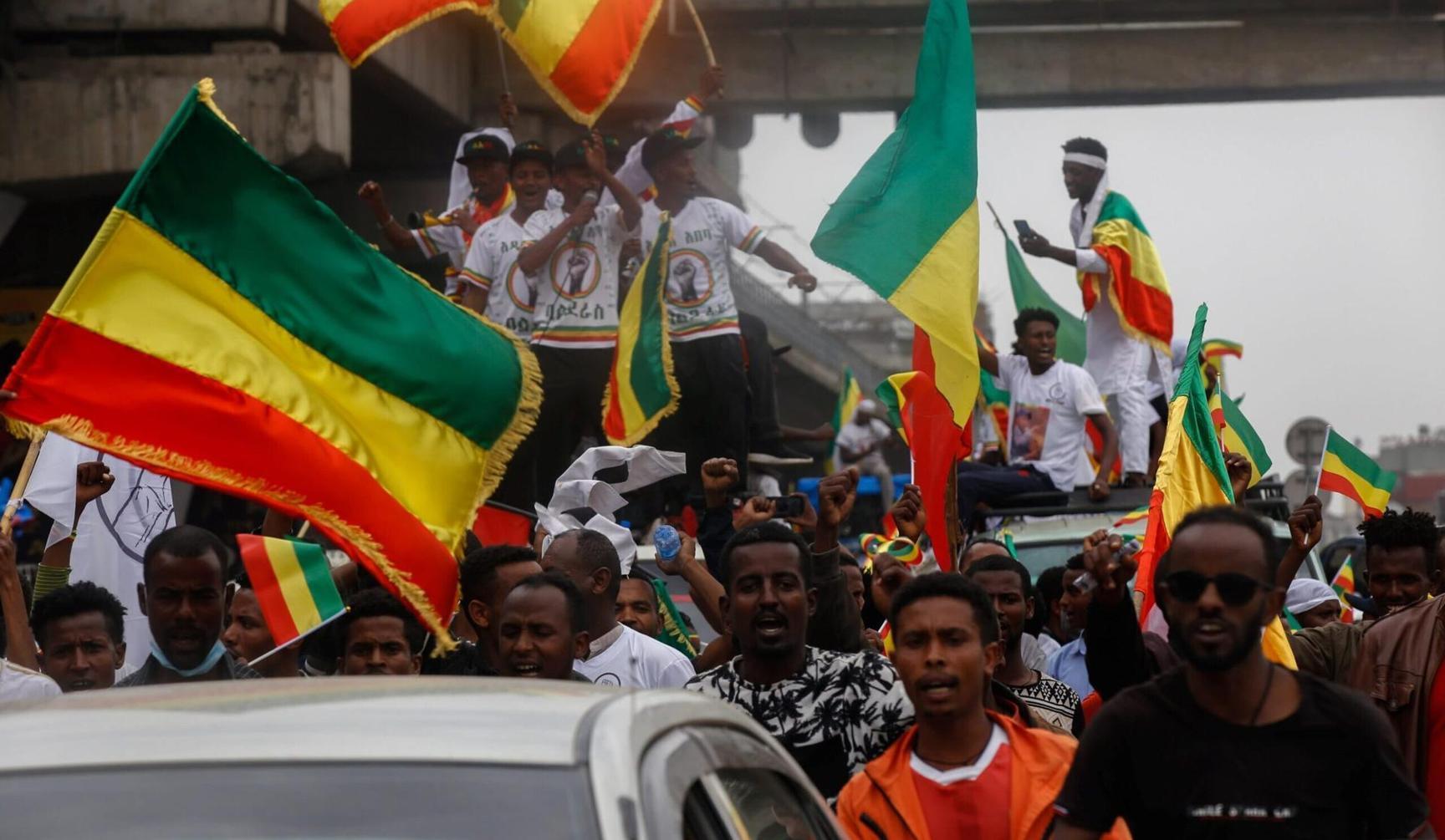
The current electoral campaign is taking place amid complex security conditions in several regions of the country, where Ethiopia is facing intertwined crises, including armed conflicts, ethnic tensions, and economic pressures.
In this context, some opposition parties argue that the current conditions do not allow for “free, safe, and peaceful elections,” pointing to difficulties in movement and organizing political gatherings in conflict-affected areas.
Candidates and political activists also face significant challenges related to security and access to voters, especially in regions experiencing armed clashes or political unrest.
The upcoming electoral event occurs under the continued dominance of the Prosperity Party, led by Prime Minister Abiy Ahmed, who has been in power since 2018.
The party holds a significant majority in the House of Representatives, controlling over 80% of parliamentary seats, granting it extensive influence in state institutions.
Opposition forces accuse the ruling party of dominating official media and using it to support the government’s and the Prime Minister’s campaigns. In contrast, the government asserts that the elections represent part of the democratic process in the country and that authorities are committed to organizing a vote that reflects the will of the voters despite ongoing security challenges.