Africa-Press. At least 30 people have died since the beginning of May in a civilian displacement camp in northeastern Congo, a mortality rate described by camp officials as unprecedented, with some confirmed deaths due to Ebola, indicating a potential rapid spread of the disease in the area.
The causes of all the deaths could not be determined as patients or their relatives in the Kigonzi camp in Bunia – an Ebola outbreak hotspot in the Democratic Republic of the Congo – refused to undergo testing, according to a spokesperson for the camp and a local relief organization.
However, all the deceased exhibited symptoms including headache, fever, and vomiting, which are associated with Ebola, as reported by a camp spokesperson, a grieving father, three relief sources, and a civil society leader to a local news agency.
“People were not dying like this before,” stated the camp spokesperson, Desiree Grudia Babi, to the local news agency. The deaths in Kigonzi, which is home to more than 15,000 residents, raise concerns about the potential undetected spread of the Ebola virus among over 5 million displaced people in eastern Congo, where the refusal to undergo testing exacerbates the challenge posed by limited sanitation measures.
The camp leader, Dzdjo Ndroutsi Etienne, reported that 10 people were buried just this week. Grudia added that the camp typically records between one and three deaths per month.
Justin Zanamozi, director of a local relief organization assisting Kigonzi residents, noted that his team witnessed several bodies covered with blankets on Wednesday, including that of a pregnant woman and children.
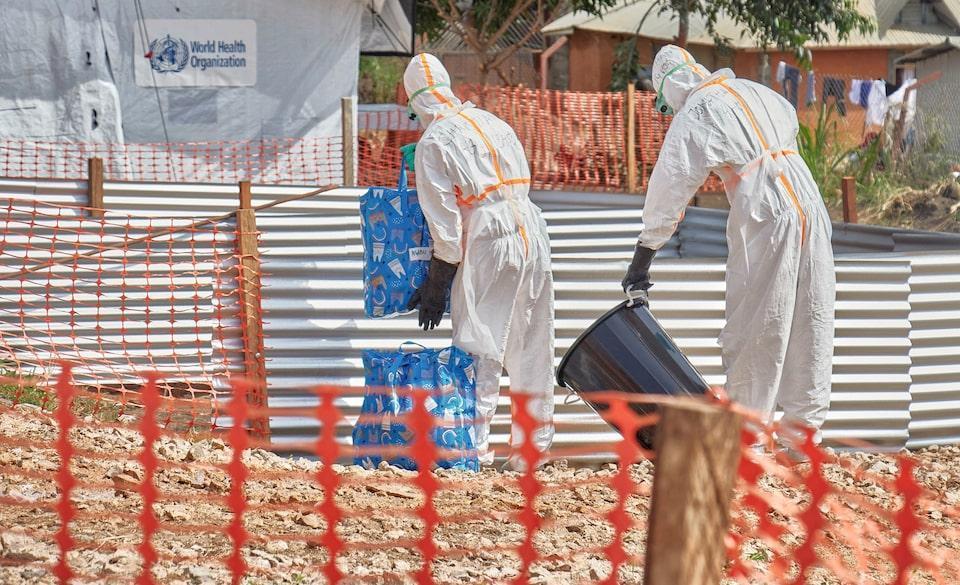
Footage from Thursday, shared by a civil society leader, showed health teams in hazardous material suits disinfecting more bodies and preparing small coffins, while mourners wept.
Zanamozi stated, “Our team tried to convince people to allow doctors to examine the bodies, but they firmly refused.” Congolese officials announced the outbreak in the country for the first time on May 15, but they indicated that the deaths began earlier in the month.
Grudia, the camp spokesperson, mentioned that health workers took samples from five victims, and some results came back positive for the Ebola virus. Three relief sources confirmed on Saturday that test results for some victims this week were positive for the Ebola virus, without specifying the number.
Four relief workers indicated that the sharp rise in deaths highlights how vulnerable communities are to diseases like Ebola, after donors, including the United States under former President Donald Trump, reduced funding for water, sanitation, and hygiene, which are essential in combating diseases spread through bodily fluids, such as human waste.
Data collected by the United Nations showed that funding for toilets and handwashing stations in Congo dropped by more than half between 2024 and 2025, to about $38 million, with only 21% of this year’s $80 million appeal funded.
Congo hosts hundreds of camps for civilians fleeing war, some housing 100,000 people. Ebola deaths have also been recorded in another camp in Ituri province, where over 90% of the approximately 900 confirmed cases have been reported. In Kigonzi, large families share plastic tents spaced less than one meter apart, and children wander barefoot in its dirt alleys.
There are toilets bearing the logo of a U.S. agency, which was dissolved by Trump, and a source in the aid sector stated that the agency contributed to their funding. However, Grudia and a relief source reported that the toilets are insufficient and often overflow.
Grudia stated, “The toilets fill up very quickly, and people have to empty them by hand.” A summary published by a former agency official indicated that Washington was the primary supporter of water, sanitation, and hygiene services in Congo, having provided over $60 million for these services in 2024 to curb the spread of diseases. The Trump administration defended these cuts, stating it wanted to focus on “high-priority programs.”
However, four relief organizations – Mercy Corps, the Danish Refugee Council, Care International, and Oxfam – reported that their U.S.-funded water, sanitation, and hygiene projects for displaced people in the three provinces affected by Ebola have been scaled back or canceled since last year’s cuts. Mercy Corps built 82 taps and more than 400 public toilets to serve over 125,000 displaced people in 2024. The relief organization stated that funding cuts this year mean that fewer than 19,000 people benefit from just six taps, with no public toilets available.