Africa-Press. Ghana has begun the first repatriation of its citizens from South Africa, with around 800 individuals registering to return home amid escalating immigration protests in several South African cities.
According to a local source, dozens of buses hired by the Ghanaian embassy were seen transporting passengers to OR Tambo Airport in Johannesburg in preparation for their departure from the country.
The group included men, women, and children of various ages, while a small additional group arrived in a police vehicle, separated from the other passengers under tight security.
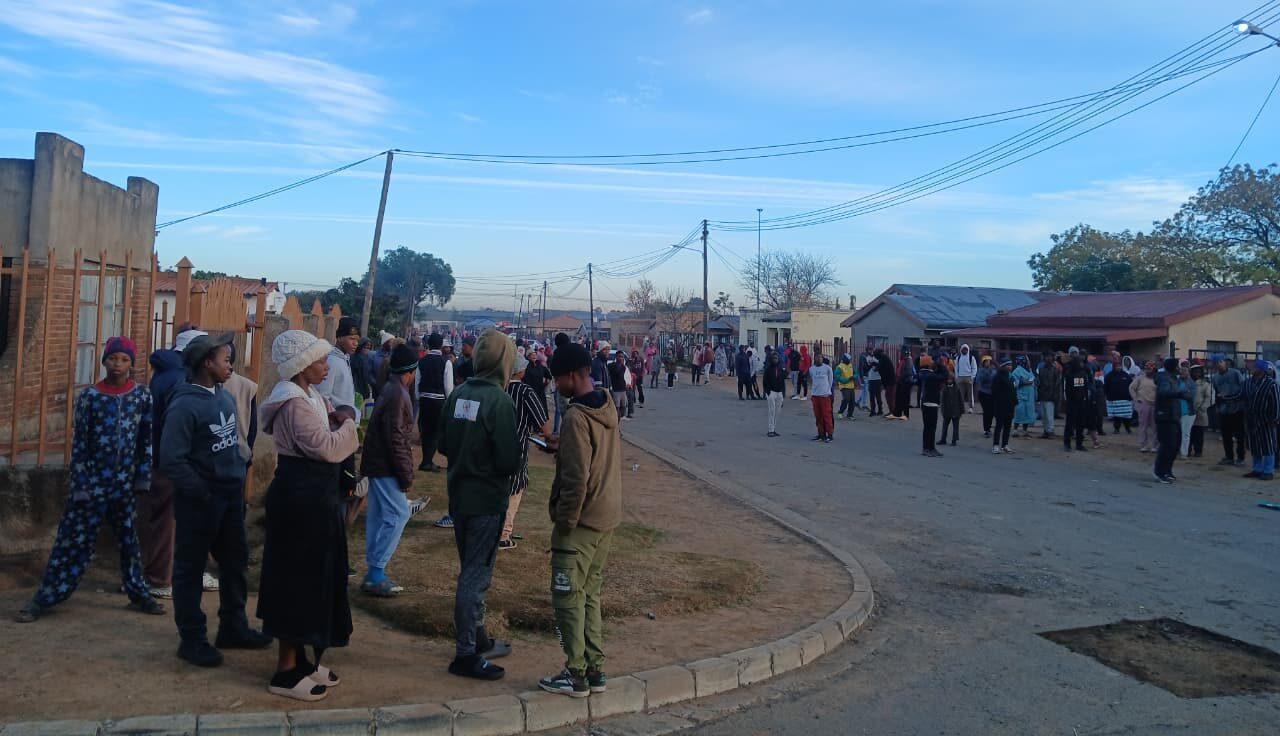
This move follows a wave of protests that have occurred in several cities in recent weeks against illegal immigration, amid growing fears of a resurgence of anti-foreigner violence that the country experienced in previous years.
Ghanaian authorities confirmed that all travelers underwent registration procedures conducted by embassy staff and airport workers, noting that an initial group of 300 individuals departed on Wednesday morning, while the remaining registrants would leave later after completing screening and verification processes.
Most of the departing individuals were reluctant to speak to the media, but one individual named Rudolf, who has lived in South Africa for ten years and runs a beauty salon, stated that the recent protests prompted his decision to leave.
He added, “It is no longer comfortable for us to stay here, so we have to leave. I believe we will find peace in our homeland.”
The estimated number of Ghanaians residing in South Africa is around 25,000.
Protest organizers claim that illegal immigrants are putting pressure on public services and job opportunities, urging the government to take stricter measures to curb the phenomenon.
The protests are led by a group known as “March and March,” which describes itself as a grassroots movement calling for reforms in immigration policies. The group has set June 30 as a final deadline for illegal immigrants to leave the country.
Rudolf expressed concerns that this deadline could lead to outbreaks of violence, saying, “The protests started in Durban and then spread to other provinces, so something bad could definitely happen.”
He added that he does not intend to return to South Africa again.
Meanwhile, the Ghanaian High Commissioner in South Africa, Benjamin Kwasi, stated that his government acted after receiving complaints from citizens who felt their lives were in danger and their economic activities had been disrupted due to the current situation.
He added, “It is the responsibility of any government to ensure the safety and welfare of its citizens both inside and outside the country.”
Kwasi explained that Accra has developed a plan for reintegrating returnees, indicating that authorities are ready to assist them in resuming the business activities they were engaged in while in South Africa.
He added, “We are also helping the South African economy, as it is clear that some of these individuals do not hold legal documents, and their repatriation confirms that we do not tolerate illegal immigration.”
Analysts believe that the rise in anti-immigrant rhetoric may be linked to the upcoming local elections scheduled for November.
In 2019, at least 12 people were killed in attacks targeting foreigners, while 62 individuals of various nationalities were killed during a similar wave of violence in 2008.
Despite this, organizers of the recent protests assert that they have occurred peacefully.
Earlier this month, the government condemned criminal acts directed against foreigners but acknowledged the need to address the issue of illegal immigration.
According to the national statistics agency, around three million migrants live in South Africa, representing approximately 5.1% of the total population.
More than 63% of these individuals come from countries in the Southern African Development Community, which is also facing economic crises and political unrest, driving many to migrate in search of better opportunities.