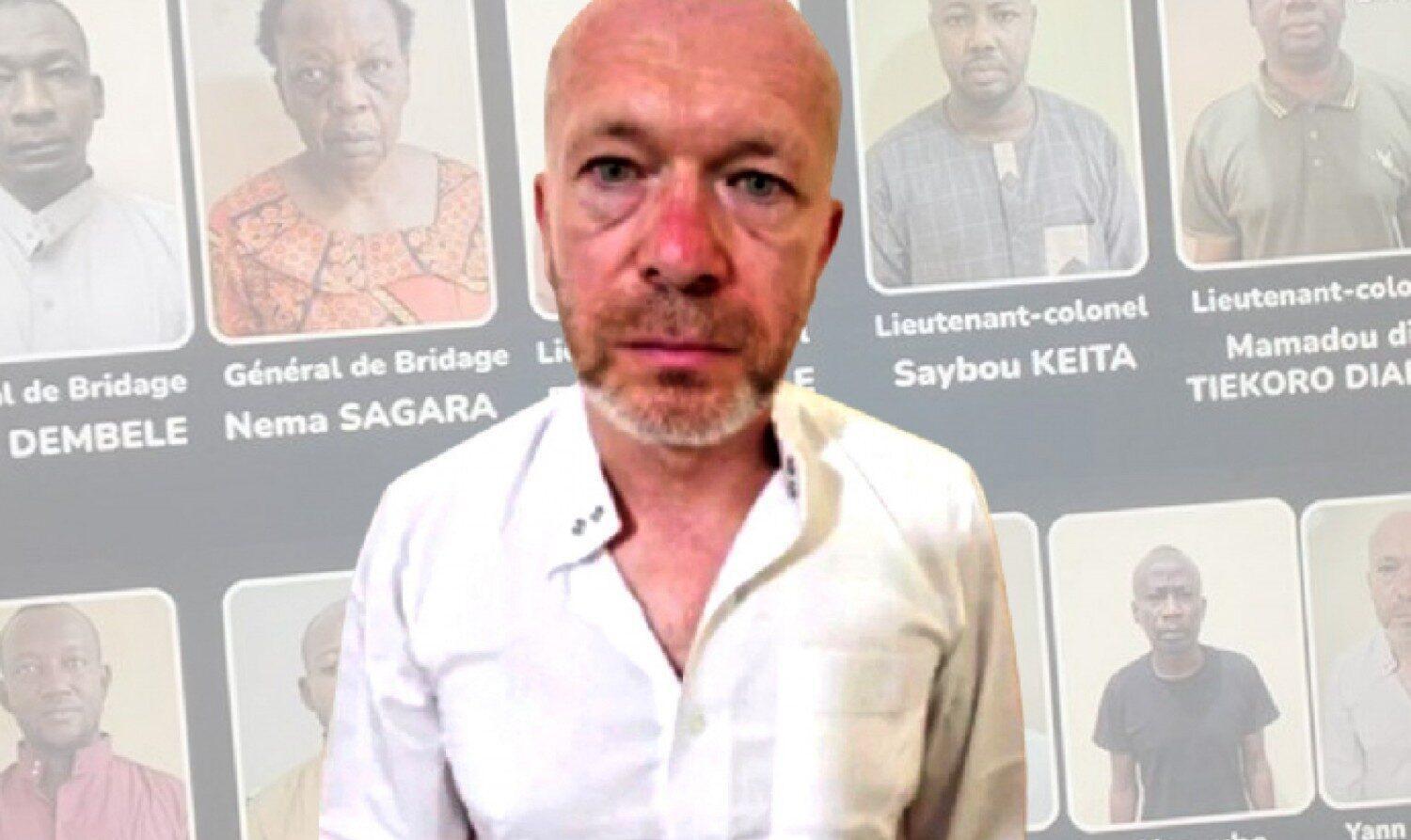
Africa-Press. A court in Mali has sentenced French diplomat Yann Visez to 20 years in prison after convicting him of conspiracy and involvement in a scheme to destabilize the country, a case that has sparked diplomatic tensions between Bamako and Paris.
A local source reported that the ruling was issued late Thursday, adding that Visez will serve his sentence within Mali.
Authorities in Bamako announced in August 2025 the arrest of Yann Visez along with two Malian military personnel, accusing him of working for French intelligence agencies to rally political actors, civil society figures, and military officers against the transitional government led by Assimi Goita.
Bamako accused France of participating in activities aimed at undermining the stability of the state and influencing the internal political landscape, at a time when the country faces complex security and political challenges.
In contrast, France categorically rejected these accusations, stating that they “lack any basis.” The French Foreign Ministry at the time said that Visez’s arrest represents a violation of the Vienna Convention on Diplomatic Relations.
Bamako and the Ministry of Justice have not issued any official comment on the ruling so far, nor has the French Foreign Ministry responded to media requests for comments following the court decision.
The Visez case has become one of the main points of contention between Bamako and Paris over the past year, prompting France to suspend its cooperation with Bamako on certain security and diplomatic matters.
In September 2025, France suspended its cooperation with Mali in the fight against terrorism and requested that Malian diplomats leave its territory in response to the arrest of the French diplomat in Bamako.
This French decision came after Malian authorities declared five employees of the French embassy as undesirable persons.
Relations between Bamako and Paris have deteriorated rapidly in recent years, especially following the two military coups that occurred in the country in 2020 and 2021, which brought Colonel Assimi Goita to power.
France intervened militarily in 2013 through Operation Serval to confront extremist groups that had seized large areas in the north of the country, before later expanding its operations under the Barkhane mission in the Sahel region.
Despite the initial success of the French military intervention, criticism within Mali has escalated as security threats persisted and conditions worsened in parts of the country, leading to a decline in the popularity of the French presence and increasing demands for its end.
In 2022, France and its European and Canadian partners announced the end of the Barkhane and Takuba operations and the withdrawal of their forces from Mali, justifying the decision by the deterioration of relations with the Bamako government and the absence of the necessary political and legal conditions for the continuation of operations.
Bamako has been experiencing a continuous security crisis for over a decade, fueled by attacks from extremist and separatist groups and political unrest, leading to a series of political and military transformations within the country.