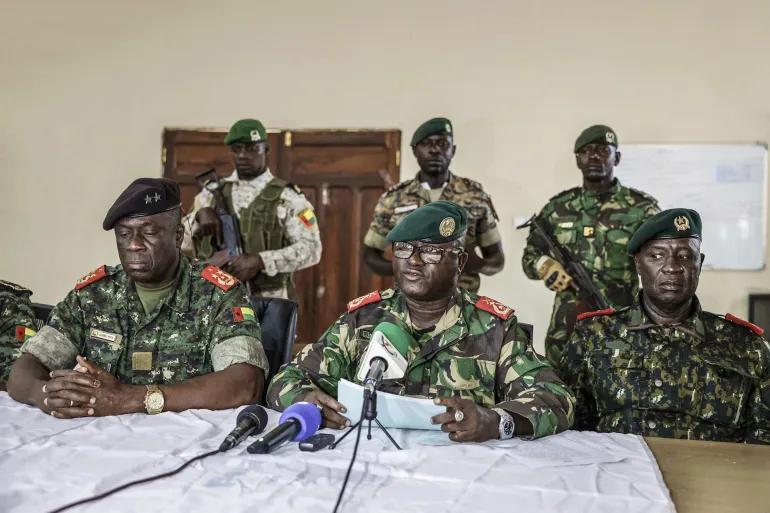
Africa-Press. The transitional authorities in Guinea-Bissau announced the suspension of their “political relations” with the Republic of Cape Verde, following criticisms from the Praia government regarding the detention of opposition leader Domingos Simões Pereira.
The Cape Verdean government had called for Pereira’s release, while the authorities in Guinea-Bissau considered these positions to be an interference in the country’s judicial and political affairs.
Tensions have escalated this week between the transitional authorities in Guinea-Bissau and Cape Verde, following the detention of the opposition leader since July 10, an action that the Praia government criticized.
On Wednesday, July 15, the transitional parliament in Bissau, which has been under military rule since the coup on November 26, announced the suspension of “political relations” with Praia, without clarifying what practical measures this decision entails.
Domingos Pereira, the head of the African Party for the Independence of Guinea and Cape Verde (PAIGC), which is now in opposition, faces judicial accusations of involvement in several coup attempts.
A military court had ordered his detention on July 10, after he appeared in response to a judicial summons.
Pereira had previously been arrested on the day of the coup that ousted President Umaro Sissoco Embaló last November, before being released in January and placed under house arrest.
Following Pereira’s detention, Praia expressed its “grave concern” in a statement issued on Tuesday and called for his swift release.
In response, the spokesperson for the National Transitional Council in Guinea-Bissau, Fernando Vaz, stated during a press conference on Wednesday that “the Cape Verdean government has no legitimacy to comment on the political and judicial situation in Guinea-Bissau.”
He also announced the “practical suspension of political relations with Cape Verde,” while emphasizing that “the relations between the two peoples will not be affected by the political disagreements between the current governments.”
A source in the Ministry of Foreign Affairs stated to a local source that the decision does not mean the suspension of diplomatic relations between the two countries, but did not clarify the nature of the measures included in the suspension of political relations.
The ruling party in Cape Verde, the African Party for the Independence of Cape Verde (PAICV), has historical ties to Domingos Simões Pereira’s party in Guinea-Bissau.
The two countries fought together in the liberation war against Portuguese colonialism from 1961 to 1974, led by the African Party for the Independence of Guinea and Cape Verde (PAIGC).
Guinea-Bissau gained its independence in 1974, while Cape Verde achieved independence in 1975, and the two countries continued under a joint political project, adopting a common national anthem and flag, until November 1980.
In that year, a coup ousted the then-President of Guinea-Bissau, Luis Cabral, the half-brother of the party’s founder Amílcar Cabral, which officially ended the political unity between the two countries in 1981.