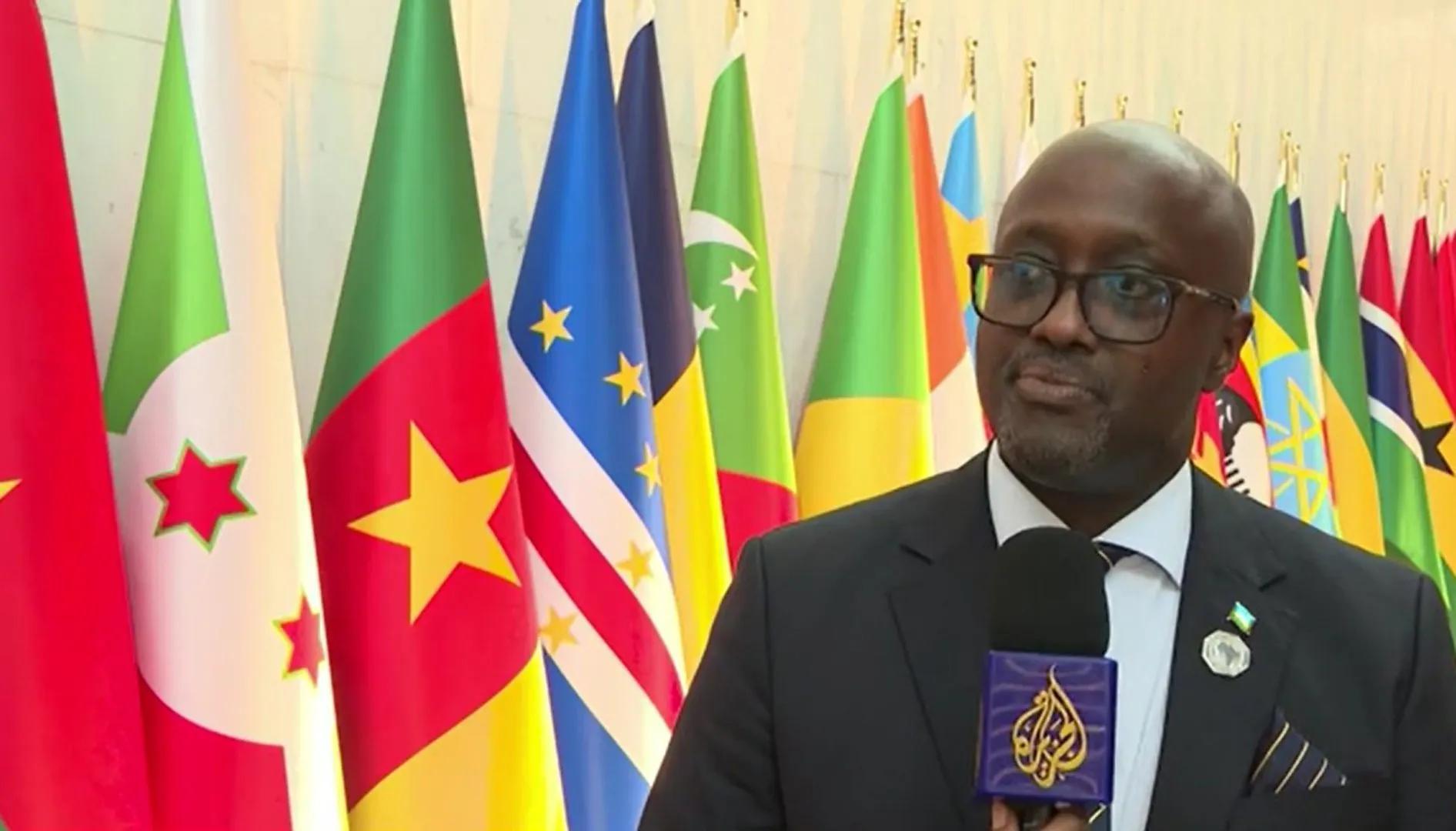
Africa-Press. The Minister of Foreign Affairs and International Cooperation of Rwanda, Olivier Ndohungirehe, has accused the government of the Democratic Republic of the Congo of failing to fulfill its commitments outlined in the peace agreements concerning the eastern part of the country. He warned that the lack of political will among the involved parties, along with what he described as bias in American mediation, hinders efforts to achieve sustainable peace in the region.
Ndohungirehe stated in remarks to a local source that the Washington Agreement and the framework agreement stemming from the Doha process form the basis for addressing the security, political, and economic aspects of the conflict in eastern Congo. He emphasized that the problem lies not in the agreements themselves, but in the absence of political will to implement them.
He clarified that Rwanda believes this missing will is primarily represented by the government of the Democratic Republic of the Congo in Kinshasa, accusing it of not implementing the ceasefire agreement to date.
The Rwandan minister also criticized American mediation, stating that his country is concerned about the increasing bias in the American role. He added that Kigali continues to inform Washington that its actions, or lack thereof, do not contribute to achieving lasting peace in the region.
Ndohungirehe affirmed that the success of efforts to end the conflict requires all parties to commit to implementing the signed agreements, ensuring that the security, political, and economic causes of the crisis are addressed, and paving the way for sustainable stability in the eastern Democratic Republic of the Congo.
The peace agreement between Rwanda and the Democratic Republic of the Congo, signed on June 27, 2025, ended an armed conflict that lasted nearly 30 years in the Great Lakes region between the two countries. It was facilitated by American-Qatari mediation and included provisions related to halting support for armed groups, respecting sovereignty, and joint security coordination, as well as plans for regional economic integration.