
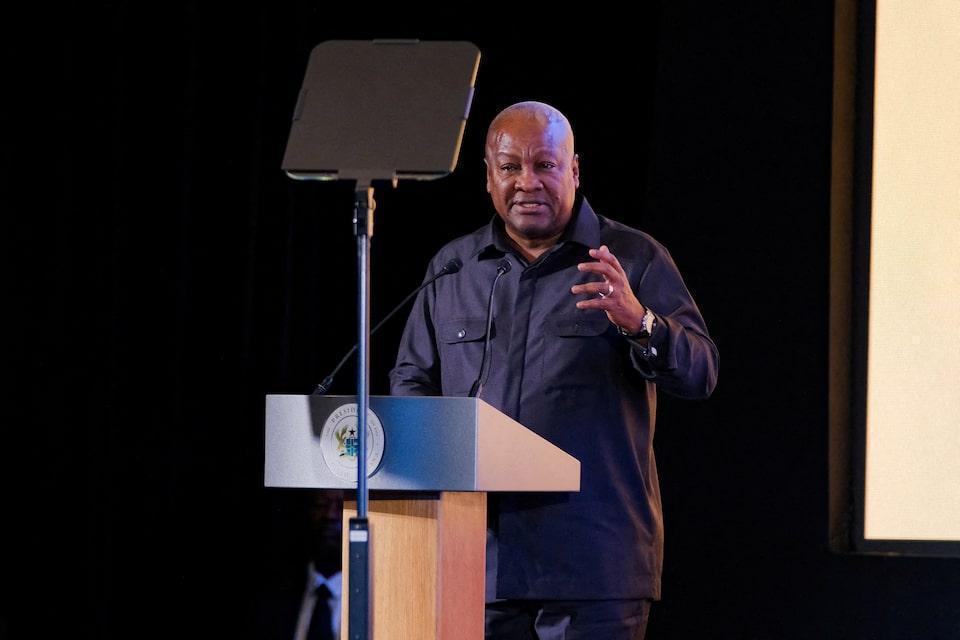
Africa-Press. The Government of Ghana has approved a proposal to extend the presidential and parliamentary term from four years to five years, as part of a package of constitutional reforms to be implemented.
The government clarified that the proposal, if approved through constitutional amendment procedures, will apply only to future presidents and parliaments, and will not affect the current president or parliament.
The Minister of Justice and Attorney General, Dominic Ayine, announced the government’s position during a press conference in the capital, Accra, dedicated to reviewing the final recommendations of the Constitutional Review Committee.
The minister stated, “Our thinking is based on practical considerations. Under the current four-year term, the first months of each administration are consumed by the transition process, while the last year is largely spent on election preparations, leaving very limited time for actual governance.”
He added that the extended five-year term would provide a more realistic period for formulating government policies, implementing them, and evaluating their outcomes.
Ayine confirmed that the recommendation, if adopted, would apply to future presidents, not to the current president, John Dramani Mahama.
He said, “To avoid any confusion, this recommendation, if implemented, will apply to future presidents, not to the current president.”
The government also expressed its preliminary approval of a recommendation to lower the minimum age for candidacy for the presidency, suggesting a minimum age of 35 years instead of 30 years, which was recommended by the Constitutional Review Committee.
The Minister of Justice explained that adopting the age of 35 would expand the pool of eligible candidates while maintaining the necessary level of maturity and experience required for the highest office in the country.
The minister noted that the government also approved a proposal to conduct presidential elections during the first week of November, with the exact date to be determined by the electoral commission through a constitutional instrument.
He added that this timeframe would provide greater certainty regarding the electoral schedule and contribute to improved planning by all parties involved, as well as allow sufficient time between the elections and the inauguration of the new president on January 7.
Regarding electoral disputes, Ayine stated that the government approved recommendations requiring challenges to presidential election results to be submitted within 14 days of the announcement of results, with the Supreme Court to rule on them within a maximum of 30 days.
He added that the electoral commission would also be required to disclose all relevant electoral data before the court and the parties involved, which would help expedite the resolution of disputes.
The minister said, “We adopt this position because the swift resolution of electoral disputes serves the interest of stabilizing the democratic transition of power and overall political stability in our country.”
The government also announced its preliminary approval to end the tax exemption currently enjoyed by the president by virtue of the office.
Under the proposal, the president will be subject to taxes on their salary and allowances, in addition to indirect taxes applied to goods and services.
In contrast, the Minister of Justice clarified that the government did not approve a recommendation to impose taxes on the end-of-service benefits and pension of the president.
He noted that the details regarding the president’s tax obligations will be regulated under the applicable tax laws in the country.