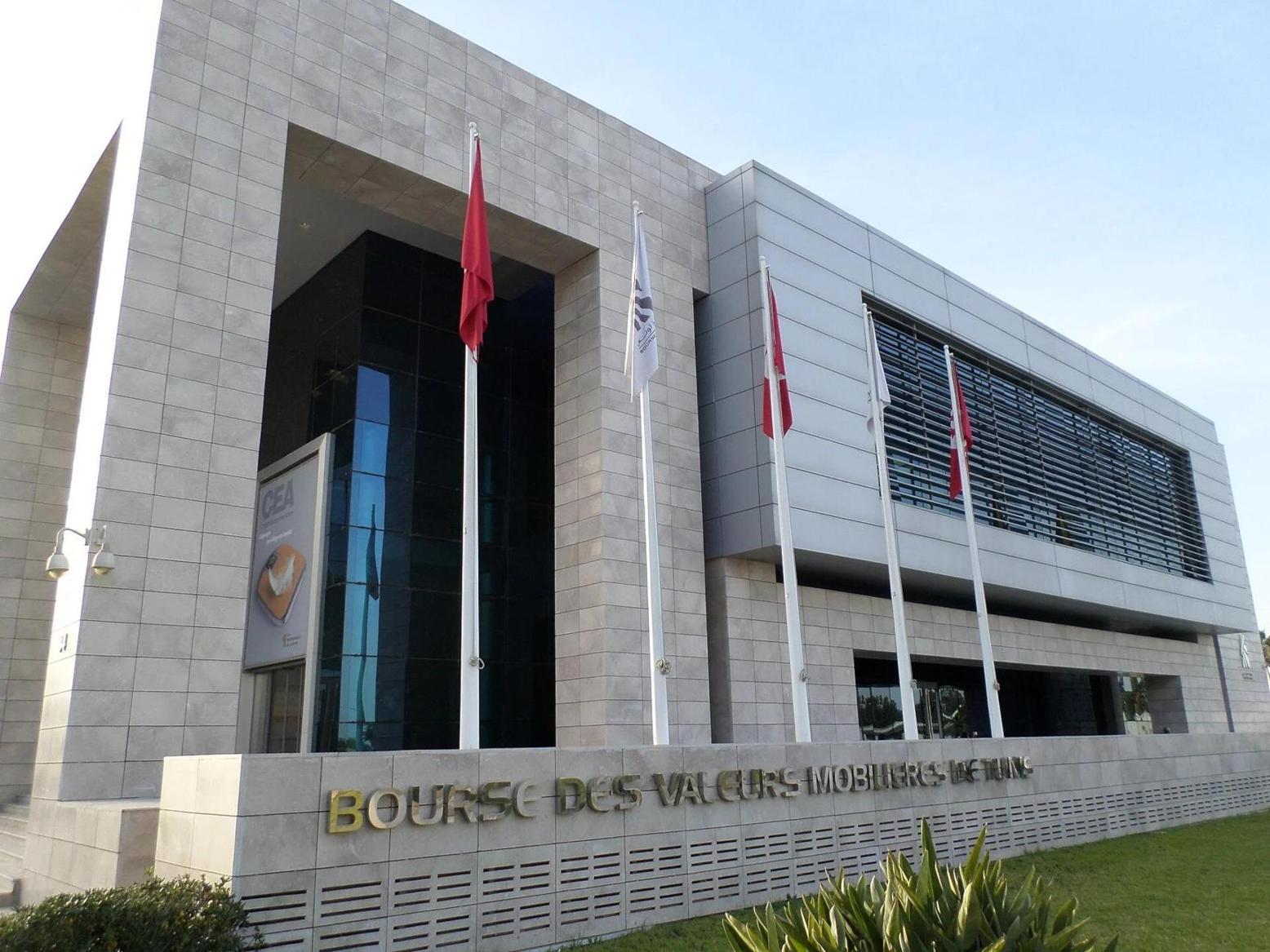
Africa-Press. The suspension of trading on the Tunis Stock Exchange during July 28 and 29 was not merely a technical measure following a sharp decline in the “Tunindex” index, but revealed the market’s sensitivity to changes in investor expectations and the challenges posed by the relationship between the performance of the financial sector and the real economy’s ability to regain growth and investment momentum.
Sharp Decline Reveals Market Sensitivity
The Tunis Stock Exchange experienced exceptional developments in the last two days after its benchmark index, “Tunindex,” fell by more than 3%, prompting the exchange management to activate the automatic trading halt mechanism and temporarily suspend operations for one hour, according to regulatory procedures aimed at limiting sharp fluctuations and allowing traders to reassess their investment positions.
On Tuesday, July 28, 2026, the main index recorded a decline of 3.47%, closing at 19,739.81 points, while the “Tunindex 20” dropped by 3.69%, settling at 8,684.95 points.
The wave of selling particularly affected leading banking stocks, with “Commercial Bank” shares falling by 6% and “National Agricultural Bank” shares declining by 5.99%. The market movement reflected the pressure experienced by investors, with 39 stocks declining compared to only 8 stocks rising out of 54 securities traded, with transaction values reaching approximately 11.03 million dinars.
The activation of the automatic halt mechanism was not an indicator of a technical crisis within the market, but rather a regulatory tool aimed at curbing rapid reactions during periods of strong volatility, a measure in place to protect trading stability.
Correction After a Period of Growth and Risk Reevaluation
This decline comes after a period of positive performance for the Tunis Stock Exchange, characterized by rising indices and trading volumes, driven particularly by improved results from several listed companies, especially financial institutions. However, financial markets do not move solely based on current results but also on investors’ expectations about the future. Therefore, any change in risk assessment or in companies’ ability to maintain profitability levels can lead to a rapid reevaluation of prices.
In this context, the recent decline can be interpreted as a combination of profit-taking after a strong upward period and a repricing of risks amid new economic and regulatory variables that have affected traders’ expectations.
Legislative Shock and Changing Investor Expectations
The pressure on banking stocks coincided with extensive discussions about the implications of several new legislative and regulatory measures on the financial sector, including amendments related to the check law, as well as the requirement for banks to allocate a portion of their profits to fund lending mechanisms directed at benefiting youth and small enterprises under preferential conditions.
These measures raised questions among investors and market observers regarding their potential impact on the profitability of banking institutions and their future ability to maintain cash distribution levels, as well as their effect on managing credit risks in the event of rising financing costs or the need to create additional provisions.
The sensitivity of financial markets lies in their movement according to future expectations as much as they respond to current results, as even a mere change in investors’ estimates regarding profits or risks can lead to a rearrangement of investment portfolios, especially concerning banking sector stocks, which hold significant weight within the Tunis Stock Exchange.
In this context, economist Ridha Chakandali believes that what has occurred reflects a gap between the dynamics of the financial market and the state of the real economy, noting that part of the stock market’s performance in recent times has been linked to the performance of the banking sector and state financing through the domestic market, raising the question of the “crowding out effect” between the state’s financing needs and the private sector’s ability to access funding.
The Banking Sector at the Heart of the Financial Equation
The banking sector occupies a central position within the Tunis Stock Exchange, both in terms of its weight in the indices and its impact on investor confidence.
In recent years, banks have benefited from increased demand for state financing through debt instruments, while private investment has faced challenges related to the business climate and financing costs.
Several analysts warn that continued pressure on financial institutions may push them to adopt more conservative policies in granting loans, especially if risks related to asset quality rise or if there is an increased need to create additional provisions.
However, assessing the situation remains linked to the banks’ ability to absorb these changes and the manner in which new measures are implemented and their actual effects on the financial statements of institutions.
Between External Stability and Domestic Pressures
The financial market disruptions coincided with Moody’s decision to maintain Tunisia’s sovereign rating at “Caa1” with a stable outlook.
The agency noted that the country’s external financing needs have become lower compared to previous years, benefiting from the stability of foreign currency reserves, which reached a level covering approximately 3.3 months of imports by the end of June 2026.
It also pointed to supportive factors for the balance of payments, including improved agricultural exports, continued remittances from Tunisians abroad, and a 14% increase in foreign direct investment flows during the first quarter of 2026.
However, Moody’s confirmed the continued presence of significant challenges, most notably rising public debt, limited fiscal space, weak economic growth, and difficulties in accessing concessional external financing.
Here, a fundamental paradox emerges: the stability of indicators of the ability to meet external obligations does not necessarily imply the same level of dynamism within the local economy, especially regarding investment, productivity, and investor confidence.
Trust: The Real Challenge Facing the Market
The repercussions of what the Tunis Stock Exchange has witnessed are not limited to price movements alone, but reveal that the primary challenge facing the market extends beyond daily indicators to the issue of trust in the investment environment. Despite the market’s ability to regain some balance after the trading suspension measures and the resumption of sessions, these developments have shown the extent of traders’ sensitivity to changes in the legislative environment and expectations of corporate profitability, especially for banking institutions that represent a significant weight within the exchange.
Moreover, clarity in economic policies and stability in the legislative framework are among the key factors capable of enhancing market attractiveness and reducing fluctuations associated with changes in investor expectations, confirming that financial markets respond not only to economic indicators but also to the level of certainty provided by public policies and the regulatory environment.
While the Tunisian economy has maintained a degree of stability in external financing indicators, reinforcing internal trust remains contingent upon improving the business climate, enhancing predictability in economic decisions, and directing resources towards productive investment capable of supporting growth and creating wealth and job opportunities.