Dr. Badr Hassan Shafei, an expert in African affairs
What You Need to Know
The 39th African Summit in Addis Ababa addressed significant political challenges facing Africa, including military coups and ongoing conflicts. Key discussions included Israel’s exclusion from participation and Sudan’s efforts to engage despite its suspended membership. The summit underscored the evolving political landscape of the continent under new leadership.
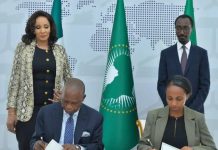
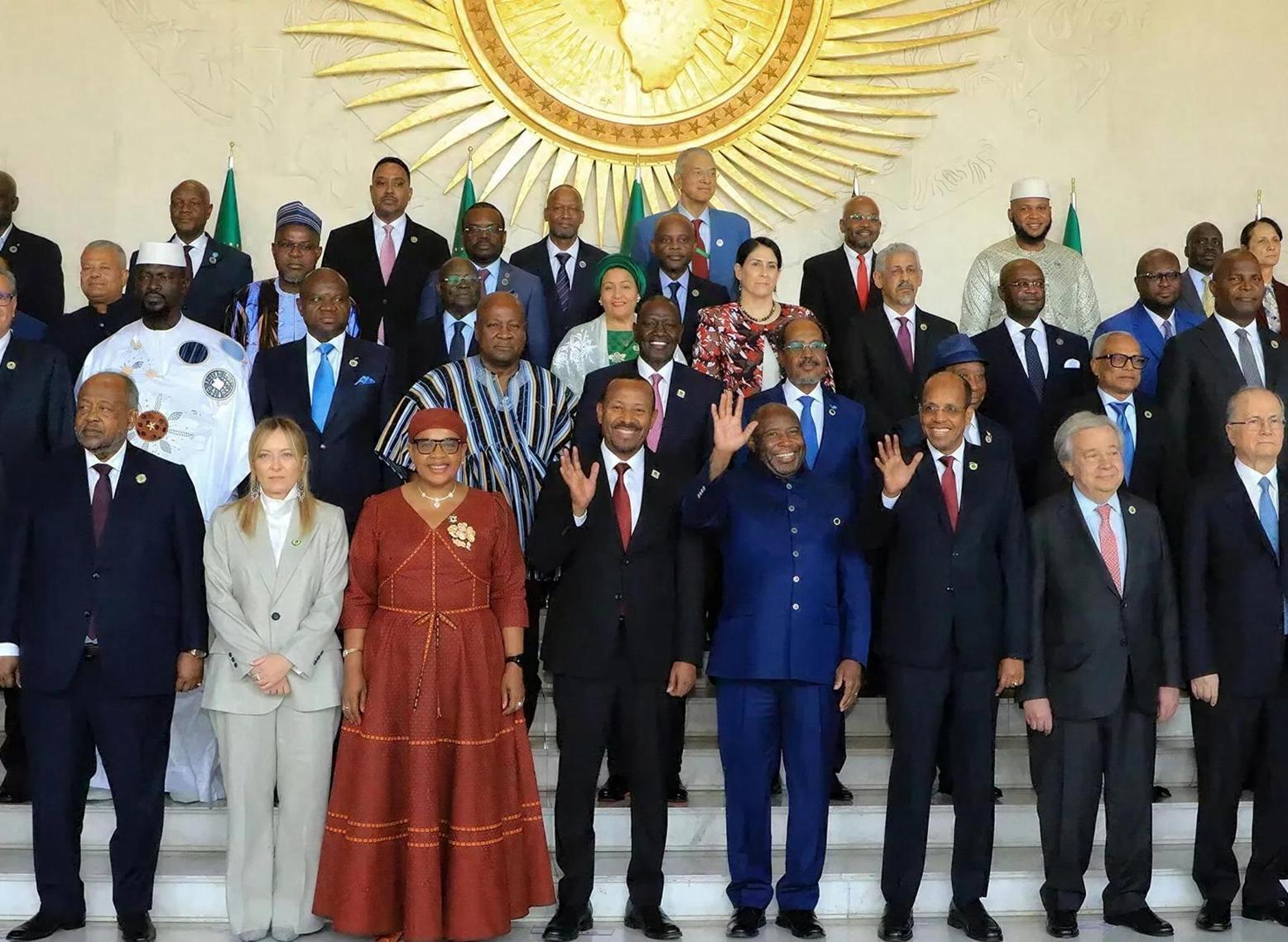
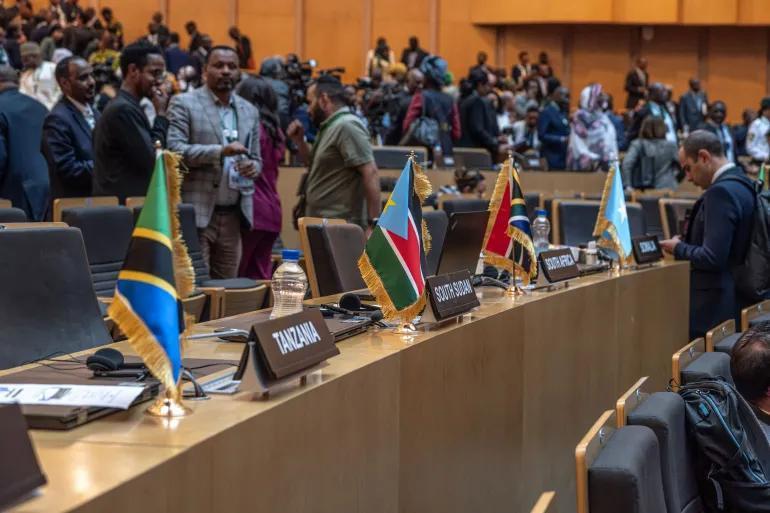
Africa-Press. The 39th African Summit, held in Addis Ababa (14–15 February 2026), was not merely a routine meeting on the African Union’s calendar but a revealing milestone highlighting the depth of the transformations shaking the continent.
It convened amid a context marked by a rise in military coups (three coups in Madagascar, Guinea-Bissau, and Benin during the period from October to last December alone; two succeeded while the third failed), the continuation of armed conflicts in Sudan and the Democratic Republic of the Congo, escalating regional tensions in the Horn of Africa, and the repercussions of Israel’s unilateral recognition of Somaliland. It also took place under new leadership of the Commission, headed by Mahmoud Ali Youssouf, which gave it an additional political dimension especially regarding African–Arab issues that featured prominently in the discussions and in the final communiqué.
Indicators of Attendance and the Limits of Decision-Making
Several preliminary observations can be made: some relate to the formal aspect attendance and participation while others relate to substance the issues under discussion.
First: the idea of Israel’s participation was not on the table this time, unlike the previous summit. That summit had been preceded by a statement from the Union Commission stipulating participation only for observer members accredited to the Union (87 members), while excluding ambassadors accredited to the host country, Ethiopia 135 ambassadors in total, including Israel. Israel exploited that situation in an attempt to participate in 2023 and 2024, but it was expelled.
Accordingly, Israel did not participate or attempt to participate this time, unlike previous occasions, particularly with Youssouf heading the Commission, given his rejection of normalization with Israel, or even granting it observer status within the Union.
Second: Guinea returned to participate in the summit’s proceedings after the Peace and Security Council decided to reinstate it to the Union following the suspension of its membership in 2021, after the coup that ousted President Alpha Condé.
That decision came after the elections held at the end of last December, which resulted in the victory of the head of the military council, Mamady Doumbouya, with 86.72%.
By contrast, six countries are still awaiting a similar decision: Sudan (October 2021), Mali (June 2021), Burkina Faso (January 2022), Niger (August 2023), Madagascar (November 2025), and Guinea-Bissau (November 2025).
However, it is notable in this regard that the Commission Chair has adopted a different approach toward these states. In his view, suspension of membership does not mean they are expelled from, or rejected by, the African Union. Youssouf instructed the relevant AU bodies to ensure these countries participate or that their views are sought on matters related to sustainable development, humanitarian affairs, NEPAD membership, health centers, and other issues.
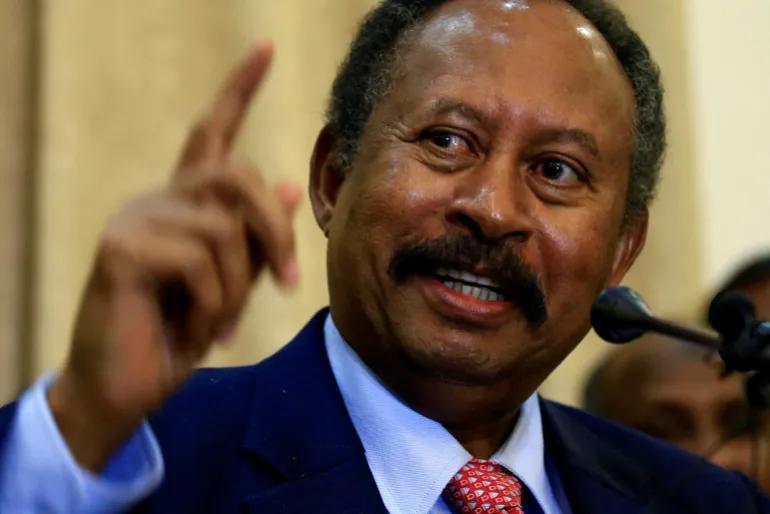
Third: the summit did not extend an invitation to Abdalla Hamdok, the Sudanese prime minister ousted by Burhan, unlike the previous summit, which was seen as a provocative move toward Sudan something Burhan affirmed at the time. In statements made the day after last year’s 38th summit, he rejected the roadmaps put forward by both the African Union and the Intergovernmental Authority on Development (IGAD) to end the war in Sudan.
He also expressed anger at Hamdok’s participation in the summit’s proceedings and declared his rejection of what he called “attempts to impose a government from outside,” stating: “As long as we are here, and the Sudanese people are here, none of those roaming abroad will rule us.”
Fourth: linked to the previous point is Sudan’s keenness this time to take part in the summit meetings despite its suspended membership, and to seek the lifting of that suspension, unlike the previous time.
Sudan’s unofficial participation came through the foreign minister, Muhyi al-Din Salem, in the Peace and Security Council’s ministerial-level meetings prior to the summit. This was reflected in the issuance of a final statement by the Council regarding Sudan, unlike the 38th summit, when the sharpness of divisions led the Council’s presidential-level meeting to fail to issue a final statement, settling instead for a special session two days later led by the African Union’s Peace and Security Council Commissioner, Bankole Adeoye, to clarify certain points about the conflict in Sudan and other matters.
Fifth: the summit did not address the Grand Ethiopian Renaissance Dam despite the recent Egyptian–Ethiopian tensions despite the fact that the summit’s main theme was titled “Ensuring sustainable water availability and safe sanitation systems to achieve the goals of Agenda 2063.”
Although the Commission Chair stated in the opening session the importance of turning water resources into bridges for peace and closer ties among African peoples, the lack of a direct reference to the issue may reflect an unwillingness to anger Ethiopia, the host country and seat of the African Union.
This may also help explain why the Egyptian president did not attend the summit nor even the prime minister settling instead for participation by the foreign minister, even though the agenda included remarks by Abdel Fattah al-Sisi in Egypt’s capacity as chair of the Peace and Security Council for February.
Sixth: linked to the previous point, the summit did not clearly mention the Ethiopian Eritrean dispute over borders, nor Ethiopia’s desire to secure access to the Red Sea and revisit the border agreement between the two countries. Once again, the summit appears to have taken into account that it was being held in Ethiopia, the AU’s host state, even though the escalation over borders has come from Addis Ababa rather than Asmara. Failure to settle the dispute could lead to clashes or even war between the two sides, similar to what happened in 1998–2000.
Seventh: the Council did not take practical steps to curb the phenomenon of military coups, particularly by preventing soldiers from switching from military uniforms to civilian attire through “token” elections whose outcomes are effectively guaranteed in their favor elections that then pave the way for lifting the AU suspension on the country that experienced the coup, as happened recently in Guinea.
This point was raised by UN Secretary-General António Guterres in his opening remarks, and was also underscored by Angola’s president, the outgoing summit chair, who noted that military coups in Africa are unacceptable because they undermine constitutional order, and that attempts to circumvent this through post-coup elections are equally unacceptable.
Yet these statements did not resonate with leaders who might end up constraining themselves if such a decision were adopted. This also relates to another issue that was not discussed at this summit or previous ones: rejecting constitutional amendments that allow any president to remain in power for more than two consecutive terms. This loophole is exploited by many leaders to prolong their stay in office without an “apparent” conflict with the continent’s governance, democracy, and good administration norms. This phenomenon is known as a “constitutional coup.” The final communiqué therefore “only” reaffirmed the traditional principle of zero tolerance for unconstitutional changes of government.
Eighth: the summit adopted the memorandum of understanding between the African Union and the regional economic communities and regional mechanisms regarding the use of the African rapid intervention force affiliated with these organizations, calling for stronger coordination and operational readiness.
This means the African Union still relies heavily on the role of these organizations in settling conflicts within their regional spheres, while requiring that it be informed of any steps taken to ensure continued coordination an approach reflected in the founding protocols of these mechanisms.
For example, Article 52 of the 1999 protocol establishing ECOWAS’s mechanism for conflict prevention, management and resolution, peacekeeping, and security states that, in carrying out its peace and security tasks, the mechanism should fully cooperate with the (then) Organization of African Unity’s mechanism, and, in accordance with Chapters VII and VIII of the UN Charter, inform the international organization of any military intervention it undertakes.
Ninth: the summit reaffirmed the common African position on reforming the UN Security Council, repeating Africa’s demand for fair representation in global governance institutions something Guterres also stressed in his address.
He noted that Africa’s absence from permanent seats on the Security Council is untenable, and that the time has come to correct the historical injustices inflicted on the continent, which must be a genuine partner in global decision-making rather than merely a subject of discussion. However, these statements do not appear to have translated into practical outcomes at this summit, or at the previous one.
The Commission Presidency and Reorienting Africa’s Compass
Despite the importance of the Sudanese and Somali issues prior to the summit, it is clear that the presence of an African/Arab figure such as Mahmoud Ali Youssouf contributed to giving them greater attention.
The Commission serves as the African Union’s main executive body. It is responsible for implementing the policies and decisions adopted by the Assembly of the Union (heads of state and government) and the Executive Council (ministers of member states). It also acts as the AU’s general secretariat and performs key roles in advancing the Union’s objectives. Its main tasks include implementing decisions, coordinating activities, formulating policies, promoting African integration and interests, managing administrative and financial affairs, advancing human rights and democracy, and managing crises and conflicts.
African heads of state have recognized the importance of the Commission Chair position, as it often reflects not only continental interests but also, in practice, the foreign policy of the state represented by the Chair contrary to the AU’s founding charter. This has been evident, at least in recent years.
There are several examples. In 2016, former Commission Chair Nkosazana Dlamini-Zuma supported the Sahrawi people’s right to self-determination, which could lead to independence. At the AU summit in Ethiopia in January 2016, she stated that African states owed the Sahrawi people the organization of a “self-determination referendum, because it was a promise.” This position was echoed by then-summit chair Robert Mugabe, President of Zimbabwe, who declared in his opening speech: “We still have the issue of Western Sahara, which is a debt we must pay to its people. The question is: when will we pay this debt? And when will we decide on the independence of the Sahrawi people?”
This support came despite 28 AU member states more than half signing a request to suspend the membership of the Sahrawi Republic in order to facilitate Morocco’s return to the Union.
A similar situation occurred when outgoing Commission Chair Moussa Faki supported granting Israel observer status in 2021 a stance also adopted by former candidate Raila Odinga.
While such directions cannot be decided unilaterally by the Commission Chair, the Chair can influence both the Executive Council and the Assembly of Heads of State, as he is primarily responsible for setting the agenda presented to them.
This may suggest that Arab-related issues such as Palestine along with Afro-Arab cooperation and rejection of external interference in African affairs, will top the continental agenda during the next four years, Youssouf’s first term in office. Indeed, this trend appears to be emerging in practice.
Somalia and Sudan: Two Open Crises and Cautious Approaches
The Somali issue dominated discussions within the Peace and Security Council. The internal situation in this African/Arab country was among its top priorities, particularly regarding Israel’s recognition of Somaliland and the current status of the African peacekeeping mission there, “AUSSOM.”
Both the Council and the final communiqué strongly condemned Israel’s recognition of Somaliland and rejected the unilateral recognition of the “so-called Republic of Somaliland,” calling for the immediate reversal of the decision (Clause 8).
As for the African peacekeeping mission in Somalia, several observations can be made:
First: in Clause 15, the Council welcomed Egypt’s deployment of international forces to contribute to the mission, replacing withdrawing Burundian troops. These Egyptian forces will operate alongside Ethiopian and Ugandan forces, whose roles were praised in Clause 14 for sending additional contingents to compensate for countries seeking to withdraw.
Although Egypt’s participation and the increased Ethiopian and Ugandan troop presence may positively affect the mission’s performance, there are concerns about possible negative repercussions due to the current disputes between Egypt and Ethiopia over the Grand Ethiopian Renaissance Dam.
Second: regarding the funding problem of the African mission, it is notable that the Council acknowledged the difficulty of African self-financing for these forces and adopted broad wording on the issue: “intensifying resource mobilization to secure sustainable, predictable, flexible, multi-year funding for the mission; requesting the AU Commission to continue its engagements with the UN Security Council to implement Resolution 2719 (2023) concerning the mission; urging the Security Council to fulfill its primary responsibility for the maintenance of international peace and security; and calling on AU partners to support ongoing efforts and consider contributing directly to the funding of the AU mission in Somalia” (Clause 16 of the Council’s decisions).
The Council also relied on financing from regional organizations and other donors for the mission, particularly in light of Trump’s decision to halt the funding required for it. In Clause 17, the Council expressed deep appreciation to regional, bilateral, and multilateral organizations, including donor countries, for their valuable contributions to peace and stability in Somalia, and for supporting ongoing efforts to secure adequate, multi-year, predictable, sustainable, and flexible funding for the mission. Nevertheless, the funding challenge is likely to remain an obstacle to AUSSOM achieving its objectives.
Even before the summit began, there was clear attention to the Sudan file, especially after Khartoum announced ahead of the summit its return to the Intergovernmental Authority on Development (IGAD), after Burhan reversed the decision he had taken in January 2024 to suspend Sudan’s membership, following IGAD’s decision to allow the commander of the Rapid Support Forces (RSF), Hemetti, to participate in an extraordinary summit held in Uganda. Burhan had at the time conditioned Sudan’s return on an apology from IGAD.
He also rejected IGAD’s roadmap plan since the outbreak of the war more than two years ago, when the organization declared that Sudan faced a constitutional vacuum requiring the deployment of forces from the East African region. It was also evident that Burhan was keen this time on ensuring Sudan’s participation and on lifting the suspension of his country’s AU membership since October 2025.
The Peace and Security Council affirmed recognition of Sudan’s current government an approach closer to Burhan and rejected the parallel government declared by the Sudanese Founding Alliance (Ta’sis), led by the RSF. It called on all member states and partners not to recognize the so-called “parallel government,” while reaffirming its support for Sudan’s sovereignty and territorial integrity within its internationally recognized borders (Clause 11).
However, despite condemning RSF abuses in El Fasher (Clause 3), the Council did not exclude these “militias” from any political process. Instead, in Clause 7, it stressed the need to resume an inclusive Sudanese dialogue focused on reconciliation and a consensual political solution, under the AU-led process in coordination with IGAD, the United Nations, neighboring states, and other regional and international peace-support tracks in Sudan. This includes the Quadrilateral dialogue (Egypt, Saudi Arabia, the UAE, and the United States) and the “Quintet” (the African Union, IGAD, the Arab League, the European Union, and the United Nations), to support de-escalation, a humanitarian truce, and the cessation of hostilities in order to restore peace and stability in Sudan.
On the other hand, the Council appears to have limited itself to denouncing external interference in Sudan without clearly condemning, for example, the states that support the RSF. Clause 10 states: “the Council strongly condemns external interference in the internal affairs of Sudan and calls on all external actors to refrain from actions that may continue to fuel the conflict.”
It is also notable that the Council did not roll back its October 2021 decision to suspend Khartoum’s membership in the Union, which led forces participating in Ta’sis’s “parallel” government to describe this stance as “historic.”
Conclusion
This summit, with all the stakes and challenges surrounding it, reveals a deep African paradox: an abundance of rhetoric and caution in action. Between affirming major principles and hesitating to address the roots of crises, the continent remains trapped in partial remedies and narrow political balancing.
The African Union faces a historic test: either it transforms from a platform for statements into an effective decision-making instrument, or it remains a largely protocol-driven framework that accompanies crises without anticipating them. When African elites realize that sovereignty is not safeguarded by rhetoric but by will, and that stability is not imported but built, only then can Africa begin to write a new chapter of its political history with the ink of action rather than the ink of communiqués.