By Othmane Lahiani
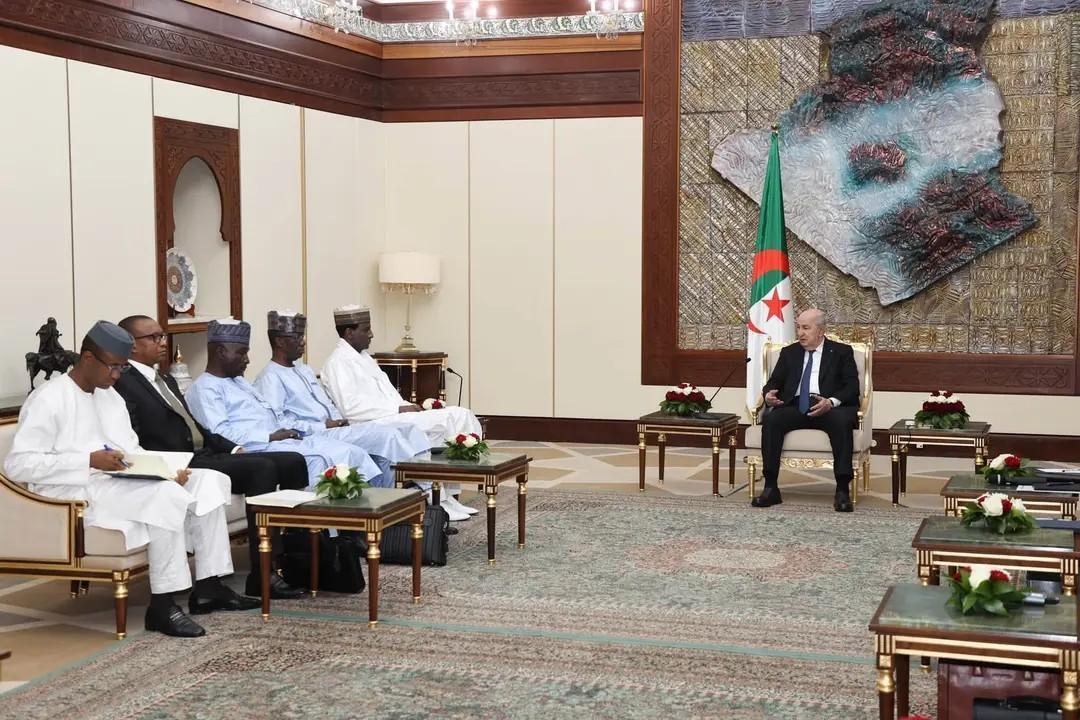
Africa-Press. As soon as the Prime Minister of Mali, Abdallah Maiga, left Algeria, the Prime Minister of Niger, Ali Mohamed Lamine Zein, arrived at the airport in Algeria. The two visits confirm the overcoming of the previous crisis between Algeria and the Sahel countries, indicating a serious shift in the relationship that is beginning to find its way towards building political and security understandings and economic partnerships.
Unlike the outcomes of the Nigerien Prime Minister’s visit, which resulted in a new package of cooperation agreements in the field of energy, the marketing of Nigerien oil with Algerian support, and the maintenance of the Zinder refinery along with the near opening of a commercial corridor, the outcomes of the Malian Prime Minister’s visit to Algeria have not yet been revealed. The Malian government remains cautious and deliberate regarding a broader normalization of relations with Algeria after a political and diplomatic crisis that began in 2023 and worsened in April 2015, following the incident of Algeria shooting down a drone belonging to the Malian army.
Malian Foreign Minister Abdallah Diop explained the steps taken before the Prime Minister’s visit to resolve the crisis, emphasizing that the matter still requires silent discussions. Diop stated in a political discussion held last Thursday evening in Bamako: “We are neighbors and committed to geography; we need to work together based on this principle. What is happening between Algeria and Mali is a necessary political process to manage our differences through dialogue.” He added: “We need to exercise restraint. When we are dealing with such political processes in relations with countries, it is often necessary to adhere to strategic silence. When we are in the midst of strategic changes, we should not assume that everything happening in the arena must be discussed in the public space. Not everything should be said to the public, as there are also enemies and opponents listening, so we must trust our leaders. What you do while standing, there are those who know about it while they are seated.”
Steps to Resolve the Crisis Between Algeria and Mali
On July 10, Algeria and Mali began steps to resolve the crisis by announcing the opening of airspace and the return of ambassadors, culminating in the visit of the Malian Prime Minister, with an anticipated visit from the transitional authority leader in Mali, Assimi Goïta, to Algeria. However, Bamako insists on giving a political impression that the central dispute with Algeria, concerning the northern file and Azawad, and the subsequent cancellation of the 2015 Algeria peace agreement, has been resolved in favor of the Malian position, which is purely an internal matter.
Targeting Azawad Movement Sites
One day after Maiga’s visit to Algeria, the General Staff of the Malian Armed Forces announced the bombing of sites belonging to the Azawad movements (classified by Bamako as terrorist groups) that contained significant military equipment and armed vehicles in the Abiyara area of Kidal, northern Mali. They confirmed that this operation was conducted with the support of their partners, referring to the “African Legion” affiliated with Russia. This indicates a political message from Bamako, separating the paths of its relations with Algeria and the northern file and the Azawad movements.
The nature and outcomes of the reciprocal visits between officials from both Algeria and Niger reflect a significant difference in the approach of Sahel countries towards their relations with Algeria. A prominent leader in the Nigerien Democratic Renewal Party, Omar Al-Ansari, stated that it is necessary to consider the difference in the political crisis between Algeria and the cases of Mali and Niger, explaining that “the positive factor is that relations between Algeria and the Sahel countries have regained their natural political rhythm, which is very important. It is certain that there will be a difference in the treatments, as in the case of Mali, the crisis was deepened by the impulsive perceptions of the ruling group in Bamako towards a collision option, unlike the case of Niger, where its crisis with Algeria did not reach a severe level, granting Niamey a shorter retreat and easier possibilities for understandings with Algeria compared to Mali.”
Algeria’s relationship with Mali in recent years has been largely governed by political and security dimensions, especially in light of the disagreements related to the northern file, sovereignty, and Algerian mediation. In contrast, Niger appears more inclined towards a pragmatic approach that places economic cooperation, development, road connectivity, energy, and communications at the core of the relationship. Experts believe that this difference provides Algeria with an opportunity to adopt a flexible diplomacy that respects the uniqueness of each partner and addresses political and security concerns with Mali while deepening mutual economic reliance with Niger, ultimately allowing for the construction of a regional network based not on the logic of axes but on the diversity of interests and the integration of roles.
Niger Views Algeria as a Strategic Economic Partner
Algerian researcher specializing in political and security affairs, Boumediene Aribi, explained this disparity by stating that “Niger views Algeria primarily as a strategic economic partner, while Mali still perceives it through a political and security lens filled with doubts. Therefore, Algeria cannot transfer the Nigerien model to Mali as it is; the Algerian approach towards Mali should shift from a diplomacy of addressing political disputes to a diplomacy of producing common interests.”
He added: “Instead of trying to resolve all political issues first, gradual economic and developmental cooperation can be built to create mutual interests and rebuild trust. Here, the economy does not become a substitute for politics, but rather a tool to alleviate its sensitivity and reframe the relationship from a logic of doubts and sovereignty to a logic of interests and mutual dependence.”
He considered that “Algeria can test the seriousness of the Malians without turning it into a public test or embarrassing political conditions. The difference with Niger is clear; the seriousness of Niger is currently measured by the intensity of the transition to projects and sectoral agreements, as cooperation between the two countries has seen the signing of more than 20 agreements in various fields. As for Mali, after Prime Minister Abdallah Maiga’s visit to Algeria on August 24, 2026, and President Assimi Goïta’s preliminary acceptance of a visit to Algeria, the political indicators are positive, but they are not sufficient alone to judge the transformation of the relationship sustainably and to turn it into an opportunity to re-establish its influence on more sustainable foundations.