Thabet Al-Amour, political science researcher
What You Need to Know
The death of Libyan Army Chief Mohamed Ali Al-Haddad in a plane crash has significant implications for the country’s fragile political and military landscape. His absence raises concerns about the future of military unity and the ongoing power struggles between rival factions in Libya, complicating international efforts for stabilization.
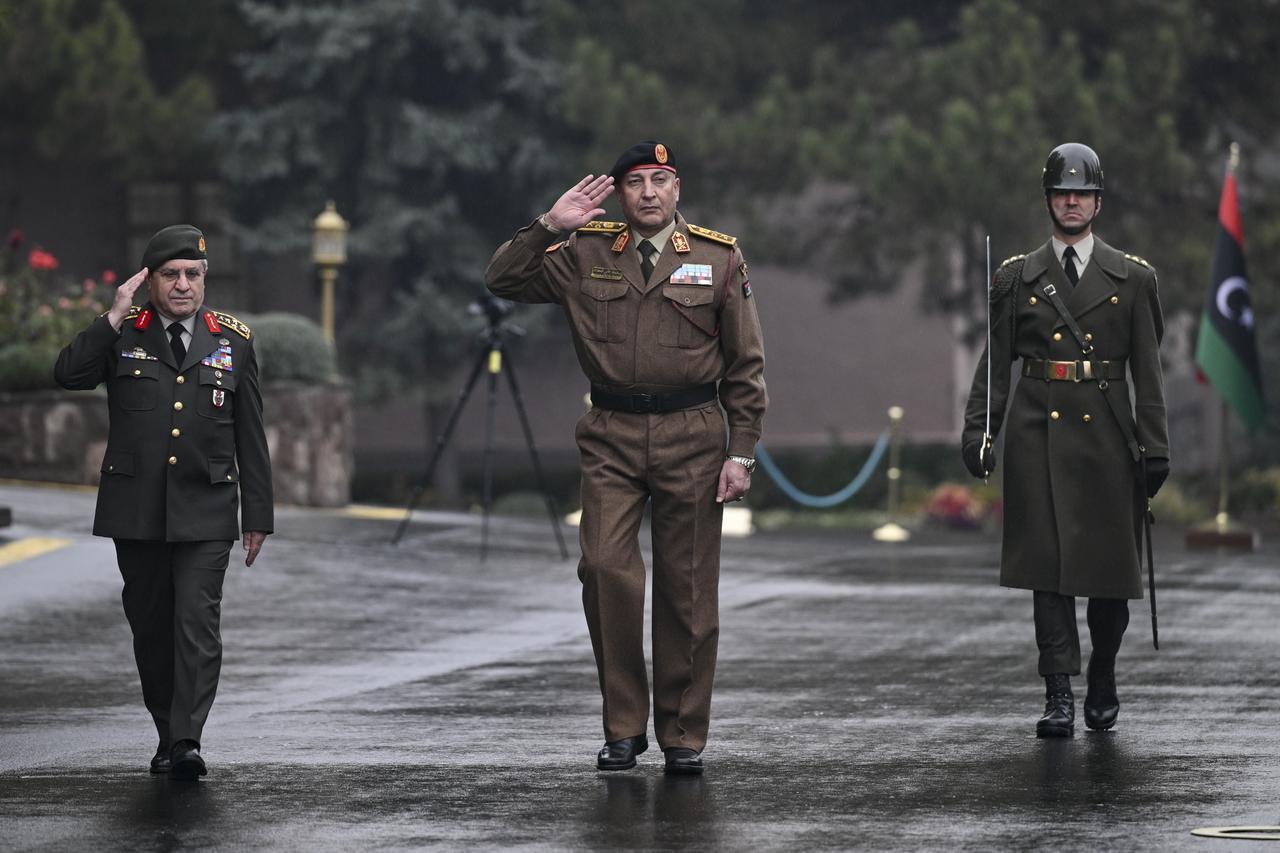
Africa. Libyan Army Chief of Staff, First Lieutenant Mohamed Ali Al-Haddad, and four of his companions lost their lives in a plane crash shortly after taking off from Ankara Airport on December 23, 2025. In a politically and security-sensitive context, Al-Haddad’s death under “unclear” circumstances raises legitimate questions about the political and military ramifications of the absence of a leader who was spearheading the unification of the Libyan military institution.
The death of the Chief of Staff represents a significant development in a political and military landscape characterized by fragility and complexity. In a country experiencing a long-standing division between competing governments and the presence of armed forces with multiple loyalties, the absence of a central military figure reshuffles the cards and raises questions about the future of military balance and the fate of efforts to unify the military institution.
Al-Haddad’s death comes at a sensitive time, as international attempts to unify the military institution face challenges amid escalating competition between military leaders from the east and west, alongside local and regional interest networks that do not hide their international connections.
The incident has transformed from a mere plane crash into a nationally significant event, with its human dimensions giving way to extensive political and institutional repercussions, reflected in the intensity of local and international reactions and the swift official response to open investigations. The circumstances surrounding the crash are still under close scrutiny by both Libyan and Turkish parties. The event’s impact was evident in the crowds that gathered for Al-Haddad’s and his companions’ funeral.
In the Libyan context, the Chief of Staff was not merely a military leader but a political actor within a delicate balance of power. The uniqueness of the Chief of Staff in Libya is that he does not represent a purely technical position; rather, he is a central figure in the military and political power balance, especially given the existence of parallel armies, armed factions, and external interventions.
Consequently, his absence opens the door to fierce competition for the position and threatens to collapse the fragile understandings in place. This has reignited discussions about the future of the military trajectory and the ability of the Libyan military institution to continue its unification efforts, particularly in the absence of key figures who played pivotal roles in achieving delicate balances within the military landscape. The repercussions and implications of this situation vary in answering the question: Was the incident orchestrated or merely an accident?
Al-Haddad’s death occurs in a fragile context for the trajectories of the Libyan scene, both politically and militarily, at a moment when international efforts to relaunch the political settlement are intensifying, alongside efforts to unify the military institution, against a backdrop of increasing indicators of security breakdown and political assassinations in some areas.
The implications of the sudden absence of the Libyan Chief of Staff represent a significant blow to the military institution in western Libya. Al-Haddad was not just a conventional military leader; he was a pivotal figure who played a crucial role in attempts to unify the military institution and contain local conflicts in Tripoli and its surroundings. He was a balancing factor and a link between the east and west of the country, possessing an institutional vision that sought, albeit slowly, to integrate armed brigades and end military division while building balanced military relations with international partners. He had made significant progress in the restructuring file within the western region, alongside his role in the 5+5 military committee, which works on unifying the army between the east, west, and south. The file of building the Libyan military institution remains one of the most complex issues in the political and security landscape, given the ongoing division, multiple centers of influence, and the dominance of armed formations on the ground, against repeated attempts to restructure and unify the army within a comprehensive national framework.
The sudden absence of Al-Haddad at this critical time may disrupt coordination within the western region and reignite the ongoing competition for local and regional loyalties, especially if a widely accepted and unifying successor is not chosen. This threatens to slow down the unification process of the army and makes military balances more fragile at a time when there was relative recovery and the beginnings of institutional reform that require strong, accepted leadership that is difficult to replace quickly.
The death of the Chief of Staff of the Libyan Army marks a pivotal event in the complex Libyan scene, where military divisions intersect with political tensions and institutional fragmentation between the east and west of the country. This death comes at a sensitive time characterized by attempts to restructure the military institution amid intense regional and international power struggles. This leads to the following scenarios:
– Absorbing the event and its implications and appointing a consensus replacement, which is a weak scenario due to the difficulty of achieving internal and external consensus. The death of the Chief of Staff may lead to escalating internal conflicts among senior officers, each seeking to consolidate their influence or advance in the military hierarchy, especially in the absence of a unified and comprehensive military structure.
– Escalation of conflict within the army, which is a likely scenario, especially if several internal and external parties enter the competition to succeed Al-Haddad. The absence of a significant figure in the military institution may lead to a race among power centers to fill the position, threatening further fragmentation within the institution. Internal and regional parties may exploit this vacuum to impose loyal names, deepening the division between the eastern and western camps.
– Stagnation of consensus or appointment, leading to a halt in efforts to unify the army and the proliferation of competing militias. In Libya, where politics intersects with arms, and loyalties with deals, the death of the Chief of Staff may not merely be a military loss but a link in a chain of struggles for influence, money, and arms. Libya, which possesses the largest oil reserves in Africa, exceeding 45 billion barrels, intensifies the regional conflict over these resources and the desire to secure as many foreign investment opportunities in this sector, which are gains that both internal and external parties seek to achieve in pursuit of legitimate and sometimes illicit economic gains.
In Libya, nothing occurs outside the complex context of regional conflict and the delicate balances between centers of influence. Therefore, the late Chief of Staff’s visit to Turkey, followed by his sudden death, is not merely a temporal coincidence but may be a key to understanding the hidden struggle for the future of the Libyan military institution and the limits of permissible alliances. If the circumstances surrounding what happened are not revealed, the ambiguity will remain a weapon in the hands of those who plan in the shadows and kill in public. If a link between Al-Haddad’s death and a weapons deal with Pakistan is established, it reveals the depth of the crisis within the Libyan military institution and raises troubling questions about who is effectively managing this sensitive sovereign file.
In conclusion, the death of the Libyan Chief of Staff is not an isolated event but reflects the fragility of the military and political structure in Libya, highlighting the interconnection between security issues and regional and international tensions. The near future will reveal whether Libyan elites can navigate this moment with national consensus or whether the repercussions will plunge Libya into a new chapter of divisions within one of the state’s most critical components: the army.
Libya has been in a state of turmoil since the fall of Muammar Gaddafi in 2011, leading to a fragmented political landscape with competing governments and armed groups. The military has struggled to unify under a single command, with various factions vying for power and influence, complicating efforts for national reconciliation and stability. The recent death of a key military leader adds to the uncertainty surrounding the future of Libya’s military and political institutions.