
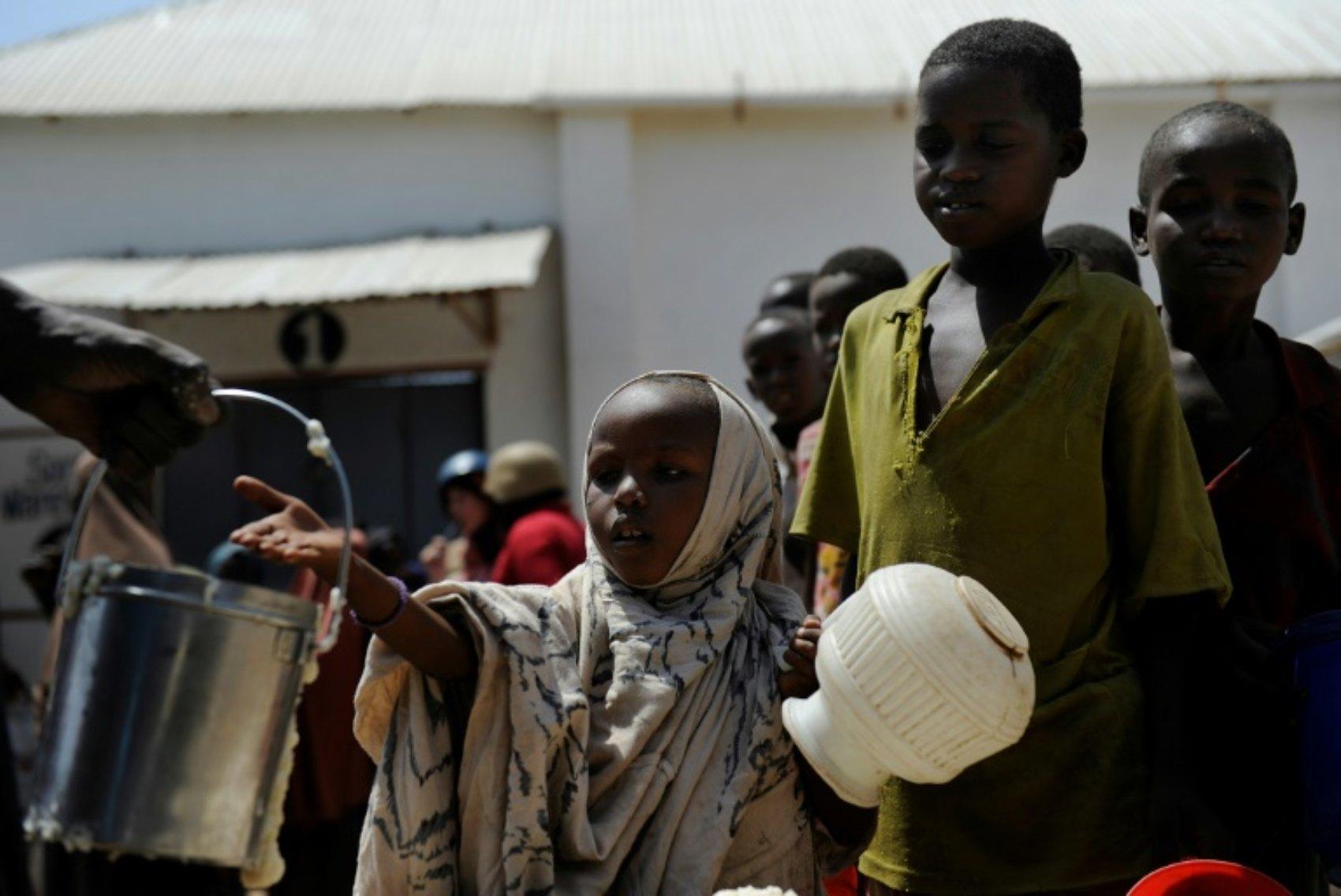
Africa-Press. Somalia is facing one of its most severe humanitarian crises in years, with escalating international warnings that large parts of the country, particularly the southern regions, are on the brink of famine for the first time since 2022. This situation is exacerbated by a combination of drought, conflict, rising food prices, and a sharp decline in humanitarian funding.
This time, cuts in foreign aid and the repercussions of the U.S.-Israeli war on Iran are hindering efforts to address food shortages caused by poor rainfall over multiple seasons and ongoing insecurity.
International institutions concerned with food security, including the Integrated Food Security Phase Classification and the Famine Early Warning Network, have issued repeated warnings about the rapid deterioration of food security and malnutrition, particularly in the agricultural and pastoral areas of the Bay, Bakool, and Gedo regions in the south.
Recent estimates indicate that around 6 million people, or 31% of the analyzed population, are facing critical levels of acute food insecurity between April and June 2026, including approximately 1.9 million people in the “emergency” phase according to the Integrated Food Security Phase Classification.
Warnings suggest that continued poor rainfall or failure of the upcoming harvest season could push some areas into famine within a few months.
The city of Baidoa in the Bay region (southern Somalia) tops the list of areas most at risk of famine, having recorded unprecedented levels of acute malnutrition among children.
According to the Integrated Food Security Phase Classification analysis, the overall rate of acute malnutrition among children in the city is approximately 37.1%, exceeding the threshold for declaring famine, while the rate of severe acute malnutrition has reached 10.2%.
This development is a serious indicator, as one of the three technical criteria necessary for declaring famine has already been met.
Famine is defined according to the Integrated Food Security Phase Classification as the simultaneous fulfillment of three conditions, including:
– At least 20% of the population suffering from acute food deficiency.
– Acute malnutrition rates among children exceeding 30%.
– The rate of deaths related to hunger reaching critical levels.
Data also show a sharp increase in disease incidence among children; the morbidity rate is 36.4% in the agricultural and pastoral areas of the Bay region, increasing the likelihood of deaths related to hunger and disease.
The Famine Early Warning Network has warned that failure of the “Gu” rains or exposure of crops to dry spells during the flowering and grain filling stages could lead to exceeding the three famine criteria within a period of two to three months.
The roots of the current crisis trace back to the failure of the “Deyr” rainy season between October and December 2025, followed by the harsh and dry “Jilaal” season between January and March 2026, which undermined families’ chances of recovering from the historical drought that struck the country between 2020 and 2023.
The succession of weak seasons has resulted in significant losses in agricultural crops and livestock, as well as a decline in agricultural job opportunities, which has eroded the primary income sources for poor families.
Moreover, the population’s ability to adapt has been hampered by the sharp rise in food, water, and fuel prices, alongside ongoing armed conflicts and insecurity, further increasing the fragility of economic and social conditions.
Despite a relative improvement in rainfall over the past few weeks, international reports confirm that precipitation levels remain well below normal averages, and their impact on agriculture and pastures is still limited.
Forecasts indicate that the anticipated harvest from the “Gu” season in July will be below average, even if rainfall continues in the coming weeks, putting millions of people at risk of food shortages in the second half of the year.
The climate crisis has coincided with a sharp rise in food and fuel prices, amid disruptions in global supply chains due to tensions and conflict in the Middle East this year.
According to food security reports, Somalia, which heavily relies on food imports, has been directly affected by rising transportation costs and fuel prices, leading to increased prices of essential goods in most regions.
Additionally, some traders and service providers’ refusal to transact in the Somali shilling in the southern regions has contributed to the depreciation of the local currency, further eroding families’ purchasing power.
Field analyses confirm that local markets are experiencing record increases in the prices of grains, oils, and essential food items, while poor families face increasing difficulties in accessing food, especially with limited job opportunities and declining wages.
In agricultural and pastoral areas, weak rainfall has reduced demand for agricultural labor, pushing an increasing number of residents to seek informal jobs with limited returns, amid rising competition and declining wage levels.
In addition to drought, large areas of Somalia face increasing risks related to flooding, particularly along the Shabelle River.
International reports have indicated a rapid rise in the river’s water level during April 2026, with expectations of additional rainfall in May, raising the likelihood of devastating floods in the riverine areas with fragile infrastructure.
Flooding, alongside drought and conflict, is expected to cause new internal displacement affecting more than 304,000 people between April and June 2026.
Displacement exacerbates the pressures on cities and displacement camps, where millions already live in dire humanitarian conditions, with limited job opportunities, health services, and clean water.
International estimates indicate that food security conditions in several displacement camps, such as Baidoa, Bossaso, Beledweyne, and Galkayo, are deteriorating rapidly due to rising prices and weakened humanitarian assistance.
Malnutrition data paint a bleaker picture of the humanitarian crisis in Somalia, with estimates indicating that around 1.88 million children aged 6 to 59 months will suffer from acute malnutrition this year 2026, including 493,000 children suffering from severe acute malnutrition.
This increase is attributed to the interplay of several factors, including deteriorating food security, rising disease incidence, and weakened health, nutrition, water, and sanitation services, in addition to funding constraints that have led to the closure of hundreds of health centers and nutrition programs.
In Baidoa specifically, the number of treatment and nutrition centers has decreased from 16 centers in 2024 to only three centers by April 2026, depriving large numbers of children of necessary treatment.
Reports have also shown rising rates of measles, diarrhea, malaria, and respiratory diseases, which directly contribute to worsening malnutrition and increasing mortality among children.
Observers note that one of the most dangerous aspects of the current crisis is the sharp decline in the volume of international humanitarian funding directed to Somalia.
According to United Nations data, total humanitarian funding allocated to Somalia in 2026 was only about $160 million, compared to $531 million the previous year, while funding reached $2.38 billion during the major drought crisis in 2022.
Despite the planned increase in food assistance in recent months to cover around 700,000 people monthly, it still only addresses 12% of the total needs among those in phase three or higher, and 37% of those in the emergency phase.
Relief organizations have warned that Somalia could become an early model of what is known as the “post-aid era,” amid a widening gap between humanitarian needs and available funding.
Daoud Jiran, the director of Mercy Corps in Somalia, stated that the country faces the risk of becoming “one of the first major crises in the post-aid era,” as humanitarian needs increase while international response declines.
Current developments evoke memories of the 2011 famine that claimed the lives of around 250,000 people in Somalia, as waves of drought coincided with conflict and weak humanitarian response.
The country also experienced similar crises in 2017 and 2022, but the extensive expansion of humanitarian assistance at that time helped prevent the crisis from turning into a full-blown famine.
Today, however, conditions appear more complicated due to declining international funding, rising response costs, ongoing conflicts, and increasing climate pressures.
Food security reports confirm that the difference between partial recovery of conditions or a rapid slide into famine will largely depend on the performance of the current rainy season and the scale of humanitarian intervention in the coming months.
Experts believe that continued decline in funding and delayed response could lead to a rapid collapse in food security conditions, especially in the agricultural and pastoral areas of the south, with rising probabilities of widespread human losses if the upcoming harvest fails.