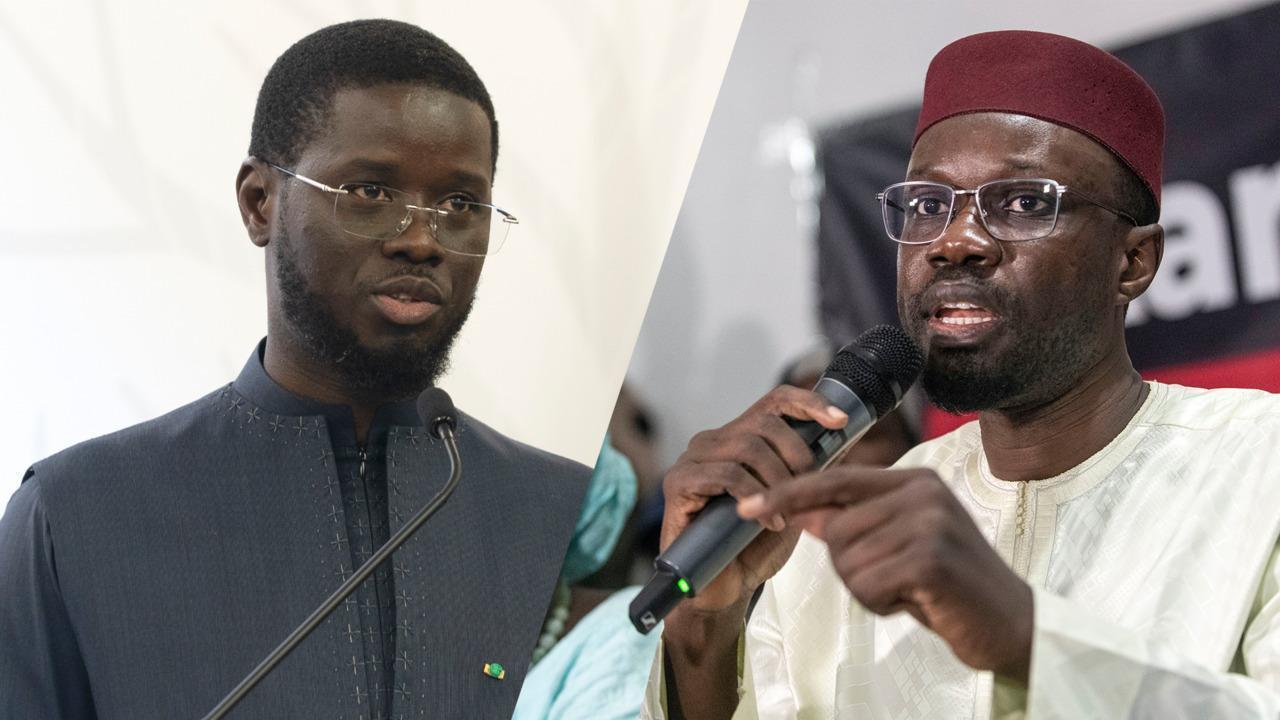
Africa-Press. Amid a rapidly evolving political crisis, Senegal’s national guard summoned two prominent deputies from the ruling party for questioning, just days after President Faye dismissed Prime Minister Ousmane Sonko and dissolved his government. This summons has reignited a broad discussion about parliamentary freedom of expression and the use of the judiciary in political conflicts.
The summoned deputies, Cheikh Bara Ndiaye and Guy Marius Sagna, belong to the ruling party, which leads both the parliament and the state. According to local media reports, Cheikh Bara Ndiaye publicly accused former Finance Minister Cheikh Diop of holding a personal bank account containing “hundreds of billions of West African francs (approximately hundreds of millions of dollars).”
Guy Marius Sagna went further, describing President Faye as a dissident in response to the appointment of the new Prime Minister Ahmed Amin Mohamed Lo, and labeled the situation as “electoral theft.” Sagna explicitly stated that he would not appear for questioning, denouncing what he termed judicial practices that contradict the deputy’s right to express himself, according to a French news outlet.
From Dismissal to Internal Confrontation
These summons occurred in an exceptionally tense context. On the 20th of last month, Faye issued a presidential decree dismissing Sonko and dissolving his government, following months of escalating disagreements between the two over sensitive economic issues, including dealings with international financial institutions and a debt crisis that reached 132% of GDP, according to a news agency.
However, the dismissal did not silence Sonko; instead, it opened a different arena for him. Six days after the dismissal, parliament elected Sonko as president of the National Assembly with a majority of 132 votes out of 165, a move the opposition described as an “institutional coup.” Thus, Sonko now leads the parliament against a president who cannot dissolve it before November, according to the constitution.
The ruling party itself did not remain silent regarding the summons of its deputies. In a statement issued on Sunday, the party expressed its “deep discontent,” warning against “any use of the judiciary for political intimidation,” and calling for respect for the parliamentary immunity of the summoned deputies, according to local sources.
Human Rights Concerns Evoking the Past
The implications of this political movement are not limited to politicians; Amnesty International expressed concern over “alleged violations related to freedom of expression,” noting that these practices evoke methods from past eras. This is a notable reference, especially since the ruling party had built its popularity partly on defending freedom of expression and opposition during a time when both Sonko and Faye faced judicial persecution under former President Macky Sall.
Escalation of the Crisis and Formation of the New Government
This crisis has entered a more complex phase following President Faye’s announcement of his new government, consisting of 30 ministers led by economist Ahmed Amin Mohamed Lo. Although the lineup included some party allies, it notably lacked several key figures who were part of the previous government. This announcement followed an extensive conversation between President Faye and Ousmane Sonko, during which Sonko confirmed the emergence of major points of disagreement regarding the party’s future role, officially announcing the ruling party’s boycott of the new government and its lack of representation with any ministers.