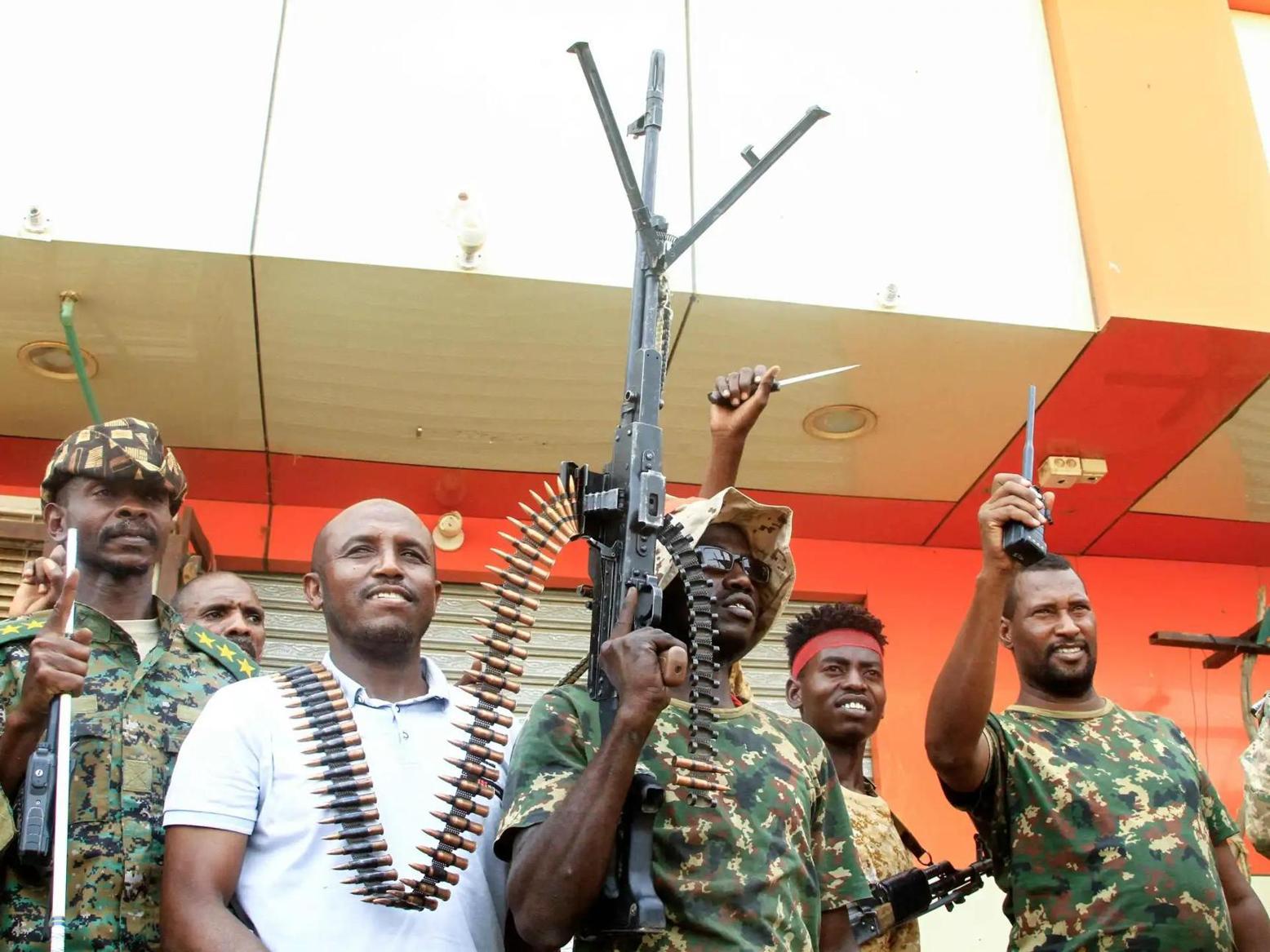
Africa-Press. As the conflict in Sudan enters its fourth year, the battlefield is engulfed in a cycle of “hit-and-run” warfare that has left no inch of land untouched by devastation.
While battles intensify in the Kordofan and Blue Nile fronts, the question “Where is Sudan headed?” hangs in the balance between the barrels of guns and the obstinacy of political wills, amidst a humanitarian disaster that has reached unprecedented levels, putting the lives of tens of thousands at risk.
Failure to Resolve
The situation on the ground is divided between two conflicting interpretations. Security expert Moatasem Abdel Qader believes that the Rapid Support Forces have ended militarily and socially and have failed to seize power.
Abdel Qader, speaking on a local program, considers the targeting of civilian facilities by these forces—such as Khartoum Airport and villages in East Al-Jazeera—as “media stunts” to compensate for their battlefield losses.
He also emphasizes that external interventions, particularly Ethiopia’s involvement in the Kurmuk area of the Blue Nile state, are prolonging the war.
In this context, the Sudanese army has confirmed that it has regained control of the strategic area of Magja in the Blue Nile, amid warnings from a local source about the severe risks facing tens of thousands of civilians.
Conversely, Sudanese academic Fathi Abu Ammar paints a different picture, asserting that the Rapid Support Forces control more than half of Sudan and have recently taken over strategic areas such as “Bara” in South Kordofan.
Abu Ammar stresses that the rhetoric of “uprooting from the roots” adopted by the leader of the Rapid Support Forces, Mohamed Hamdan Dagalo, stems from possessing advanced weaponry and drones, accusing the army of initiating a policy of destroying civilian areas and targeting population centers with drones and airstrikes.
Amid this impasse, diplomatic efforts appear to be in a state of “dying,” as African affairs expert Kofi Kwako believes the conflict has transformed into a “global war” fueled by external support that prevents the parties from sitting at the negotiating table.
Kwako points out that military leaders are thinking solely in terms of power, ignoring the moral element and the suffering of the people, while the African Union and international organizations are unable to impose a real solution.
Sudan… Where to?
The current scene presents Sudan with bleak scenarios summarized by Kwako as follows:
– Prolonged War: Leading to the fragmentation of the state and the emergence of warlords.
– Frozen Conflict: A partial ceasefire and division of areas within a transitional framework, which is difficult to achieve with the continued influx of external weapons.
– Comprehensive Regional Escalation: The conflict extending beyond borders to Ethiopia, South Sudan, and the Red Sea corridors.
Between the army’s rhetoric of “absolute victory” and the Rapid Support Forces’ claim of “fighting for 40 years,” the Sudanese citizen remains the weakest link, paying the price for military ambitions and political failures that have made peace—according to analysts—a postponed option until further notice.
Since April 15, 2023, Sudan has been witnessing a war between the Sudanese army and the Rapid Support Forces, which began in the capital Khartoum and has spread to various parts of the country, resulting in tens of thousands of deaths and the displacement of around 13 million people.