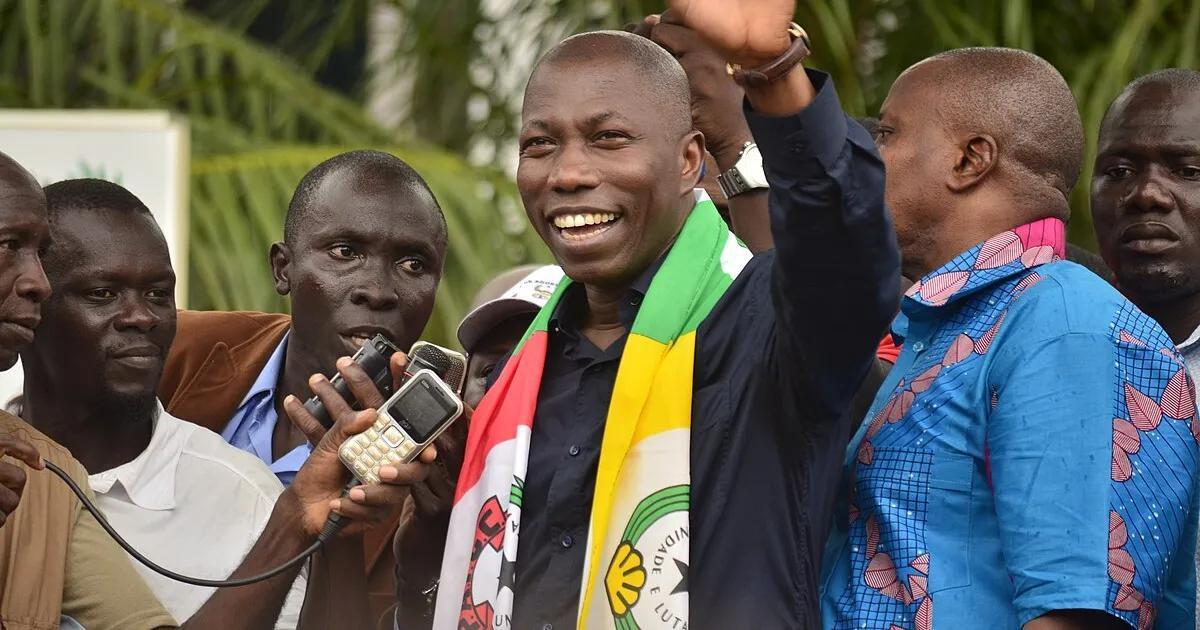
Africa-Press. Guinea-Bissau opposition leader Domingos Simões Pereira, the longtime head of the African Party for the Independence of Guinea and Cape Verde (PAIGC), is facing charges before a military court for allegedly planning more than one coup attempt. These latest developments have thrust him back into the political spotlight and sparked broad debate about his role in a country long accustomed to coups and power struggles since independence.
Born in 1963 in the town of Farim, Pereira began his career as an engineer before entering politics through the PAIGC, the party that led the country’s independence from Portugal. He held diplomatic and administrative posts, including serving as executive secretary of the Community of Portuguese Language Countries, before becoming prime minister from 2014 to 2015. His dismissal following disputes with President José Mário Vaz pushed him into opposition, and he later emerged as the leading challenger to President Umaro Sissoco Embaló.
Recurring coup allegations
This is not the first time Pereira has clashed with the authorities. In November 2025, he was arrested along with several opposition figures during the military coup that ousted President Umaro Sissoco Embaló, before later being released and placed under house arrest. His name has now resurfaced with fresh allegations of plotting coups—claims he repeatedly denies—arguing that his rivals are trying to sideline him through the courts rather than at the ballot box.
Despite the accusations, Pereira remains one of the most prominent contenders for power. He returned from self-imposed exile in Portugal in 2025, and his party again nominated him to face Embaló in the presidential election, but he was barred from running. While supporters view him as a reformer seeking to restore the standing of democratic institutions, opponents accuse him of pursuing power through unconstitutional means.
A polarizing figure
Pereira combines political charisma with administrative experience, yet he has remained a controversial figure given Guinea-Bissau’s political reality, where electoral competition often intersects with military coups. His image swings between that of a reformist leader pushing for change and that of a politician accused of being entangled in the cycle of coups that has shadowed the country for decades.
The case facing Domingos Simões Pereira today is not merely a legal file; it reflects the fragility of Guinea-Bissau’s political system, where accusations and coups are used as instruments in the struggle for power. While he denies all charges, his name continues to weigh heavily in the country’s future—whether through elections or in the arena of political confrontation.