Africa-Press. The United States and the Puntland state of Somalia have signed a new agreement to expand the American military facility in the coastal city of Bosaso. This move reflects the increasing American interest in the Horn of Africa and the Gulf of Aden, amid rising security challenges in the Red Sea and maritime routes leading to Bab al-Mandab.
The agreement was signed on August 2 by Puntland President Said Abdullah Deni and the commander of the U.S. Special Operations Command in Africa, Major General Claude K. Tudor Jr., during a meeting in Bosaso. Puntland’s presidency stated that the agreement aims to expand the base to enhance counter-terrorism operations and support maritime security, without disclosing the extent of the expansion or the number of U.S. troops that may be stationed there.
Strategic Importance of the Location
Bosaso is located on the southern coast of the Gulf of Aden and serves as the main port in Puntland, giving it a location close to one of the most important maritime routes connecting the Indian Ocean to the Red Sea and the Suez Canal.
The region gains additional significance due to its proximity to Yemen and Bab al-Mandab, as well as the presence of the “ISIS-Somalia” group in the mountainous areas near Bari, where U.S. forces conduct support operations for local troops against armed groups.
Security analyses indicate that Washington views Puntland as a potential pivot point for expanding security cooperation in the Horn of Africa, particularly in counter-terrorism and maritime security. Recent analyses have linked the new agreement to an increasing American interest in the Somali coast, the Gulf of Aden, and the Red Sea.
A Facility with Previous Security Presence
The United States is not starting from scratch in Bosaso; U.S. forces have previously utilized facilities around the airport and the facility that was originally developed for the Puntland Maritime Police Force (PMPF).
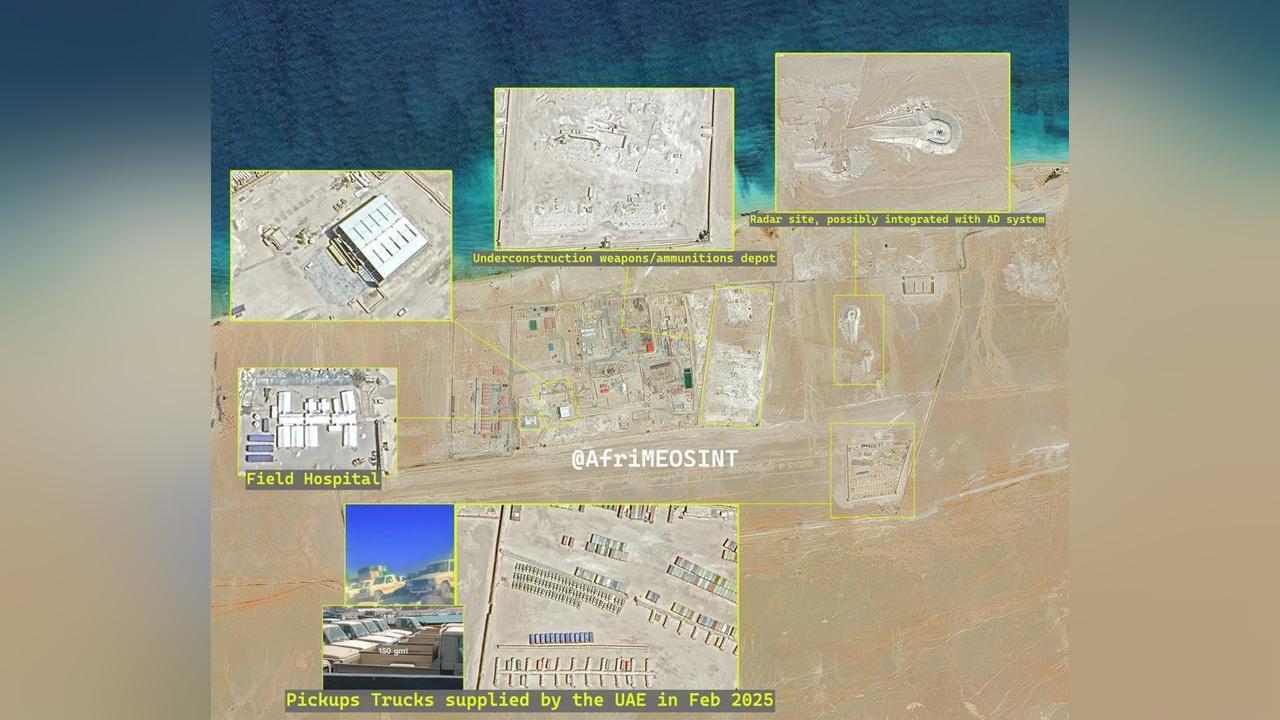
The UAE had supported the establishment and development of this force for years as part of anti-piracy efforts, and UN reports have documented the arrival of military equipment to the Bosaso Maritime Police Force via aircraft belonging to the UAE Air Force.
Satellite images and open-source analyses indicate an expansion of military infrastructure in the region in recent years, including facilities for aircraft, equipment, storage, and radar sites. However, some details circulating about the nature of these facilities and their uses are based on satellite image analysis and unofficial sources, making it difficult to independently verify all their current functions.
Bosaso has also appeared in reports related to military and logistical transport networks in the region, including allegations of its use as a transit point linked to the war in Sudan. These allegations need to be distinguished from the officially confirmed information regarding the new U.S. agreement, which Puntland has stated is aimed at counter-terrorism and maritime security.
Why Now?
The expansion of the facility coincides with a more complex security environment in the Red Sea and the Gulf of Aden, where maritime navigation faces multiple threats, while the United States continues its operations against armed groups in Somalia.
The presence of a larger U.S. facility in Bosaso could provide Washington with an additional point for operations, monitoring, and logistical support in a region characterized by its proximity to Yemen and Bab al-Mandab, alongside existing U.S. military facilities in Djibouti.
However, according to the announced information about the agreement, there are no details confirming that the facility will be used for military operations against Yemen or for offensive missions outside Somalia. Therefore, linking the agreement directly to potential operations in Yemen remains an analysis of possible strategic implications rather than a stated goal of the agreement.
The Somali Dimension
The agreement simultaneously raises questions about the relationship between Puntland and the Somali federal government. Puntland enjoys significant autonomy but is part of the Somali state, and its relationship with Mogadishu has seen political and constitutional disputes in recent years.
Recent studies and analyses have noted that Washington has intensified its direct communications with regional Somali administrations, including Puntland and Jubaland, alongside its dealings with the federal government. Some analyses have suggested that this approach may create political sensitivities regarding the limits of the central government’s powers in concluding security and military agreements.
Conversely, Puntland focuses on its need for external support to confront the “ISIS-Somalia” group and security threats in its areas, while the United States views cooperation with local forces as a means to enhance counter-terrorism and maritime security operations.
Thus, the Bosaso agreement represents not just an expansion of a military facility but is part of a broader reconfiguration of international security presence in the Horn of Africa, where counter-terrorism intersects with maritime security in the Gulf of Aden and the Red Sea, while the nature of future U.S. presence, its size, and operational uses remain contingent on details that have not yet been disclosed.