Mohammed Sanajleh
What You Need to Know
The Nigerien government has begun selling uranium produced by the local company Somair, escalating tensions with France’s Orano, which owns Somair. This dispute highlights Niger’s strategic position as a major uranium producer, crucial for European nuclear power, and raises questions about resource sovereignty and foreign exploitation.
Africa. The Nigerien government has placed uranium produced by the local company Somair on the international market, escalating its dispute with France’s Orano, which owns Somair.
The site is estimated to contain around 1,300 tons of concentrated uranium valued at approximately 250 million euros (about 290 million dollars).
Niger is the seventh-largest uranium producer globally, accounting for about a quarter of the European nuclear power supply in 2022, according to data from the “Euratom” organization. This makes the dispute with Orano a strategic conflict that transcends economic boundaries to impact global energy influence, as previously reported by Al Jazeera.
Niger’s GDP in 2024 was approximately 19.54 billion dollars, according to the World Bank.
Sovereignty Over Plundered Resources
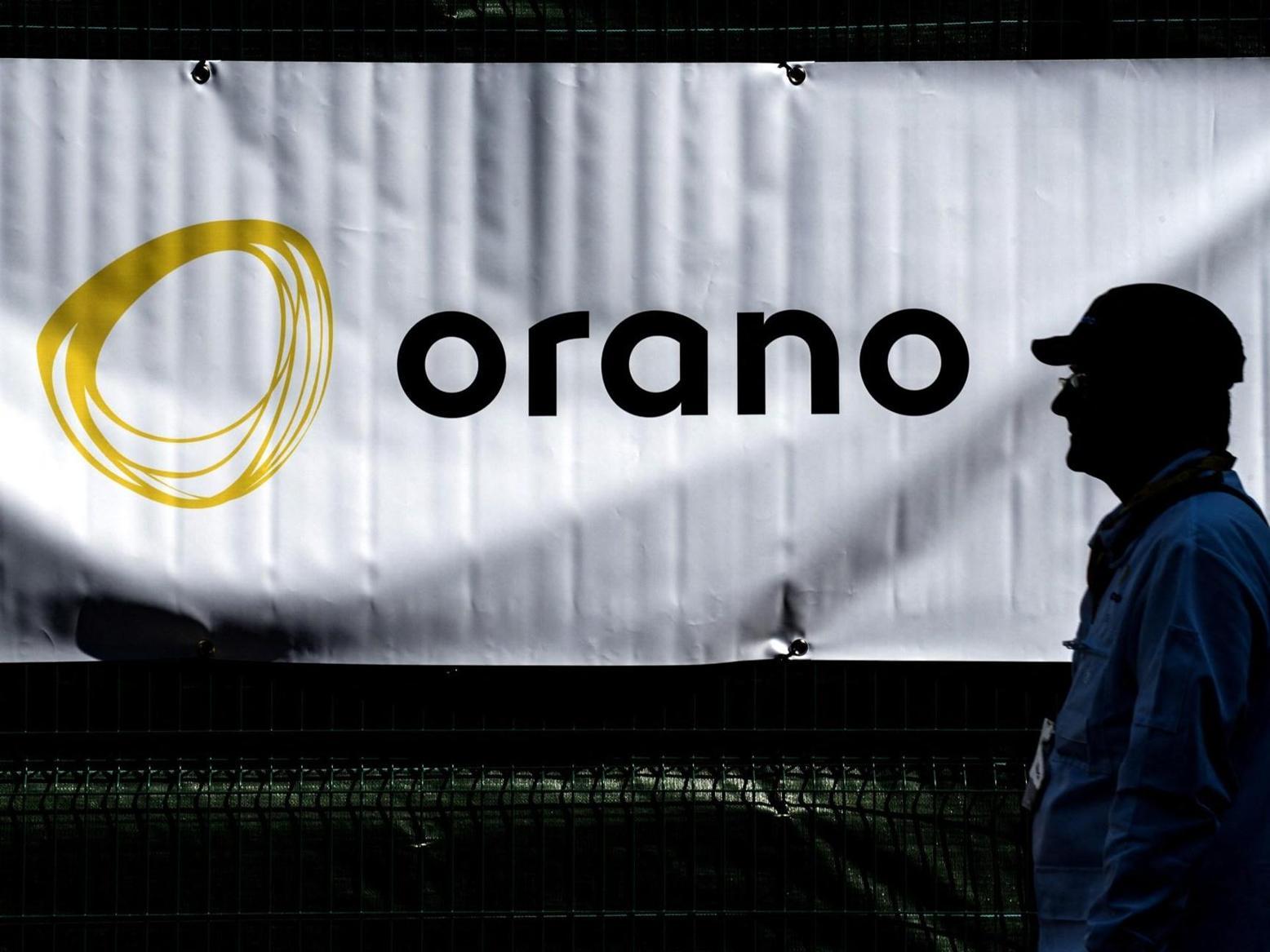
Orano, which is over 90% owned by the French government, has been one of the oldest operators of uranium mines in Niger for more than five decades. However, after the military council took power in 2023, Niamey accused Paris of attempting to deprive it of its natural wealth.
In June 2024, Niger revoked Orano’s rights to operate three of the country’s most important mines: Somair, Cominak, and Imouraren, which contains one of the largest uranium deposits in the world. This ended over 50 years of French exploitation of the country’s wealth, prompting Orano to seek international arbitration to regain operational control.
At the United Nations General Assembly, Prime Minister Ali Lamine Zein accused foreign companies of exploiting the country for decades, stating that uranium has brought “poverty, pollution, rebellion, corruption, and ruin” to the Nigerien people, while enriching France, according to Reuters.
The Nigerien government has begun implementing nationalization and control over its natural resources, including uranium.
A security source, according to Reuters, reported that about 1,050 tons of uranium were transported from the Somair site last week, although the destination and buyer remain unclear.
Orano responded to this escalation by stating that the shipment of uranium from the Somair mine, which was “confiscated” in northern Niger last week, posed “serious security and safety risks,” citing threats of radioactive material diversion and violations of international transport rules.
On November 27, the company stated that it learned from media reports that a convoy carrying concentrated uranium, known as “yellowcake,” had left the mining site in Arlit.
The company claimed it did not participate in the transport and had no details about the quantity, destination, or buyer.
However, Niger’s state television reported that the country would exercise its “legitimate right” to sell uranium from the Somair mine to any buyer under market rules, asserting that sovereignty over natural resources is “non-negotiable.”
The broadcast showed President Abdourahamane Tiani at the Arlit mine, where he pledged to end decades of French control and reclaim what officials described as “plundered wealth for over half a century.”
According to Reuters, this move violates a ruling issued by the International Centre for Settlement of Investment Disputes in September, which prohibited Niger from selling or transporting uranium from Somair.
Bias Towards Orano
Orano initiated arbitration at the International Centre for Settlement of Investment Disputes in January.
On September 23, 2025, the Centre issued an order for Niger to refrain from selling, transporting, or facilitating the transport of uranium produced at the Somair mine, a decisive ruling that placed Niger in confrontation with the French state-linked Orano nuclear group.
The Nigerien government accused France of seeking to deprive it of benefiting from its natural wealth through what it described as “drowning it in endless lawsuits” to halt the exploitation and sale of uranium, a strategic resource that is a significant part of the country’s natural wealth.
What is Orano?
According to the company’s platform and the “Global Data” platform, Orano, formerly known as “New Areva Holding,” is one of the world’s leading industrial groups specializing in the nuclear fuel cycle, with the French state holding a majority stake (90.33%), making it a state-owned company serving French interests.
The company operates as a comprehensive provider of nuclear energy solutions, covering all stages of nuclear fuel production from raw material extraction to waste management.
Orano’s activities include uranium mining, conversion, enrichment, recycling, and reprocessing of spent nuclear fuel, as well as nuclear engineering, nuclear medicine, and logistics services.
Thanks to this extensive integration, the company contributes to the production of low-carbon electricity and provides services and technologies to support the operation of nuclear reactors worldwide, making it a key player in the international nuclear energy sector.
Orano manages its operations through a wide international network that includes France, Europe, the Americas, Africa, the Middle East, and Asia, with its headquarters located in Châtillon in the Île-de-France region, reflecting its international presence and strategic role in nuclear energy security and the development of related technologies.
Orano’s Financial Performance
– Orano’s revenues in the first half of the current year increased by 18.2% compared to the same period last year, reaching 2.67 billion euros (3.1 billion dollars).
– The company’s profits amounted to 109 million euros (126.5 million dollars) compared to a loss of 133 million euros (154.37 million dollars) in the first half of last year.
– Orano achieved revenues of 5.87 billion euros (6.81 billion dollars) in 2024, a significant increase compared to 4.77 billion euros (5.54 billion dollars) in 2023, representing a growth rate of 23%.
– The company’s earnings before interest, taxes, depreciation, and amortization reached 2.07 billion euros (2.4 billion dollars) in 2024, compared to 1.23 billion euros (about 1.43 billion dollars) in 2023, with a growth rate of 35.2%, according to “Business Wire.”
– This substantial increase is primarily attributed to a massive deal the company made in November 2024 with several Japanese energy companies worth nearly one billion euros (about 1.16 billion dollars) related to the reprocessing of their nuclear waste.
– Excluding this exceptional contract, Orano’s revenues came in line with its usual expectations, supported by improved cash flows and rising market prices in uranium mining and the nuclear services it provides.
Niger is the world’s seventh-largest uranium producer, contributing significantly to global energy supplies. For over five decades, Orano, a French state-owned company, has operated uranium mines in Niger, but recent political changes have led to accusations of exploitation and calls for national control over natural resources. In 2024, Niger’s military government revoked Orano’s mining rights, intensifying the conflict over resource management and sovereignty.
Source : Al Jazeera Net