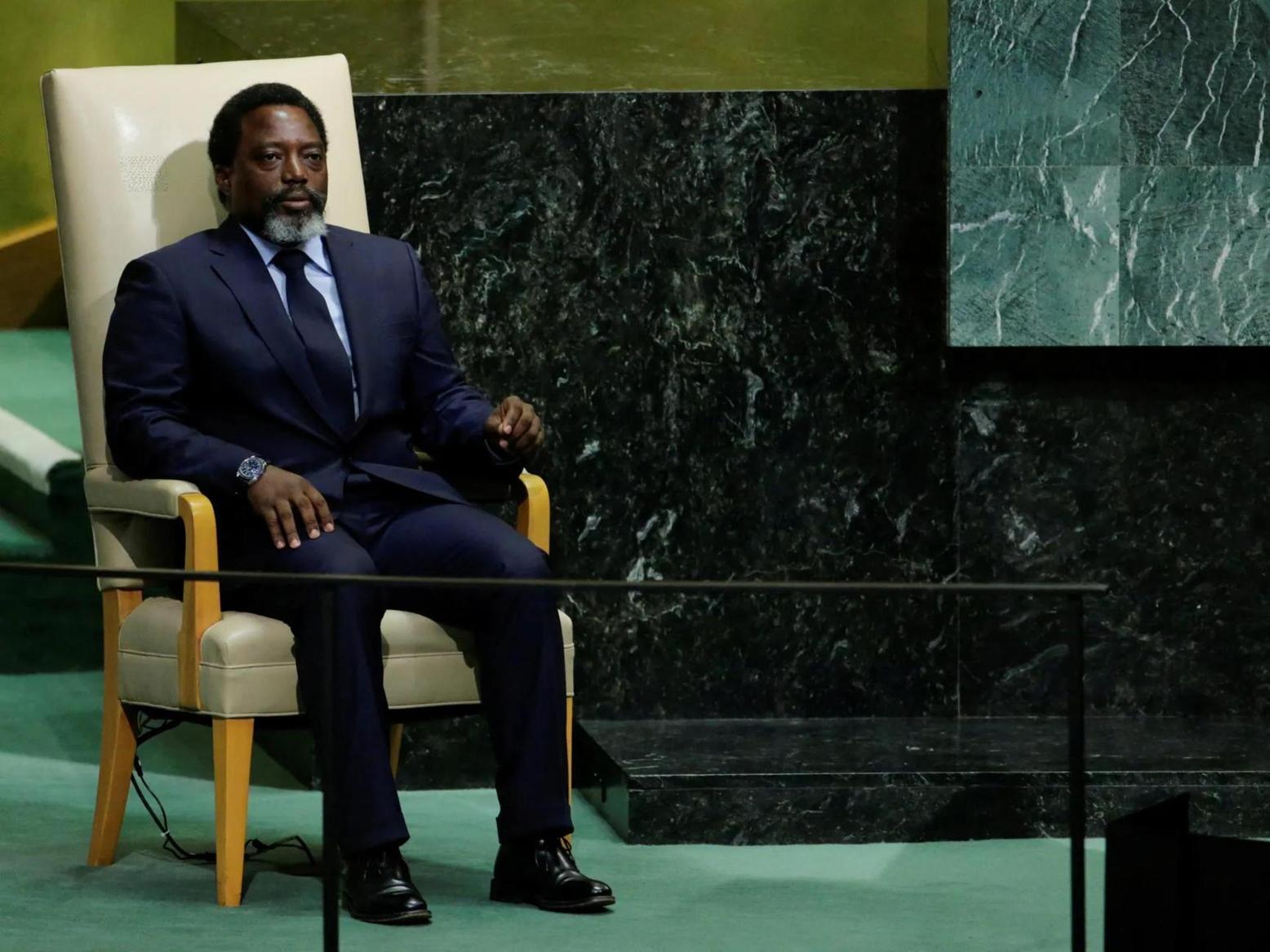
Africa-Press. The Office of Foreign Assets Control of the U.S. Department of the Treasury announced last Thursday the imposition of economic sanctions on former Congolese President Joseph Kabila due to “his role in supporting the M23 movement and the Congo River Alliance,” as described in the announcement. This step comes amid efforts by the U.S. administration to salvage a fragile peace agreement between Kinshasa and Kigali.
The Treasury Department stated in a press release on its official website that the M23 movement is “an armed group supported by Rwanda in eastern Democratic Republic of the Congo,” and that the “Congo River Alliance” operates as its military political arm, seeking to “overthrow the government of President Félix Tshisekedi.” The statement added that both groups “have fueled political instability and violent conflict in the east of the country, resulting in the deaths of thousands of civilians and a mass displacement crisis.”
According to the U.S. Treasury, Kabila “provided financial support to the Congo River Alliance to influence the political situation in the east,” and “encouraged soldiers in the Congolese armed forces to defect and join the alliance’s forces,” as well as “sought to launch attacks from outside the country on the Congolese army in the east, but his efforts failed.” The statement also noted that the former president “supported an opposition candidate against the current president in an attempt to regain influence over the government.”
U.S. Treasury Secretary Scott Piesenet stated in a comment accompanying the announcement that “President Trump is paving the way for peace in the Democratic Republic of the Congo, and it has been clear that those who continue to sow instability will be held accountable,” adding that his department “will continue to use its full range of tools to support the integrity of Washington’s agreements.”
U.S. State Department spokesperson Tommy Bigot confirmed in a statement to a local source that “the action sends a clear message: we will hold accountable anyone who obstructs peace efforts in Congo.”
Kinshasa Welcomes the Decision
For its part, Kinshasa welcomed the decision, with Deputy Prime Minister Jackman Shabani describing the step as “belated,” considering Kabila to be “the instigator, initiator, and architect of destabilization in Congo.”
In an official statement reported by a local news agency, Congolese authorities deemed the sanctions “an important act in combating impunity,” noting that they “also have a practical dimension, as they restrict the financial mobilization and logistical support capabilities that could fuel and prolong the war.”
In contrast, Kabila rejected the sanctions, describing them as “unjustified, politically motivated, and based on unfounded accusations,” hinting at the possibility of pursuing legal avenues to challenge them.
The M23 movement had not issued any response by the time this report was prepared.
Under the decision, all of Kabila’s assets and properties within the United States are frozen, and U.S. citizens and companies are prohibited from any dealings with him, while banks and foreign partners have been warned against indirect transactions under the threat of civil or criminal penalties.
An American Pressure Tactic?
This step follows nearly two months after Washington imposed sanctions on Rwandan defense forces and four of their senior officers on March 2, due to what the Treasury described as “gross violations of Washington’s peace agreements” signed in December 2025 between Congo and Rwanda under U.S. sponsorship, before collapsing in the following weeks, according to multiple media reports.
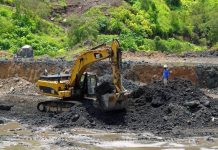
In a contextual reading, it seems that the U.S. administration is following an approach of “applying pressure on the disruptors of its path” in an effort to revive the negotiation process. The announcement of the sanctions comes after Washington and Kinshasa signed a partnership in December to expand access to cobalt, coltan, and copper reserves, according to a local news agency. This raises questions about the extent to which the sanctions are intertwined with U.S. interests in critical minerals.
It is worth noting that Kabila, who ruled Congo from 2001 to 2019, was sentenced in absentia to death by a Congolese military court in September 2025 on charges of “treason, war crimes, and crimes against humanity,” following accusations of collusion with the Congo River Alliance and the M23 movement. The former president had appeared in the city of Goma, controlled by the movement, in May 2025, after years of moving between South Africa and Namibia, a reappearance that drew sharp criticism from Tshisekedi’s government.
Fundamental questions remain regarding the ability of the sanctions to change the balance of power on the ground, given the M23’s control over the capitals of North and South Kivu provinces, Goma and Bukavu, and its influence extending into mineral-rich areas. The step also raises questions about its implications for the Congolese opposition domestically and for Kinshasa’s relationship with Kigali, which has consistently denied accusations of supporting the movement.